By Brazil Stock Guide – Brazil’s auto industry lobby criticized a government decision to restore incentives for imports of electric vehicles shipped in disassembled and semi-disassembled kits, warning the move could undermine local manufacturing and investment plans.
The National Association of Motor Vehicle Manufacturers, known as Anfavea, said Tuesday (June 23) that the decision by the Executive Management Committee of the Foreign Trade Chamber, or Gecex, runs counter to the interests of workers, automakers operating in Brazil and domestic auto-parts suppliers.
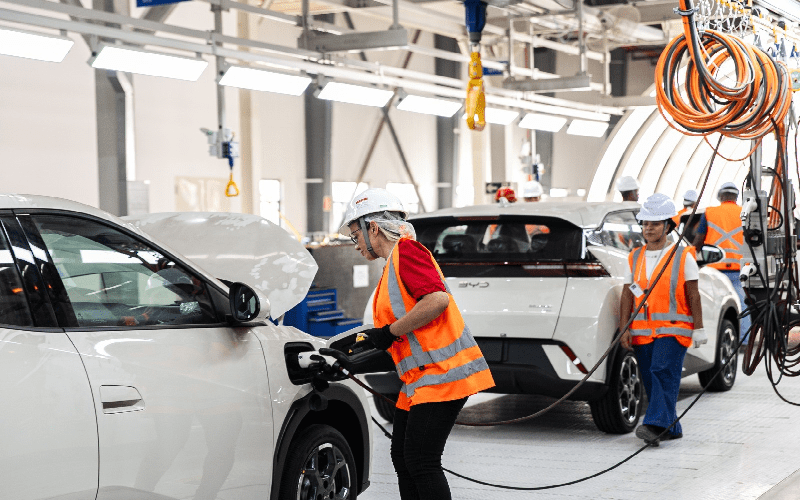
The measure reinstates benefits for electric vehicles imported in CKD and SKD formats, terms used for completely knocked down and semi-knocked down kits. According to Anfavea, the change was made without consultation with the productive sector and alters a policy previously set by the federal government to link the expansion of electric mobility with long-term industrial investment in Brazil.
The import quotas for electric vehicle kits had ended in February 2026 under a timetable defined last year after discussions with the industry. Anfavea said the new decision affects companies and thousands of workers across nine Brazilian states.
The group said extending incentives that were designed as temporary measures raises questions about regulatory predictability for manufacturers that adjusted investment plans based on the previously agreed rules. It also said the shift creates uncertainty for companies that structured projects around the government’s own schedule.
Brazil’s electrified vehicle market has expanded rapidly in recent years. Anfavea said new brands entered the market, supply increased and registrations of imported electrified vehicles rose 214% between 2023 and 2025.
The domestic industry also responded to the policy framework, according to the association. Automakers announced 140 billion reais in investments in Brazil through 2033, covering new propulsion systems, electrification, research, engineering, industrial modernization and the expansion of supplier chains.
Local production has also gained ground. Electrified vehicles made in Brazil accounted for 25.9% of segment sales in 2025, Anfavea said. Through May 2026, the market supplied by vehicles produced in Brazil grew 57% from the same period a year earlier.
For Anfavea, the policy debate has moved beyond how to accelerate the arrival of electrified vehicles in Brazil. The issue now, the group said, is whether the transition will generate more domestic production, technology development, suppliers, engineering capacity and value added inside the country.
The association said import benefits can play a relevant role in the early stages of industrial deployment. But expanding them when investments have already been announced and local output is growing may weaken incentives for the expected next phase of Brazil’s auto industry.
Anfavea said it will continue to support decarbonization, including fleet electrification, competition and broader vehicle supply for Brazilian consumers. The group said the Gecex decision puts the focus on what development model Brazil intends to encourage for new mobility and what role domestic production will have in that process.