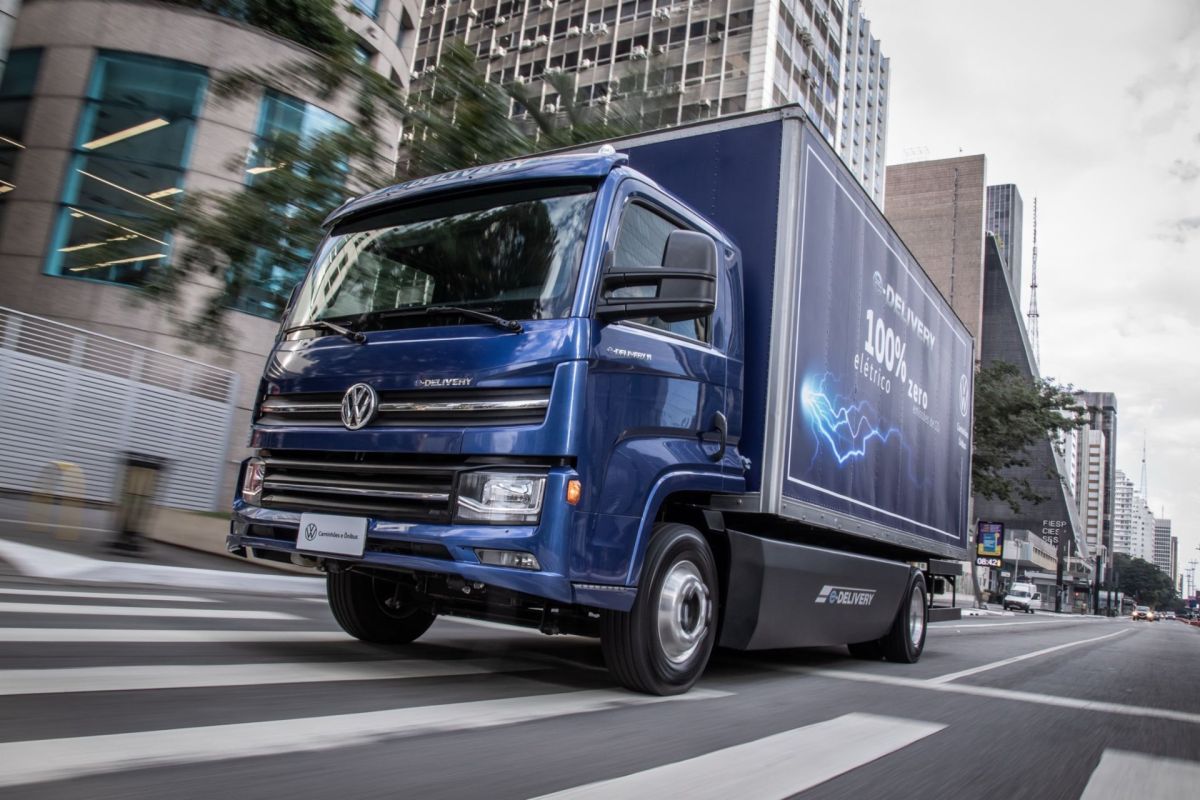
By Brazil Stock Guide – The TRATON GROUP, parent company of Volkswagen Truck & Bus, has launched e-Dutra, Brazil’s first zero-emission freight corridor. The project links Rio de Janeiro and São Paulo — the country’s two largest urban and industrial centers — and opens a new chapter in heavy-duty mobility, marking Brazil’s debut in the global network of green corridors designed to decarbonize road freight transport.
Called Laneshift e-Dutra, the corridor is part of the Global Green Road Corridors Initiative (GGRC) and was conceived as a laboratory of cooperation between the private sector, government, and logistics leaders such as DHL Supply Chain, Amazon, and Scania. The concept, presented during COP30 in Belém, is straightforward yet ambitious: to unite fleet operators, manufacturers, and infrastructure providers to reduce both the cost and the risk of large-scale electrification.
“Electrification is the future of transportation, but the road ahead is long,” said Andreas Follér, Chief Sustainability Officer at TRATON. “e-Dutra matters because it delivers real progress.”
Pilot operations are already underway. Volkswagen Truck & Bus and LOTS Group completed the first electric truck trip between Rio and São Paulo using existing infrastructure, while DHL and Amazon began operating zero-emission freight routes along the corridor. Data from these early runs will help calibrate the high-power charging network now being planned as the backbone of the project’s expansion.
Roberto Cortes, CEO of Volkswagen Truck & Bus, emphasized the collaborative spirit behind the effort: “We are committed to developing smart and accessible transport for everyone.”
According to the World Business Council for Sustainable Development (WBCSD), which coordinates the global initiative, the project aims to have 1,000 electric trucks operating daily by 2030. Although the exact number of heavy-duty charging stations has not yet been disclosed, Rio de Janeiro already serves as a testing hub, with public charging points in operation and plans for 15 additional sites by 2028 under the Laneshift Rio program.