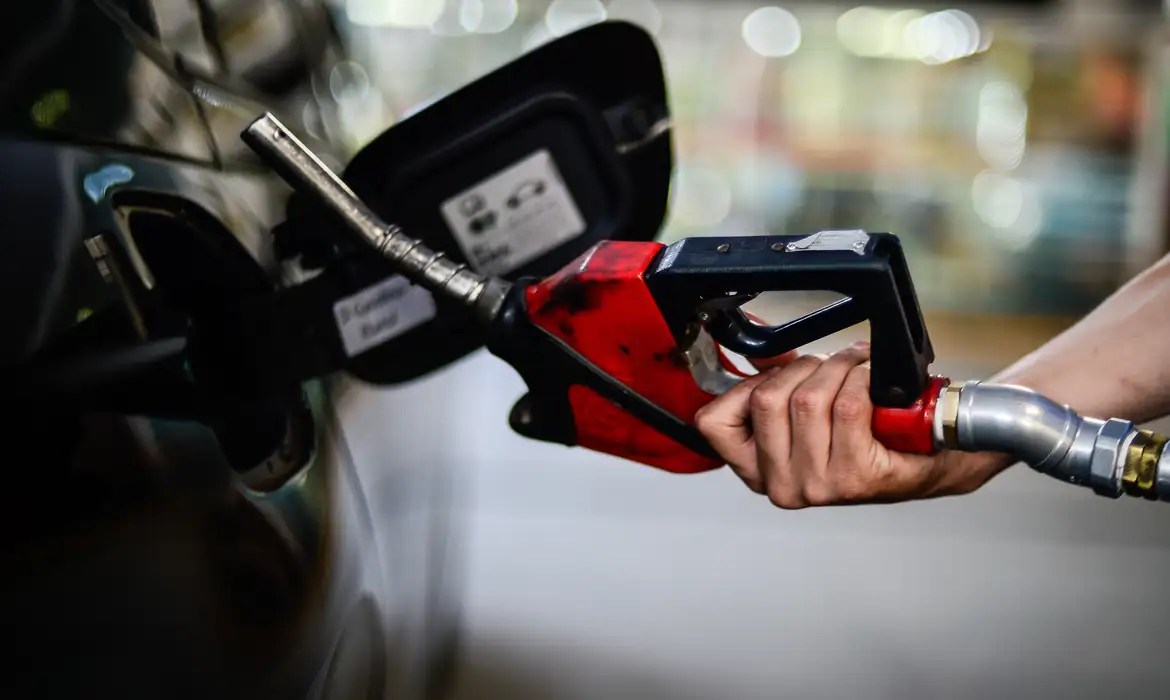
By Brazil Stock Guide – Brazil’s government plans to seek approval to raise the mandatory blend of anhydrous ethanol in gasoline to as much as 32% from the current 30%, in a bid to curb fuel imports, strengthen energy security and expand the use of lower-carbon fuels.
Energy and Mines Minister Alexandre Silveira said Tuesday that the proposal will be submitted to the National Energy Policy Council, known as CNPE, within the next 15 days, according to Agencia Brasil. The announcement followed a meeting at the presidential palace in Brasilia with President Luiz Inacio Lula da Silva, cabinet ministers, executives and biofuels industry representatives.
“We know we can go up to E35, but the technical studies needed to advance the blend allow us to go to E32,” Silveira said. “It was a demand brought today by the sector.”
The proposed increase would move Brazil’s gasoline blend from E30 to E32, meaning ethanol would account for 32% of the fuel mix. Silveira said the measure is part of the government’s decarbonization agenda and is aligned with the Fuel of the Future law, which encourages the production and use of sustainable fuels.
The minister said the higher blend could reduce Brazil’s need for imported gasoline by an estimated 450 million liters. He argued the measure would also help shield domestic fuel prices from international volatility linked to geopolitical conflicts.
“It is energy security, fuel price affordability, decarbonization, national development, more planting, more jobs, more income,” Silveira said. “These are public policies focused on the country’s development.”
Biofuel industry representatives who attended the meeting described the talks as productive and said ethanol could help lower costs for consumers. Evandro Gussi, president of sugarcane and bioenergy industry group Unica, said ethanol is currently about 2.40 reais per liter cheaper than gasoline on average.
“Today, a liter of ethanol costs on average 2.40 reais less than a liter of gasoline,” Gussi said. “In other words, a 2% increase in the blend will bring an equivalent reduction to consumers.”
Gussi said the price difference between ethanol and gasoline has generated around 2 billion reais in savings for Brazilian consumers over the past three months. He also said the use of ethanol helped Brazil avoid about 8 billion reais in gasoline import costs since the start of the conflict in Iran.
The Unica head said technical concerns over engine performance should not prevent the change. According to Gussi, a 32% ethanol blend was successfully tested when Brazil raised the mandatory mix to 30% in June last year.
Mario Campos, president of Bioenergia Brasil, said public policies adopted in recent years have helped expand the sector. He projected that Brazil’s ethanol output will increase by more than 4 billion liters this year.
“So it is an opportunity for Brazil to further decarbonize our transport matrix, and for Brazilian consumers it is an excellent time to truly use the technology they have in their vehicles and choose ethanol, which is cheaper than gasoline in several regions,” Campos said.
The proposal still requires formal review by the CNPE. If approved, the higher ethanol blend would mark another step in Brazil’s biofuels strategy, with potential effects on gasoline imports, agricultural production, consumer prices and transport-sector emissions.