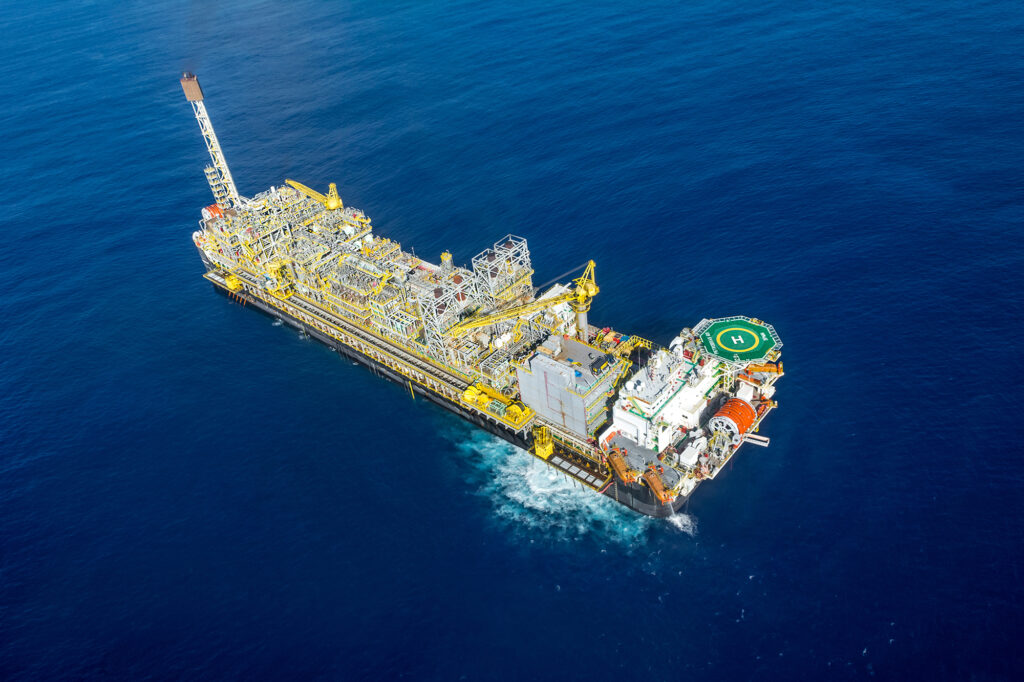
By Brazil Stock Guide – Crude oil remained Brazil’s top export for a second consecutive year, underscoring a structural shift in the country’s trade profile and the renewed centrality of the oil and gas industry to economic stability. Official 2025 trade data released this week show oil exports totaling $44.6 billion, ahead of soybeans and iron ore, confirming the sector’s resilience after a record-setting 2024.
While marginally below the $44.8 billion peak posted a year earlier, the result cements oil’s leadership in Brazil’s export basket and highlights its growing importance as a macroeconomic buffer. The industry has become a key source of foreign exchange and fiscal revenues at a time of elevated global volatility and tightening geopolitical risk.
According to projections by the Instituto Brasileiro de Petróleo, Gás e Biocombustíveis (IBP), the sector has reached an inflection point. In 2024 alone, oil and gas generated a net trade surplus of $36.3 billion and more than R$98 billion in royalties and special participations, strengthening public finances across producing states and municipalities.
Energy Security Back in Focus
Brazil’s rising prominence comes as uncertainty surrounding Venezuela and other South American producers refocuses global attention on reliable supply hubs. With regional flows under pressure, importers are increasingly favoring politically stable producers capable of predictable expansion. Brazil, now the world’s eighth-largest oil producer, fits that profile.
IBP President Roberto Ardenghy says Brazil’s combination of scale, institutional stability and lower carbon intensity sets it apart. Production from the pre-salt emits roughly half the global average, an attribute gaining weight with investors and buyers under tighter climate scrutiny.
Growth Outlook Through 2029
IBP forecasts indicate the expansion cycle is still in its early stages. National output is expected to peak at 4.2 million barrels per day in 2028, while upstream investment could reach $21.3 billion as early as 2026. Employment across the value chain is projected at about 483,000 jobs next year, with total government take potentially rising to $42.3 billion per year by 2029.
Financing the Energy Transition
Beyond trade and fiscal gains, the oil and gas sector is also positioned as a catalyst for Brazil’s energy transition. The country is already the world’s second-largest producer of biofuels and is advancing carbon capture and storage (CCUS) alongside offshore wind, with estimated potential of 1,200 GW. For IBP, the competitiveness of Brazil’s oil industry is precisely what enables the capital-intensive shift toward lower-carbon energy.
Brazil’s Top Exports in 2025 ($ FOB)
• Crude oil: $44.7 billion
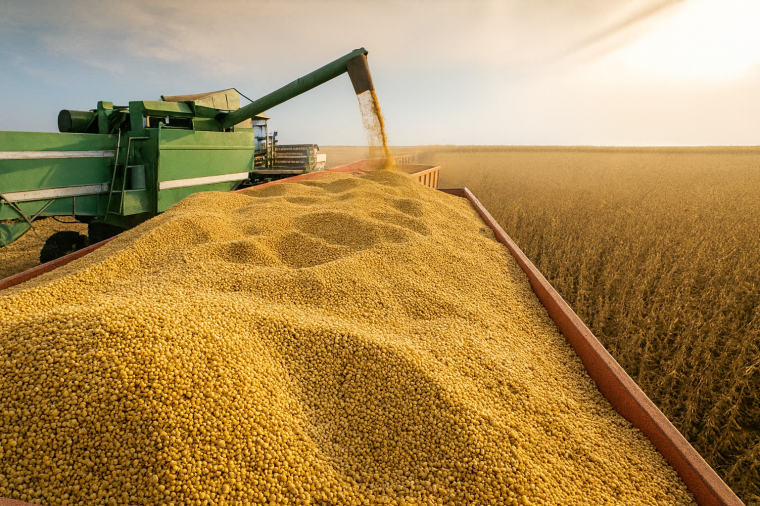
• Soybeans (excluding for sowing): $43.5 billion
• Iron ore and concentrates: $26.3 billion
Source: MDIC