By Brazil Stock Guide – Brazil’s national grid operator ONS said that on May 4 and Aug. 10, 2025, a high share of distributed generation in the National Interconnected System (SIN) strained its ability to control frequency and voltage. The warning prompted regulator ANEEL and industry group Abradee to begin drafting new protocols to integrate smaller plants into grid operations.
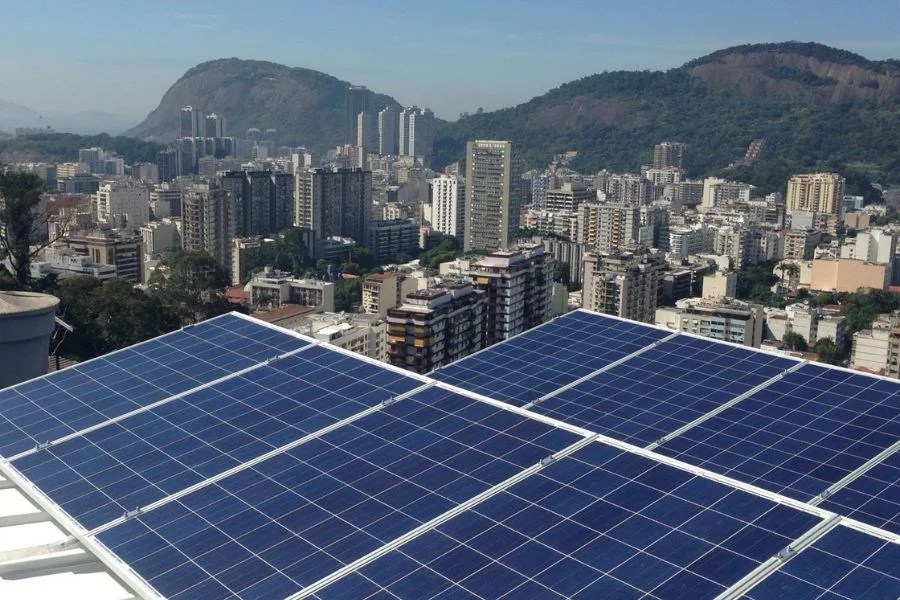
Distributed generation — mainly rooftop solar and small-scale units connected to local networks — has already surpassed 25 gigawatts of installed capacity, accounting for more than 10% of Brazil’s power mix. Until now, ONS has dispatched only large hydro, thermal, wind and utility-scale solar plants, while small generators inject electricity into distribution grids without central coordination.
Bottlenecks in the grid
The rapid advance of wind and solar has transformed Brazil’s energy matrix, consolidating the country as an international reference in renewables. But this expansion has also exposed bottlenecks in the SIN, which balances electricity flows across regions. At times, renewable output exceeds demand — for example, during midday solar peaks or strong wind regimes in the northeast — driving spot prices down and leaving part of the energy curtailed due to transmission constraints.
To protect stability, ONS has resorted to curtailment, ordering wind and solar producers to reduce output. Hydropower plants, meanwhile, must remain on standby to compensate for fluctuations in renewable supply, increasing operational costs.
Climate risk and thermal backup
Climate change is adding further complexity. Studies show declining water inflows to reservoirs of large hydro plants in central Brazil. In dry years, reduced hydro availability limits the system’s natural balancing role. As a result, thermal plants are dispatched more intensively, raising costs for consumers and increasing fossil-fuel emissions.
The joint note highlighted the need to “establish operational and communication procedures between ONS, utilities and agents.” The first phase of the protocols will apply to plants directly connected to distribution grids that are not dispatched by ONS. A second phase will extend to remote small-scale generators, often developed by cooperatives or investment funds to serve consumers in different regions.
For investors in rooftop and community solar, the new rules could mean stricter technical requirements and higher connection costs. For utilities, greater oversight promises more predictable operations but also new monitoring expenses. For consumers, the benefit lies in a more stable supply, balanced against the risk of higher costs for distributed projects.
ANEEL expects to complete the protocols by 2026. The challenge will be to reconcile the accelerated growth of distributed generation — a key driver of Brazil’s energy transition — with the security of Latin America’s largest interconnected grid. Overcoming these bottlenecks could cement Brazil’s position not only as a leader in clean power but also as an innovator in renewable integration.