By Brazil Stock Guide – Brazil is preparing a national strategy to reduce the use of mercury in artisanal and small-scale gold mining, an industry long associated with informal operations, environmental contamination and limited government oversight.
The Ministry of Mines and Energy has opened a public consultation on a draft National Action Plan for Artisanal and Small-Scale Gold Mining, known by its Portuguese acronym PAN-MAPE. Companies, researchers, public agencies and civil society organizations may submit comments through Aug. 7.
The proposal is part of Brazil’s obligations under the Minamata Convention on Mercury, an international treaty designed to protect human health and the environment from emissions and releases of the toxic metal.
Rather than focusing exclusively on banning mercury, the draft combines environmental enforcement with measures intended to bring small mining operations into the formal economy. Its priorities include the adoption of mercury-free technologies, stronger institutional capacity and improved systems for monitoring gold production and trade.
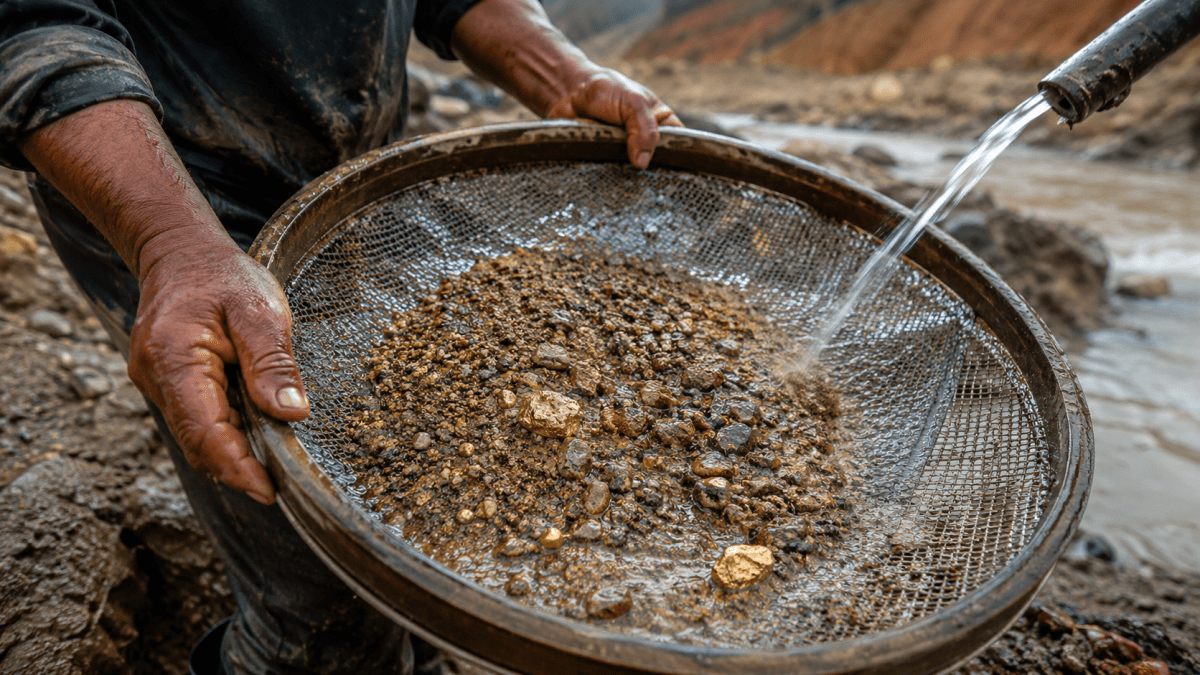
Mercury is commonly used to separate gold from other materials because the process is relatively inexpensive and easy to deploy in remote locations. Its use, however, can contaminate rivers, soil and the atmosphere, while exposing miners and surrounding communities to serious health risks.
The Brazilian plan therefore sits at the intersection of several difficult policy challenges: reducing environmental damage, protecting Indigenous and riverine communities, formalizing miners and improving the traceability of gold supply chains.
Implementation is likely to be the main obstacle. Artisanal and small-scale mining frequently takes place in isolated regions where access to financing, equipment, technical assistance and public services is limited. Replacing mercury-based processes will require producers to adopt technologies that may carry higher upfront costs.
Brazil officially recorded 82.3 metric tons of gold production in 2024. Of that amount, about 5.5 tons — or 6.6% of the total — was attributed to artisanal and small-scale mining conducted under government-issued garimpo permits, according to the National Mining Agency. The figure covers formally reported output and does not include gold produced by illegal or undeclared operations, whose scale is inherently difficult to measure.
Without financial support and technical assistance, tighter environmental requirements could push some operators further into illegality rather than encourage formalization.
The draft plan was coordinated by the Ministry of Mines and Energy in partnership with the ministries of Environment, Foreign Affairs, Health and Indigenous Peoples. Brazil’s National Mining Agency, environmental regulator Ibama and mineral technology research center CETEM also participated in the process.
The proposal draws on a national assessment of artisanal and small-scale gold mining prepared by a research group at the University of São Paulo, with support from the Global Environment Facility and the United Nations Environment Programme.
Comments received during the consultation may be incorporated into the final version of the plan, which Brazil is expected to submit under the Minamata Convention framework.
The consultation itself does not immediately impose new requirements on miners or gold buyers. The plan’s effectiveness will ultimately depend on the targets, funding mechanisms and enforcement tools included in the final document — and on the government’s ability to coordinate agencies across regions where the state’s presence remains weak.