By Brazil Stock Guide- Brazil’s shopping mall industry posted a 1.2% increase in revenue in 2025, reaching a record R$200.9 billion, according to data released on Wednesday (4). The result fell short of earlier projections but still marked the highest sales level ever recorded by the sector.
The figures, published by the Brazilian Shopping Center Association (Abrasce), are nominal and do not account for inflation. Growth slowed from 2024, when sales rose 1.9%, and came in below the 1.6% expansion initially expected for 2025.
Abrasce President Glauco Humai described the performance as solid given broader economic conditions. “Sales came very close to what we expected for the year. Growth of 1.6% was significant, especially compared with other sectors such as industry, which posted weaker results. So we are satisfied,” Humai said during a press briefing.
Average occupancy across shopping malls stood at 95.4%, a level Humai called healthy. He said the remaining vacancy reflects normal turnover rather than weak demand. “What we have today is technical vacancy. If a mall is 100% occupied, there is no room for new stores or new brands to enter,” he said.
Brazil ended 2025 with 658 shopping malls operating in 253 cities, following the opening of 10 new developments during the year. Gross leasable area expanded 0.9% to 18.3 million square meters. The association expects 11 new malls to open in 2026.
The total number of stores rose 1.2% to 124,700 units. Retailer delinquency fell to 4.3%, the lowest level on record, signaling improved financial health among tenants. Employment in the sector increased 0.9%, bringing the workforce to about 1.082 million people.
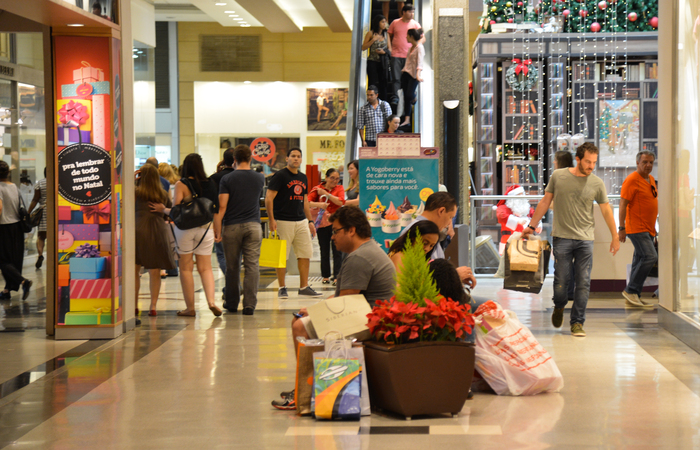
Monthly foot traffic declined 1% in 2025 to 471 million visits. At the same time, average dwell time climbed to a record 80 minutes, up from roughly 73 minutes in recent years and well above pandemic lows of under 30 minutes. Average consumer spending increased 4%, rising to R$126 from R$121 in 2024.
Humai said the longer visits and higher spending reflect the broader role malls now play. “Shopping centers have become hubs for retail, dining, leisure and services such as gyms and clinics, as well as hosting a growing number of events,” he said.
For 2026, Abrasce projects a 1.4% increase in sales to R$203.7 billion. “We are optimistic and confident, but cautious about 2026,” Humai said. He pointed to job creation, rising wages and a downward trend in interest rates as potential drivers of consumption and new investments.
He also highlighted the recent expansion of income tax exemptions for workers earning up to R$5,000 per month. “This will generate billions of reais in extra household budget, and part of that should go to retail,” he said. The 2026 World Cup is also expected to support demand for sports goods and electronics. “People leave work and can watch matches at shopping malls, then stay afterward. If games were held in the middle of the morning or afternoon, that would be much harder,” Humai said.
Risks to the outlook include Brazil’s electoral cycle and global geopolitical tensions. “Election outcomes create a lot of instability and uncertainty domestically. Internationally, the U.S. is putting pressure on many countries. There is a lot of bravado, but it still generates insecurity among investors, supply chains and companies,” Humai said.