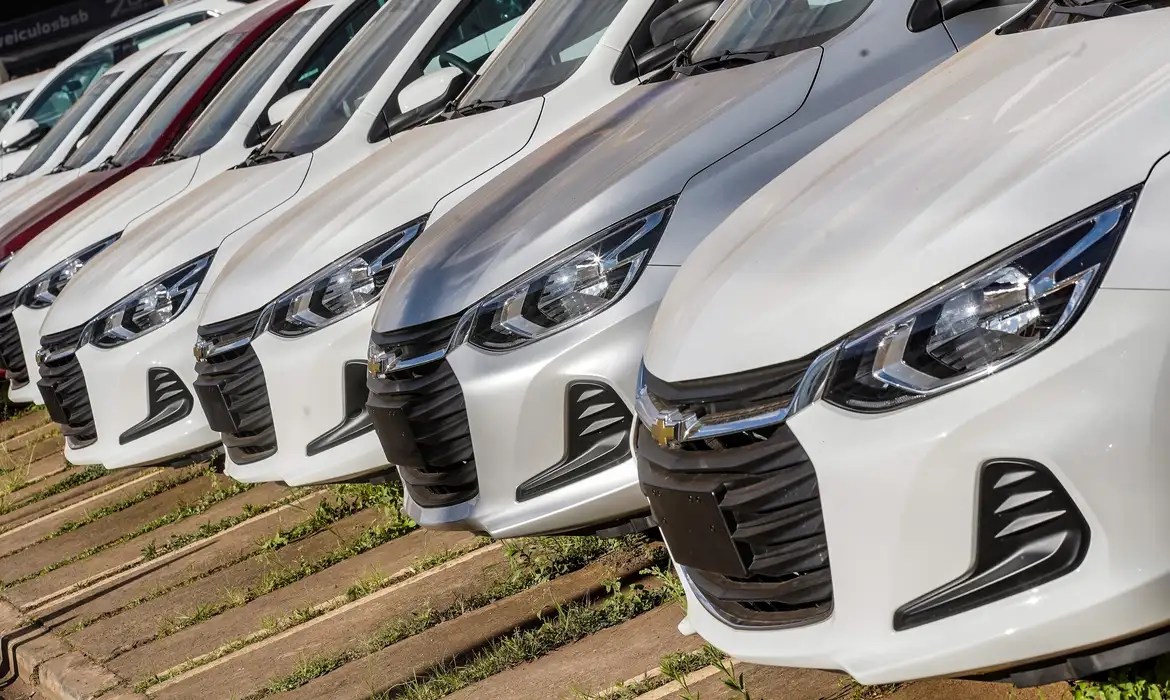
By Brazil Stock Guide – Brazil’s vehicle production posted its strongest March performance since before the pandemic, signaling a robust rebound in Latin America’s largest auto market, even as global risks continue to cloud the outlook.
Data released Wednesday (April 8) by the National Association of Motor Vehicle Manufacturers, or Anfavea, and reported by Agência Brasil showed output reached 264,100 units in March, including passenger cars, light commercial vehicles, trucks and buses. That marks a 35.6% increase from a year earlier and a 27.6% jump from February.
“This was an excellent production figure for March, the best monthly result since October 2019, before the pandemic,” Anfavea President Igor Calvet said. “It was a number that really caught our attention.”
The result also represents the strongest March since 2018, underscoring a recovery trend supported by improved demand and industrial activity.
In the first quarter, production totaled 634,700 vehicles, up 6% from the same period a year earlier. Despite the positive momentum, Anfavea flagged external risks, including geopolitical tensions in the Middle East that could push oil prices higher and increase costs for manufacturers.
Domestic sales also surged in March. Registrations reached 269,500 units, the highest level for the month since 2013 and the strongest monthly performance since December 2014. Sales rose 37.8% from a year earlier and 45.5% compared with February, partly reflecting a higher number of working days versus last year, when Carnival affected activity.
Quarterly sales totaled 625,200 units, a 13.3% increase year-over-year.
“The performance is surprising, but it’s not yet time to celebrate,” Calvet said. “March stands out, but the coming months will determine how we deal with the rest of the year.”
Truck sales were a relative bright spot, with 8,800 units registered in March, up 31.9% from February. Still, volumes were 6.2% lower than a year earlier. The segment was supported by the federal Move Brasil program, which offers subsidized financing for fleet renewal.
“In trucks, we saw a small improvement — not a full recovery, but a slight relief,” Calvet said. “It’s still a difficult scenario, though somewhat less severe, but still a cause for concern.”
Exports rose to 40,400 units in March, up 21.1% from February and 1.1% year-over-year. Imports reached 47,300 units, climbing 40% month-over-month and 25.7% annually.
Anfavea maintained its 2026 outlook, projecting vehicle production to grow 3.7% this year and registrations to rise 2.7%, pointing to a gradual recovery trajectory for Brazil’s automotive industry.