By Rodrigo Uchoa, special for Brazil Stock Guide
Brazil is better known for cachaça than Cabernet. Its wine industry, though long established, has usually lived in the shadows of Chile and Argentina. For decades its claim to fame rested on sparkling wines that occasionally surprised foreign critics. Now a handful of adventurous producers are trying to move the conversation on. Their weapon of choice is not Malbec, nor Cabernet Sauvignon, but Teroldego—a grape that few consumers could pick out in a blind tasting, let alone spell correctly.
Native to Trentino-Alto Adige in northern Italy, Teroldego has been cultivated since the Middle Ages. It remains the region’s flagship red, though its presence elsewhere is modest: a few vineyards in California, scattered plots in Australia and New Zealand, and now, somewhat improbably, a growing footprint in Brazil. The grape was introduced to Rio Grande do Sul through experimental plantings in the 2000s, supported by researchers keen to expand the range of vinifera suited to Brazil’s subtropical climate. The experiment has worked rather well.
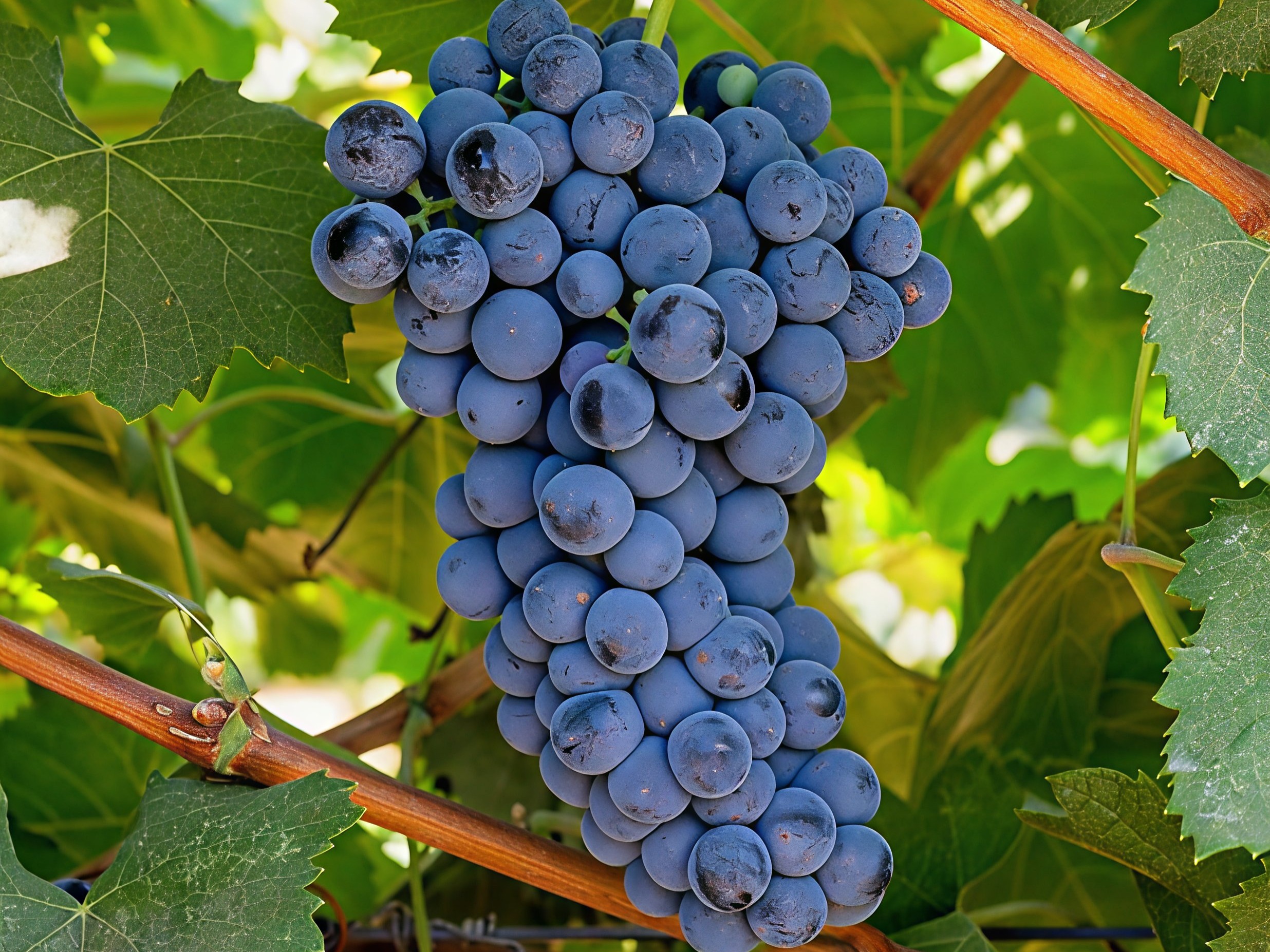
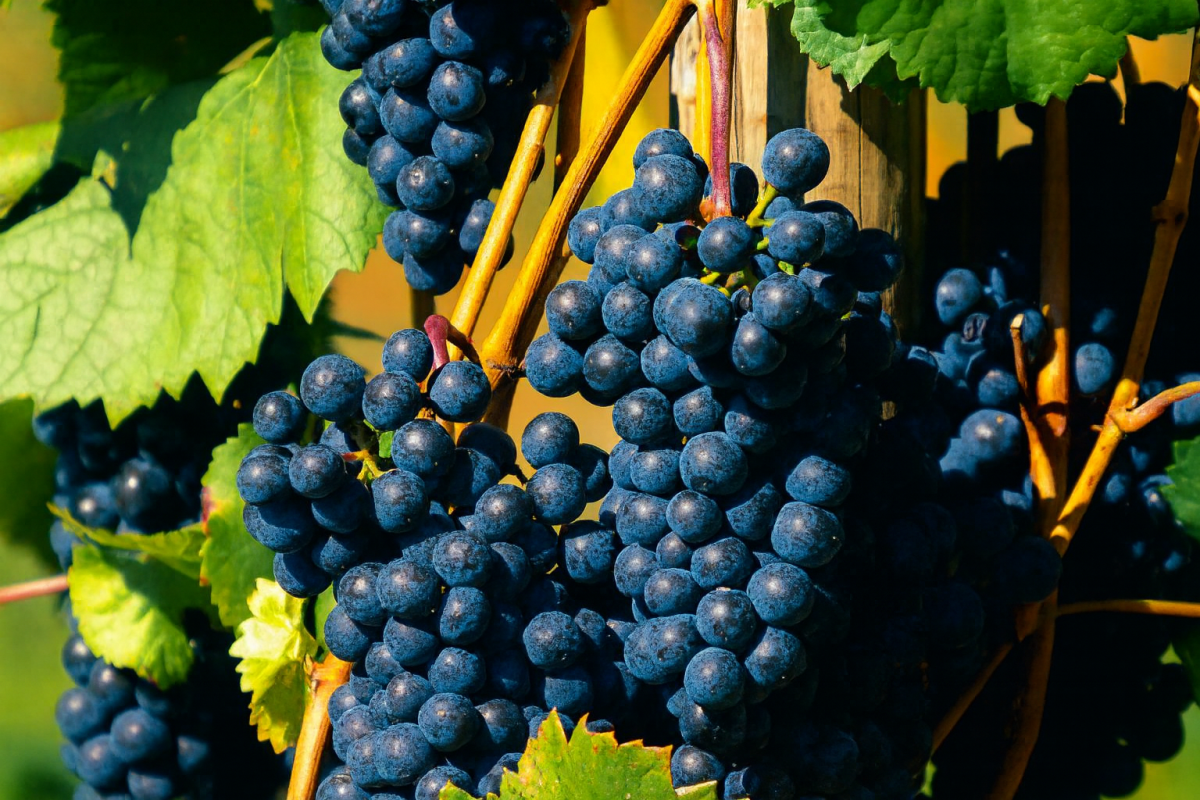
Teroldego thrives in the Serra Gaúcha, producing wines that are dark, aromatic and surprisingly fresh. Blackberries, blueberries and violets dominate the nose; firm tannins and brisk acidity provide structure without heaviness. With age, notes of earth, spice and graphite emerge. Critics, rarely shy of a comparison, liken the style to a polished Italian red, albeit with a distinctly Brazilian exuberance.
International juries have noticed. Brazilian Teroldegos have won medals at the Decanter World Wine Awards in London and at the Concours Mondial de Bruxelles. The timing is auspicious. Global drinkers, especially in northern Europe and North America, are tiring of identikit bottles of Cabernet and Shiraz. Imports of lesser-known grapes—from Portugal’s Baga to Greece’s Xinomavro—are inching upwards. Brazilian Teroldego fits neatly into this fashion for the obscure.
The numbers remain modest. Brazil has around 82,000 hectares of vineyards, but less than 15% are planted with fine wine grapes; the rest feed a vast domestic market for table wines. Production hovers at 3.5m hectolitres a year—dwarfed by Argentina’s 11m and Chile’s 12m. Exports tell a starker story: Brazil ships only 6m litres annually, compared with Argentina’s 250m and Chile’s 500m. Within that trickle, Teroldego represents a statistical rounding error. Yet in the world of boutique wines, rarity can be a virtue. Importers are willing to pay for a story, and Brazil’s narrative — that of a little-known Alpine grape reinvented in South America — is as marketable as it is unusual.
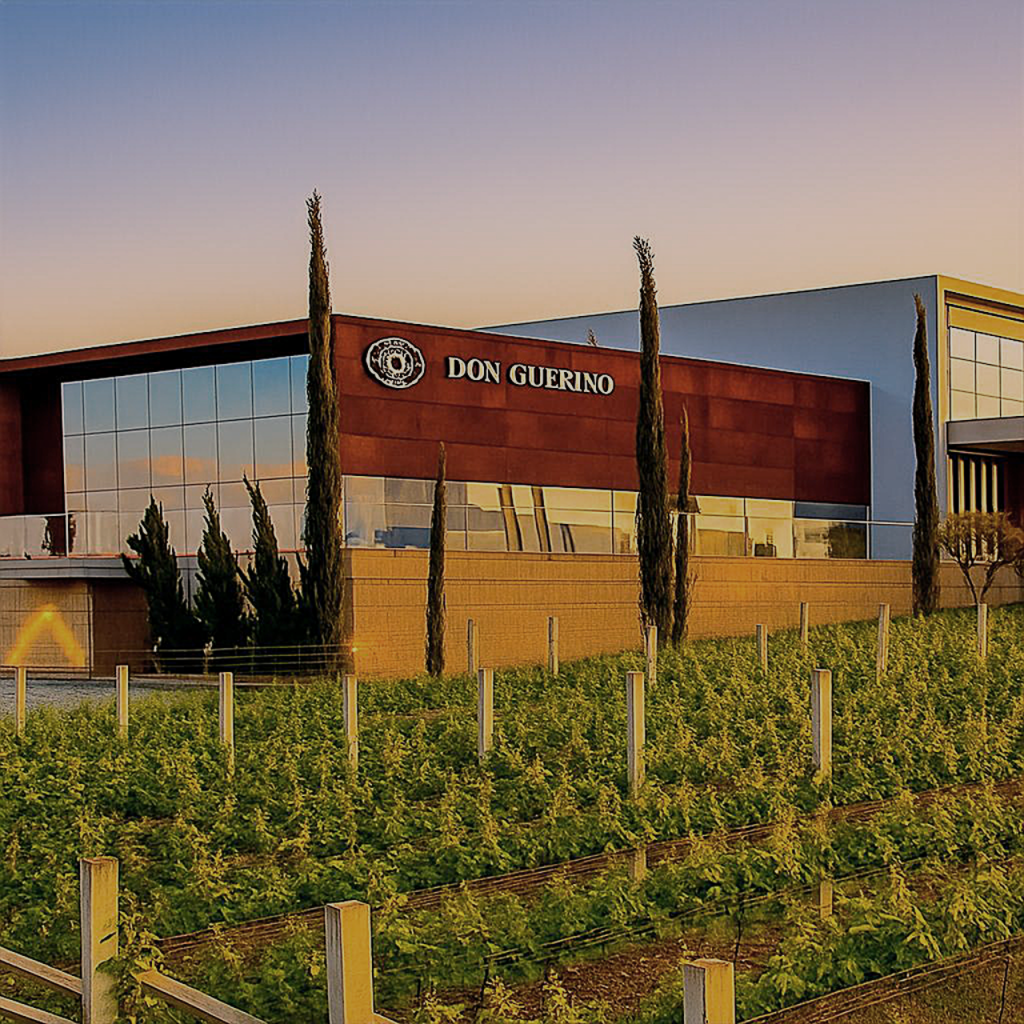
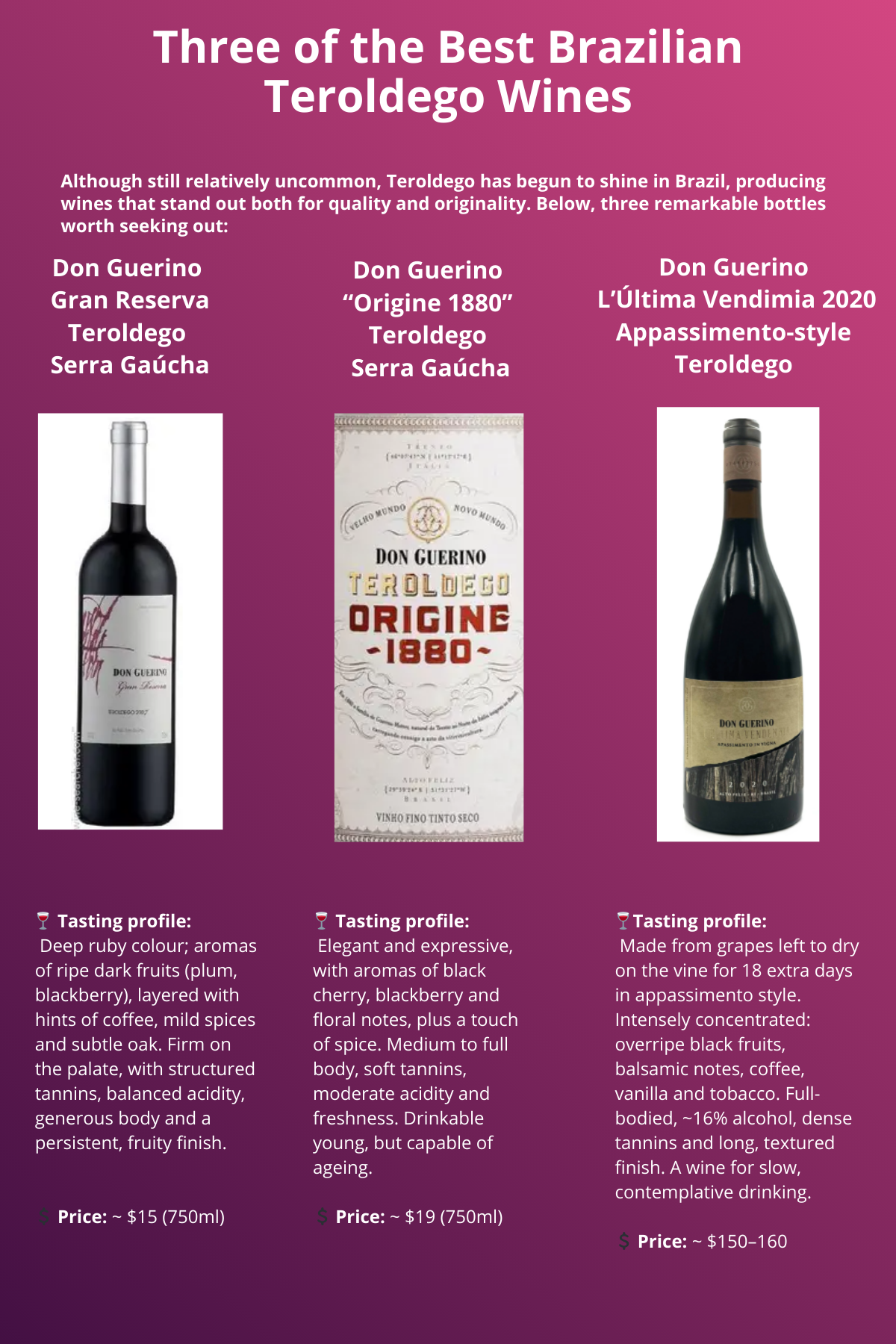
A few producers lead the charge. Don Guerino, a family winery in Alto Feliz, has collected international medals with polished versions of Teroldego. Salvattore and Tenuta Foppa & Ambrosi are following suit, each emphasising careful vinification to accentuate freshness and depth. In Santa Catarina’s high-altitude vineyards, lighter and more elegant interpretations are emerging. The results suggest that the grape could adapt across multiple terroirs, offering Brazil an edge in stylistic diversity.
For Brazil’s wine industry, the lesson is larger than Teroldego itself. The country is showing signs of maturity, investing in research, technology and export strategy rather than relying on patriotic consumption alone. Domestic per capita wine consumption has risen from 1.8 litres a year a decade ago to nearly 3 litres today—still a fraction of Argentina’s 18 or France’s 40, but an encouraging trend for local producers. Sparkling wine remains Brazil’s calling card, but the pursuit of alternative reds signals an ambition to compete in higher-value niches.
Convincing consumers, at home and abroad, will take time. Even in Brazil the name Teroldego prompts puzzled looks. Yet among sommeliers and curious drinkers abroad, the novelty is beginning to register. The story of Teroldego encapsulates Brazil’s broader trajectory: a wine industry once defined by potential, now determined to be taken seriously.
It may never rival Malbec as a global bestseller, but that is hardly the point. Brazil has found, in Teroldego, not just a grape but a metaphor: proof that even in the most competitive of markets, originality can still turn heads.