
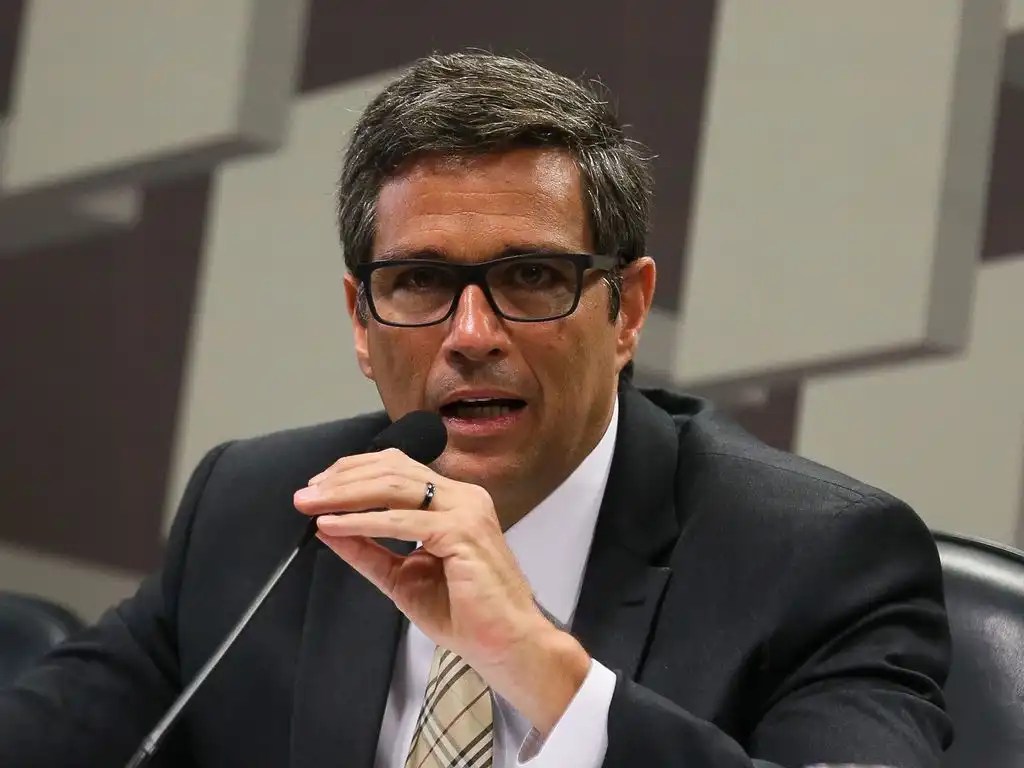
By Brazil Stock Guide – Brazil’s Central Bank sent at least 18 formal warning letters to Banco Master during the presidency of Roberto Campos Neto, citing governance, capital and risk-management failures, but stopped short of taking enforcement action, according to documents reviewed by piauí magazine.
Banco Master was authorized to operate in 2019, shortly after Campos Neto took office, following years of failed licensing attempts. Once approved, the bank expanded rapidly by issuing high-yield certificates of deposit (CDBs), in some cases offering returns of up to 140% of the CDI benchmark.
The bank’s outstanding CDB balance rose from R$2.5 billion in 2019 to around R$40 billion by 2024. Supervisors identified recurring mismatches between assets, provisions and liquidity, as well as deficiencies in internal controls, but limited their response to written warnings.
Despite mounting concerns, Banco Master was allowed to acquire smaller institutions in 2024, including Voiter, Letsbank and Will Bank. After the transactions, the entities began issuing CDBs under Master’s control, marketed with reference to Brazil’s deposit insurance fund.
By March 2024, the Central Bank acknowledged liquidity stress at the bank. Internal documents from November later cited regulatory breaches and the submission of incorrect information. Weeks before leaving office, Campos Neto granted the bank a four-month deadline to rebalance assets and liabilities or face liquidation.
At the time, Banco Master lacked liquidity to cover nearly R$50 billion in CDB and interbank obligations, including about R$12 billion maturing in 2025.
After stepping down from the Central Bank in December 2024, Campos Neto joined Nubank as a senior executive. Nubank is facing legal scrutiny related to the distribution of Banco Master CDBs.
Banco Master’s controlling shareholder, Daniel Vorcaro, was arrested in late 2025 but later released and is responding to investigations while free. The case has become one of Brazil’s most significant financial scandals, exposing gaps in supervisory enforcement and affecting more than one million investors.