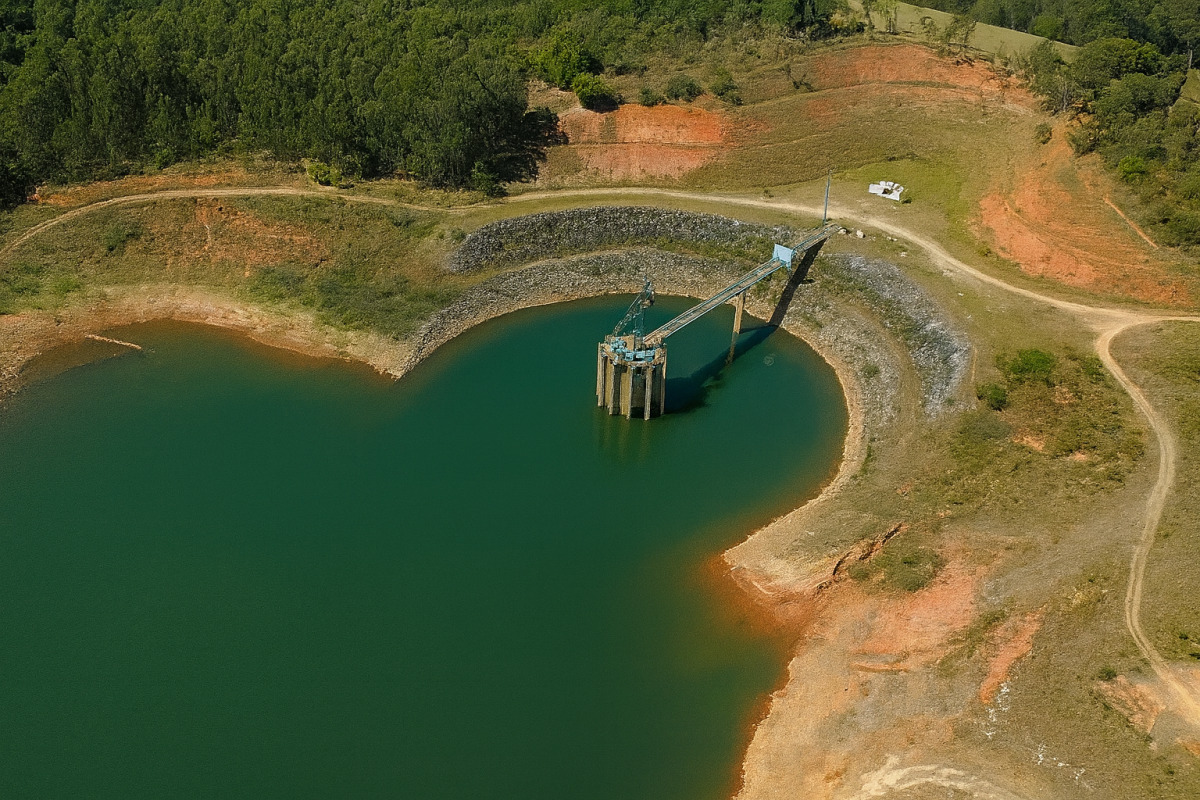
By Brazil Stock Guide – The Cantareira System fell to 19.7% of usable capacity on Tuesday, Dec. 9, breaching the critical 20% line that opens the door to Brazil’s most severe water-restriction regime for São Paulo. If the level remains below that mark at the turn of the year, the system will enter Faixa 5 – Special, triggering the sharpest cut in water withdrawals since the current rules were adopted. At that stage, the limit drops to 15.5 cubic meters per second (547 cubic feet per second), less than half the normal ceiling.
Stress Spreads
The strain now runs across the network. The Integrated Metropolitan System is operating at 24.6%, or 477.56 hectometers cubed. The Alto Tietê System has slipped to 18.0% (101.04 hm³), below Cantareira itself. Guarapiranga stands at 44.3%, Cotia at 36.1%, Rio Claro at 23.9%, Rio Grande at 54.2%, and São Lourenço at 42.2%. December rain has failed to reverse the slide. Cantareira logged 211.1 millimeters (8.31 inches) this month, close to historical averages. Still, storage keeps falling.
If Faixa 5 is activated in January, Sabesp (B3: SBSP3) may offset part of the cut with up to 8.5 m³/s from the Jaguari reservoir, subject to regulatory approval. Even so, supply constraints would tighten sharply for a system that serves nearly nine million people and stabilizes flows to the Piracicaba, Capivari and Jundiaí basins. After years of weak recharge and rising demand, São Paulo is now staring at 2026 under its toughest water regime of the last decade.