By Brazil Stock Guide — Lucas Kallas, the controlling shareholder of Cedro Participações, had been carrying out a portfolio reorganization in recent months to concentrate capital, management and execution on mining and integrated logistics when he began facing a new legal chapter tied to old facts.
Cedro recently announced the sale of its 33.33% stake in Latache Capital and its 8% holding in Biomm (BIOM3), in moves presented by the company as part of a strategy to reduce financial investments outside its operational core and reinforce its focus on iron ore, proprietary infrastructure and export logistics.
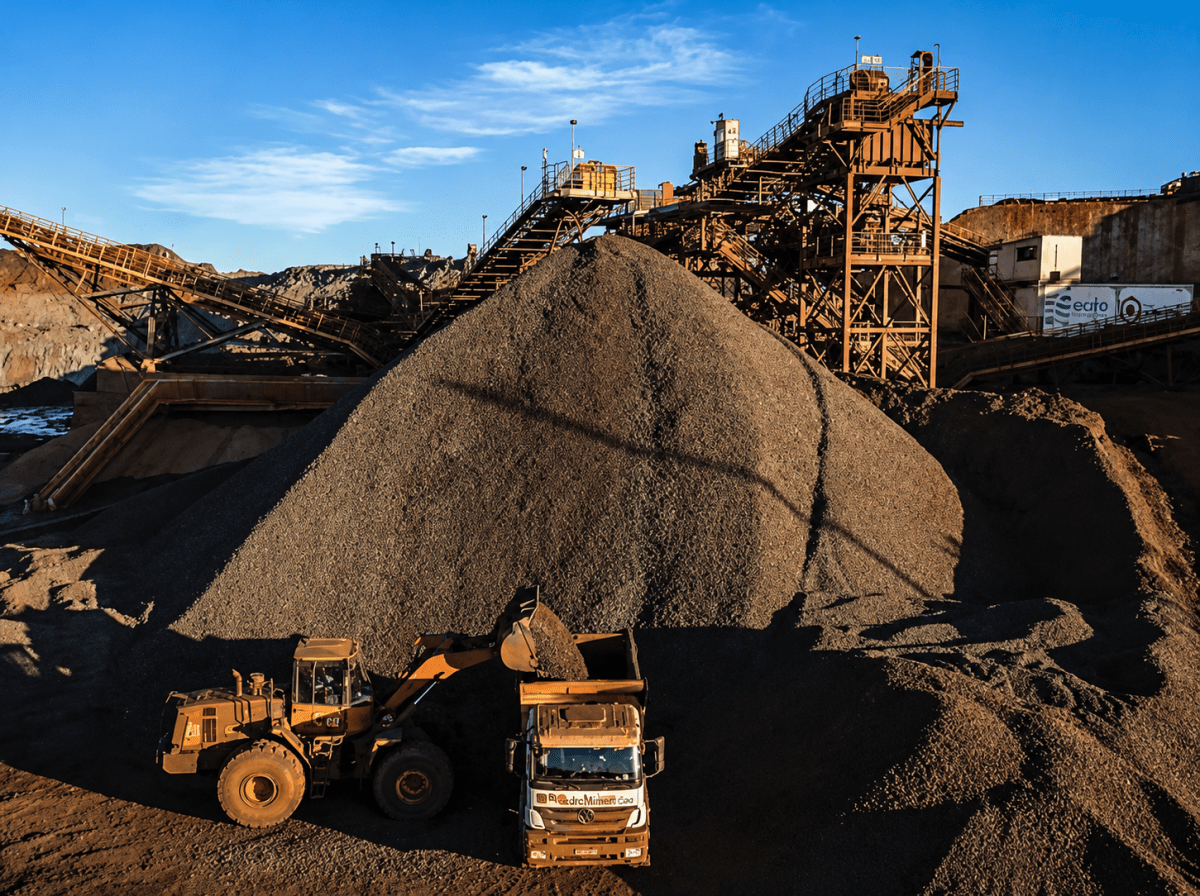
Cedro’s industrial plan calls for about R$5 billion in investments through 2030 in projects including the expansion of its mine in Mariana, in Minas Gerais; the construction of Porto do Meio, in Itaguaí, Rio de Janeiro; and the Shortline railway in the Serra Azul region. The company aims to reach 20 million tons of annual iron ore output by the end of the decade, with a focus on pellet feed, a higher-quality input used by global steelmakers in lower-emission production processes.
That repositioning, however, is now sharing the spotlight with Kallas’s indictment by the Brazilian Federal Police in an investigation into suspected corruption and alleged bribe payments. The case, which has also drawn attention to officials at Brazil’s National Mining Agency, or ANM, still depends on a decision by prosecutors on whether to file charges in court.
The allegation of illegal mining had already been dismissed by the courts in a previous investigation, according to Kallas’s defense. The point raised by the Federal Police involves suspicion of an improper payment to a former official at Minas Gerais’s state environmental agency.
The defense disputes any connection between the facts and says it is “absurd to link the donation of a Cruzeiro Esporte Clube supporter membership in 2020, worth no more than R$8,000, to an alleged favor that supposedly occurred in 2015.”
In Minas Gerais, the relationship between major local entrepreneurs and football clubs is often more organic than in other business centers. Atlético Mineiro and Cruzeiro have both had, in their recent structures, direct or indirect involvement from prominent local business figures — including Rubens Menin, founder of MRV, at Atlético, and Pedro Lourenço, controlling shareholder of Supermercados BH, at Cruzeiro. Kallas is also a Cruzeiro benefactor and long-time supporter. For the defense, that context helps weaken the interpretation that a contribution to the club, on its own, would indicate an improper quid pro quo.
In a statement, Kallas’s defense, represented by Grimaldi & Rodrigues Advogados, said it has “full confidence that Lucas Kallas’s innocence will be demonstrated” and argued that the indictment “reheats old facts that were already investigated and dismissed by the courts.” According to the defense, Kallas has had no relationship with the company under investigation — Empabra — since 2017 and, before that, had only been an investor. Cedro was founded in 2019.
The main question for investors, partners and creditors is whether the episode could affect the execution of Cedro’s mining plan. So far, the business thesis presented by the company has been one of simplification: exiting financial stakes and non-strategic assets to concentrate resources on an integrated industrial platform spanning mine, railway and port.
The exits from Latache and Biomm helped reinforce that narrative. At Latache, a Brazilian special situations investment firm founded in 2015 by Renato Azevedo, Cedro’s stake was acquired by the remaining partners, who returned to owning 100% of the company. At Biomm, the sale followed the same logic of reallocating capital away from sectors outside the holding company’s operational core.
For Cedro, the challenge now is not only legal. It is also one of credibility. A R$5 billion mining and logistics plan requires heavy capital, licensing, operational execution and lender confidence. According to the defense, the indictment does not directly affect the industrial thesis presented by the company, but it does require Kallas to defend himself and persuade partners that the investigated past will not interfere with the execution of Cedro’s new phase.
The company, meanwhile, continues to position its next stage as a concentrated bet on high-quality iron ore and proprietary export infrastructure.