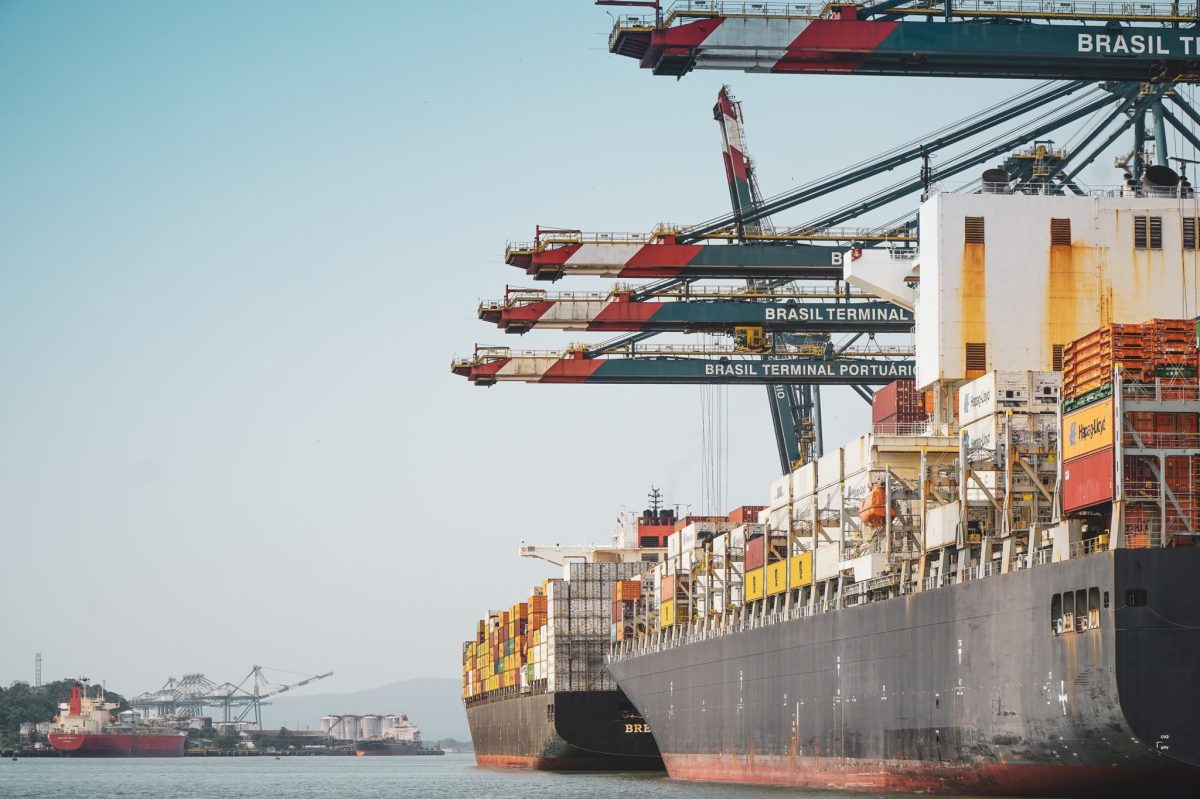
By Brazil Stock Guide – Santos Brasil Participações SA (B3: STBP3) said the global joint venture announced by its controlling shareholder, the French shipping group CMA CGM, with infrastructure investor Stonepeak does not change the company’s ownership structure and has no immediate impact on operations or contracts.
The agreement provides for the creation of United Ports LLC, an international joint venture focused on investing in port terminals operated by CMA CGM worldwide, including assets run by Santos Brasil in Brazil. Under the disclosed structure, CMA CGM will hold a 75% stake and retain operational control, while Stonepeak will own the remaining 25% as a minority partner.
Santos Brasil said it is not a direct party to the transaction and that any future developments involving the joint venture or the acquisition of stakes in port assets will depend on regulatory approvals. The company added that its governance arrangements and operational structure remain unchanged.
The clarification comes as Brazil debates the role of global shipping lines in strategic port infrastructure, amid broader concerns over market concentration and vertical integration.
Tecon Santos 10 at the center
The backdrop is the planned concession auction for Tecon Santos 10, a megaterminal at the Port of Santos, Brazil’s largest container gateway. The port handles roughly one-third of the country’s containerized foreign trade and serves regions accounting for more than half of national gross domestic product.
Designed as a large-scale greenfield project, Tecon Santos 10 is expected to have annual capacity of about 3.25 million TEUs and require investments of R$ 6.45 billion, aimed at easing structural bottlenecks at a port already operating close to its logistical limits.
The federal government plans to launch the auction in the coming months after incorporating recommendations from the Tribunal de Contas da União, the country’s federal audit court, which oversees the legality and economic soundness of major public concessions. The watchdog has pushed for safeguards to limit excessive market concentration and for the inclusion of a minimum concession fee of R$ 500 million.
Whether global shipping lines should be allowed to bid directly for the terminal has emerged as the most contentious issue in the regulatory debate, pitting the government’s desire to attract capital and scale against concerns over vertical integration and market power at Brazil’s most strategic port.
Against that backdrop, CMA CGM’s decision to place global port assets into a dedicated joint venture has added a new layer of scrutiny to the discussion over control, competition and regulatory oversight in Santos.