By Brazil Stock Guide – Cosan S.A. is preparing a secondary share offering of its gas subsidiary Compass Gás e Energia S.A., a move that underscores the group’s urgent effort to unlock cash and stabilize its balance sheet after a period of financial strain.
The proposed transaction would involve the sale of existing Compass shares held by Cosan, with placement efforts targeting investors in Brazil and abroad. The final size of the offering and pricing will be determined through a bookbuilding process with institutional investors.
Compass simultaneously requested approval to migrate its listing to Novo Mercado, the highest corporate governance segment of the B3 — a step typically associated with companies preparing for broader capital market access.
Banks prepare the exit
Cosan has assembled a large syndicate of banks to structure the deal, including BTG Pactual, Bank of America, Citigroup, JPMorgan, Santander Brasil, Itaú BBA, Bradesco BBI and XP Investimentos.
Their mandate is to gauge investor appetite and structure what could become one of the most significant equity transactions in Brazil’s gas infrastructure sector this year.
But the timing also reveals the pressure facing Cosan’s holding structure.
Cash injection before the sale
The share offering initiative comes shortly after Cosan secured a R$ 10 billion capital injection from funds managed by BTG Pactual and Perfin, a deal widely interpreted by market participants as a crucial step to reinforce liquidity and ease leverage concerns at the holding-company level.
Cosan has spent the past few years building a sprawling portfolio across energy, logistics and infrastructure. That expansion, however, came with rising debt and growing investor scrutiny over the group’s capital structure.
Selling part of Compass could therefore serve a dual purpose: bringing external investors into the gas platform while generating liquidity for the parent company.
Strategic asset under pressure
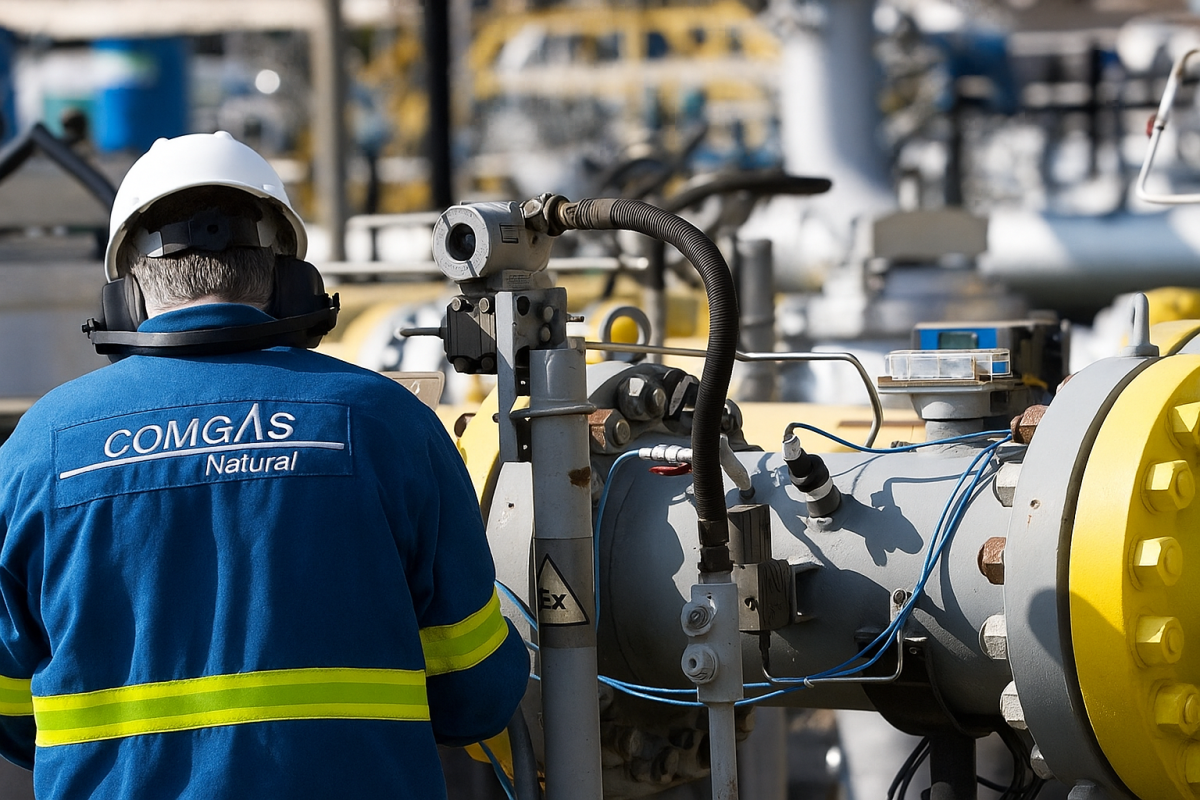
Compass has become one of Cosan’s most important assets as Brazil’s natural gas market gradually opens to competition. The company operates across distribution, trading and infrastructure and has positioned itself as a key platform in the country’s evolving gas ecosystem.
Still, the attempted monetization also highlights the broader challenge facing the conglomerate: transforming a complex web of assets into cash-generating businesses that can support the holding company’s financial commitments.
For Cosan, the Compass transaction is not just another capital markets operation. It is also a test of whether investors remain willing to finance the group’s ambitious energy strategy.
The offering remains subject to regulatory approval from the Comissão de Valores Mobiliários and to the approval of the Novo Mercado migration by B3.