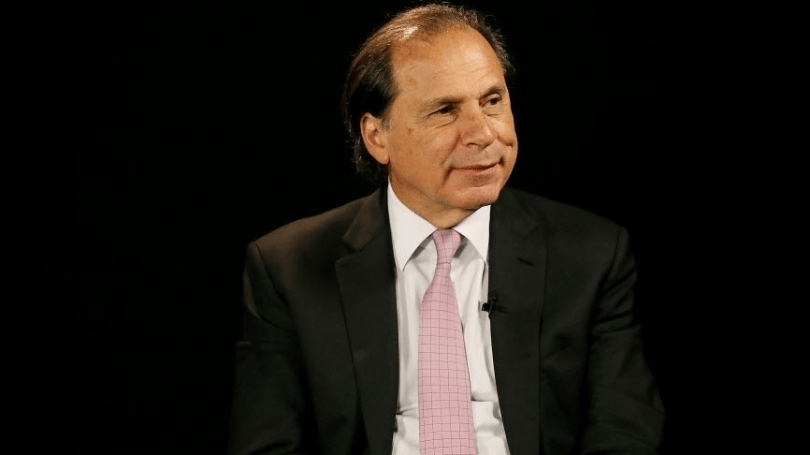
By Brazil Stock Guide – Benjamin Steinbruch, the controlling shareholder of Companhia Siderúrgica Nacional, said the group’s decision to accelerate asset sales and sharply reduce leverage reflects a pragmatic response to structurally high interest rates in Brazil — an environment he argues penalizes productive investment while rewarding financial rent-seeking.
Speaking during the company’s strategic update call, Steinbruch described the current macroeconomic backdrop as a “rentier moment,” in which high real rates favor capital allocation to financial assets rather than to industry, employment and long-term growth. CSN, he said, waited longer than it should have for a normalization in borrowing costs, but ultimately concluded that further delay would destroy value.
“The issue is not asset quality,” Steinbruch said, stressing that CSN’s operations are expected to show improving margins and profitability in 2026, reflecting operational adjustments made over the past two years. The decision to divest assets, he argued, is not driven by weakness, but by the need to reorganize the group’s capital structure under adverse financial conditions.
The group plans to reduce net debt by roughly R$18 billion, equivalent to about half of its current leverage, using only a limited portion of the portfolio accumulated over more than three decades. According to Steinbruch, the move should trigger a meaningful re-pricing of both equity and debt, lowering the company’s cost of capital and restoring financial flexibility.
Steinbruch reinforced that CSN’s strategic priorities remain infrastructure, mining and energy, businesses he described as combining high margins with resilient cash generation. In logistics and infrastructure, he cited operating margins of up to 60% in rail assets and around 50% in ports, supported by long-term demand and assets already under execution. In mining, he highlighted the growth potential embedded in Casa de Pedra’s reserves and in expansion projects already within the company.
Steelmaking, by contrast, was addressed more cautiously. Steinbruch said the segment requires deep technological modernization, both to remain competitive and to meet environmental requirements. In his view, this transformation is unlikely to be achieved relying solely on domestic capital, opening the door to potential international partnerships.
In closing, Steinbruch said CSN chose to act in a “transparent, objective and definitive” manner to resolve its capital imbalance, adapting to Brazil’s financial reality rather than waiting for macroeconomic relief. The deleveraging, he said, is a prerequisite for sustainable investment, lower risk and a return to long-term growth.