“Tell Them I Am the Anarchy of the System”.
That is how Brazilian banker Daniel Vorcaro, arrested this week for the second time in connection with the collapse of Banco Master, described himself in a message sent to his then-girlfriend, influencer and entrepreneur Martha Graeff, on a night in March 2025.
At that moment, Vorcaro believed he was confronting the financial establishment of São Paulo.
A few months later, his bank would be in ruins.
The line appears in a set of intimate conversations recovered by Brazil’s Federal Police from Vorcaro’s cellphone as part of the investigation into Banco Master — a financial institution that expanded rapidly by offering unusually high-yield investments and was ultimately liquidated by the Central Bank of Brazil in November amid allegations of fraud and corruption.
In the messages, reviewed by Brazil Stock Guide, Vorcaro describes the behind-the-scenes turmoil spreading across Faria Lima Avenue, São Paulo’s main financial district.
That afternoon he told Graeff he had stopped by the buildings of XP and BTG Pactual, two of Brazil’s largest financial firms.
He said he could barely walk through the corridors.
“I went to XP and BTG… I couldn’t even walk through the lobby. People stopping me. Surreal,” he wrote.
According to him, the Banco Master saga had become the dominant topic among bankers, traders and journalists.
“Never in Brazil’s financial market history has a subject created so much buzz.”
Some congratulated him. Others asked for pictures.
One person, he told Graeff, offered an unusual comparison.
“One guy said: you’re the badass pirate against the polka-dot underwear guys.”
It was in that moment that Vorcaro summed up his own reading of the situation.
“Tell them I am the anarchy of the system.”
An outsider in banking
Vorcaro, 42, was widely seen in the market as an outsider in Brazil’s financial system.
The son of a real-estate broker from Belo Horizonte, where he was born, he did not come from Brazil’s traditional banking elite.
His rise came after transforming a small institution called Banco Máxima into Banco Master, which grew rapidly by offering high-yield financial products to investors seeking returns far above those offered by major banks.
At the same time, he built a wide network of contacts with businessmen and politicians.
The woman in the messages
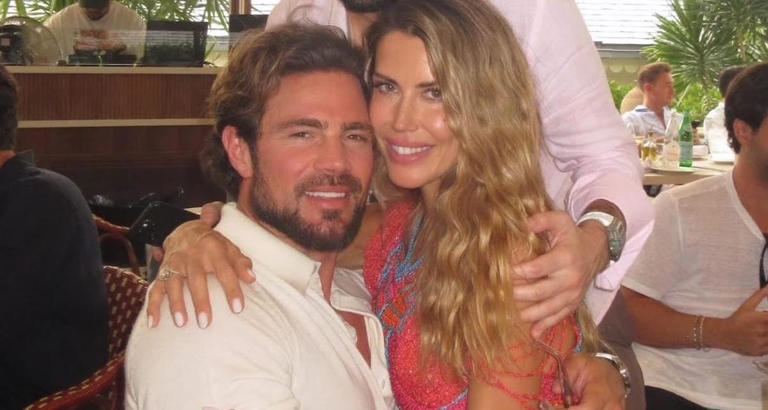
The recipient of many of the messages was Martha Graeff, an entrepreneur and digital influencer who had been in a relationship with Vorcaro since 2023.
Graeff, 40, was born in southern Brazil but has lived in Miami for about two decades.
She built a career as a model, wellness entrepreneur and social media personality, and has also worked as a journalist.
In the conversations reviewed by investigators, Graeff appears as a frequent confidant as Vorcaro recounts pressure from the market, meetings with executives and the growing public attention surrounding the bank.
The bank that grew too fast
Banco Master became one of the most talked-about institutions in Brazil’s financial sector.
The bank expanded rapidly by offering bank deposit certificates, known as CDBs, with returns far higher than those typically offered by large banks.
To investors, the deposits appeared to offer a rare combination: high returns and limited risk.
That is because they were protected by Brazil’s Credit Guarantee Fund (FGC), a mechanism similar to deposit insurance in other countries that covers up to roughly R$250,000 per investor if a bank fails.
Critics say the system allowed smaller institutions to raise funds aggressively while part of the risk was effectively shared across the financial system.
The regulator’s scrutiny
As Banco Master grew, the Central Bank of Brazil, which supervises the financial system, began examining its operations more closely.
Investigations soon turned to Vorcaro’s relationship with regulatory authorities.
Prosecutors suspect the banker may have co-opted officials inside the Central Bank, including a former director responsible for bank supervision. According to investigators, informal payments may have been made to facilitate the approval of certain bank operations.
These allegations are part of a broader investigation by Brazil’s Federal Police into potential financial crimes and corruption involving bank executives and public officials.
The case took another turn recently.
Vorcaro was arrested again on March 4, the second time since the bank’s liquidation.
Rivalries on Faria Lima
In messages exchanged with Graeff in April, Vorcaro also commented on tensions with other bankers.
Among them was André Esteves, the powerful chairman of BTG Pactual.
When Graeff asked about him, Vorcaro responded bluntly.
“He’s gone crazy,” he wrote.
According to his account, rumors and accusations were circulating throughout the market.
“Someone said I talked badly about him. Another said I said something else.”
At one point, Vorcaro described the exchange as childish.
“It turned into two teenagers.”
Despite the pressure, he tried to sound confident.
“Now love, as a journalist friend of mine says… just hold the line,” he wrote.
He believed the storm would pass.
“If I hold out for two weeks, the media pressure will be over.”
But even he recognized that the situation was escalating.
“This is everywhere now… Jornal Nacional (Brazil’s main TV news program) and everything.”
A meeting between bankers
Days later, Vorcaro told Graeff about a meeting with Esteves.
He said he brought a third person along to witness the conversation.
“You won’t believe what he said today. I brought Augusto (Lima, his partner) so I’d have a witness,” he wrote, referring to one of his partners.
According to Vorcaro’s account, Esteves told him:
“André said he was the greatest banker in the world. That he was like God appearing in our lives. That we should thank God for his proposal. And forget the BRB.”
The BRB, a bank controlled by the government of Brazil’s Federal District, had been considered a potential buyer of Banco Master.
The deal was eventually blocked by the Central Bank.
In the same exchange, Vorcaro said he agreed to the meeting after being encouraged to hear BTG’s proposal.
“I went because the Central Bank asked me to,” he wrote.
“He gets inside the heads of the guys at the Central Bank.”
The system reacts
Three days later, the tone of the messages shifted.
Vorcaro wrote that the attacks had eased and that Esteves had lowered his guard.
In the conversations reviewed by investigators, no further direct confrontations between the two bankers appear after that point.
Weeks later, the conflict gave way to a pragmatic outcome.
On May 27, 2025, BTG Pactual announced it would acquire certain assets linked to Vorcaro, including equity stakes, real estate and credit rights.
The deal was estimated at around R$1.5 billion.
By then, however, Banco Master was already facing mounting financial problems.
BTG denied any interest in buying the bank itself, saying it was evaluating only specific assets.
The seized material
Documents revealed so far by investigators include around 200 files, including spreadsheets, contracts — some password-protected — photographs and email exchanges.
Authorities also identified 47 phone contacts, many belonging to powerful figures: congressional leaders, Supreme Court justices, ministers in President Luiz Inácio Lula da Silva’s government, prominent businessmen, Central Bank officials and influential political brokers from Brazil’s so-called Centrão bloc.
People familiar with the investigation say the material disclosed so far likely represents only a fraction of what authorities seized, raising questions about whether the leak itself may have been selective.
The ending
Months earlier, in one of those private messages, Vorcaro had summarized his view of the crisis in a single sentence.
“Tell them I am the anarchy of the system.”
Months later, Banco Master would leave a hole estimated at R$50 billion in Brazil’s financial system — part of it covered by the Credit Guarantee Fund, financed by the banks themselves.
In the end, the “anarchy of the system” was paid for by the system itself.