By Brazil Stock Guide – Brazil’s fuel market has entered a gray zone, where pricing dynamics among distributors are raising not only regulatory concerns but also deeper economic questions. Reports from fuel station operators point to seemingly inconsistent signals — product shortages, sharp price swings and widening spreads versus smaller distributors. At the same time, authorities are investigating potential distortions between costs and selling prices.
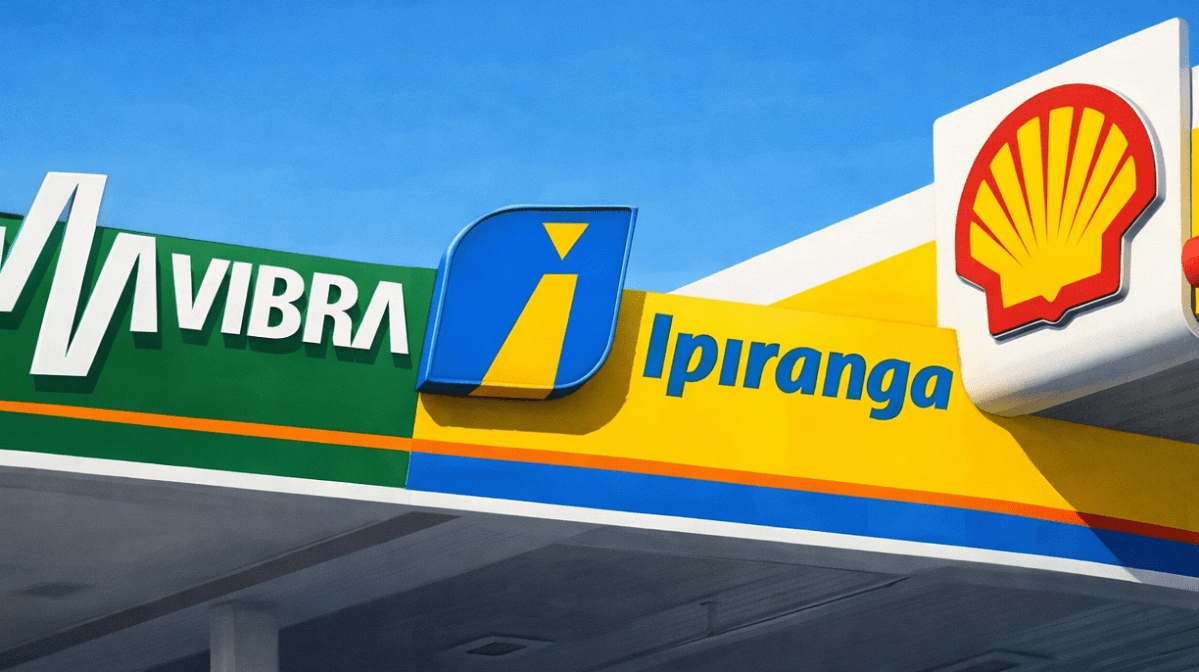
The most emblematic case involves Vibra Energia, the country’s largest fuel distributor and former Petrobras unit, which was fined after raising diesel prices by about R$ 1.06 per liter while its cost increased just R$ 0.03 over the same period — a gap of up to 35 times, according to regulators. The episode, first reported by Folha de S. Paulo, reinforces the perception of a disconnect between cost and pricing, particularly amid heightened global volatility, with oil jumping from around $60 to the $100–110 range in March.
Arbitrage signals
Against this backdrop, the hypothesis of strategic behavior among distributors is gaining traction. Market participants increasingly believe that inventory and pricing decisions are being driven not only by current costs but also by expectations of future price adjustments by Petrobras, the dominant domestic supplier. In practice, anticipating higher prices may incentivize distributors to hold back supply — tightening availability — while positioning to capture higher margins ahead.
These dynamics help explain conflicting signals: localized shortages, occasional price cuts — possibly following regulatory pressure — and persistent spreads relative to smaller players. In major cities, for instance, price differences of R$ 0.30–0.35 per liter have been reported between large distributors and regional competitors, a level difficult to justify solely by logistics or scale. In a high-volume, low-margin business, moves of this magnitude can translate into meaningful short-term gross margin expansion if sustained across a few inventory cycles.
However, the behavior is unfolding within a broader supply imbalance. Brazil relies on imports for roughly 25% to 30% of its diesel consumption, but the recent surge in international prices, combined with domestic pricing dynamics, has reduced the incentive to import. According to market estimates, Petrobras diesel is currently about 60% cheaper than imported fuel — a gap of roughly R$ 2.20 per liter. As a result, diesel imports have dropped sharply in March, increasing the risk of supply constraints and reinforcing pricing power in the downstream segment.
Regulation vs. market
Distributors argue that pricing is inherently complex and influenced by multiple factors, including imports, exchange rates, logistics and regional conditions. They also contend that simplified analyses fail to capture the full cost structure, particularly in a volatile environment.
Even so, the timing of recent price moves — combined with rising political pressure and coordinated action from regulators — suggests the issue has moved beyond technical debate into the institutional arena. In the near term, distributors may benefit from stronger margins, while consumers and independent retailers bear higher costs. For investors, the setup implies a tactical margin upside in the short run, offset by asymmetric downside risk if regulatory intervention intensifies or Petrobras moves to realign domestic prices more aggressively.
Structural risk
At a deeper level, the issue reflects a structural shift. The divestment of Petrobras from fuel distribution created a more competitive but also less transparent market. Former Finance Minister Fernando Haddad, now a candidate for governor of São Paulo, criticized the sale of BR Distribuidora, arguing that Brazil lost a key pricing benchmark that once helped anchor the market. Without a dominant player with a clear pricing policy, the system now relies on multiple private agents optimizing margins in an environment of imperfect information.
Margin behavior in the coming weeks, potential regulatory responses and Petrobras pricing decisions will be critical in determining whether current dynamics reflect a temporary distortion driven by global volatility or the emergence of a new pricing regime in Brazil’s downstream fuel market — one potentially defined by higher volatility, tighter supply and increased regulatory intervention.