
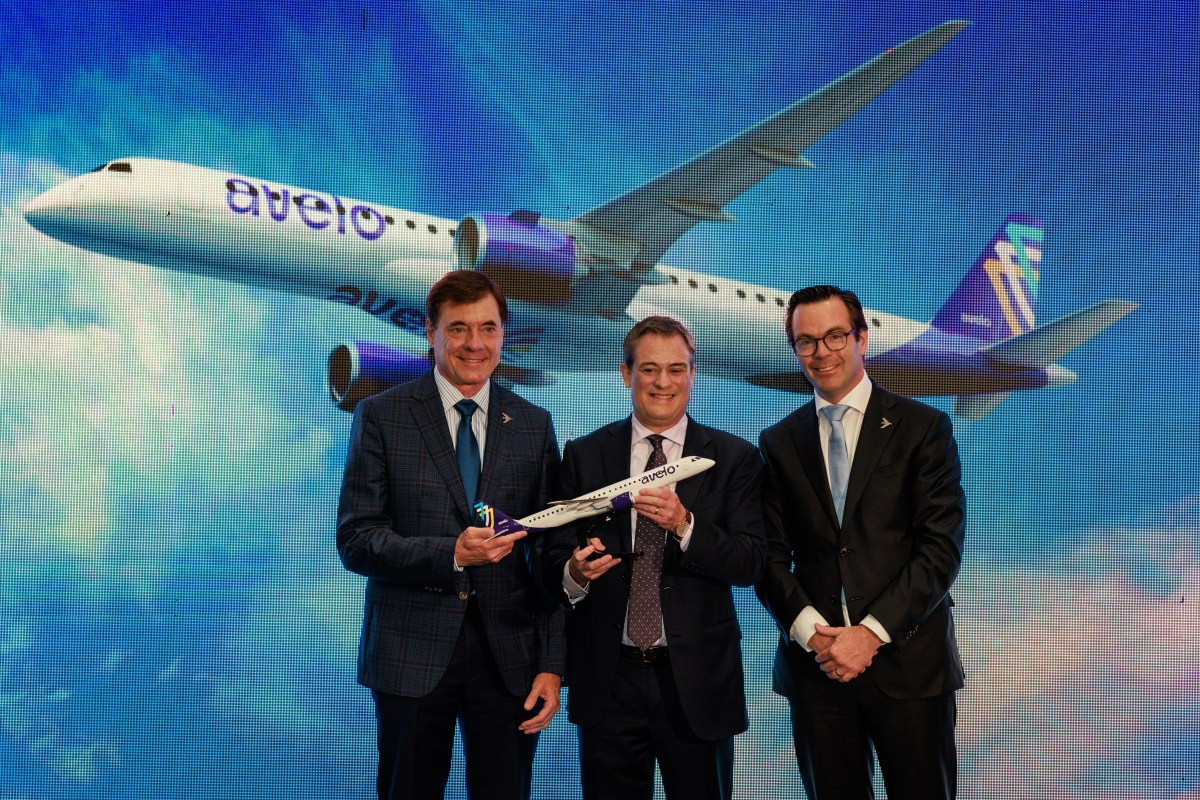
By Brazil Stock Guide – Embraer (B3: EMBR3; NYSE: ERJ) announced on Wednesday (Sept. 10) a deal worth up to $4.4 billion with Avelo Airlines, marking the U.S. debut of the E195-E2. The announcement came just one day after JetBlue (Nasdaq: JBLU) retired its last E190, ending nearly two decades of operations with Embraer aircraft.
The deal includes 50 firm orders for delivery from 2027, plus purchase rights for 50 more. Houston-based Avelo will become the first U.S. carrier to operate Embraer’s largest commercial jet.
“It’s a game-changer for airlines seeking profitable growth and better passenger experience,” said Arjan Meijer, CEO of Embraer Commercial Aviation. Avelo founder and CEO Andrew Levy added the aircraft’s “operational advantages and comfortable layout will be key to expanding our network.”
Embraer highlights the E195-E2’s fuel efficiency, low noise levels and short-field takeoff capability, which broaden network reach and allow access to constrained airports.
The contrast is clear. While Avelo is betting on Embraer jets to diversify beyond its 22 Boeing 737NGs, JetBlue ended its long E190 run and completed a fleet shift to Airbus A220s, with 52 of 100 already delivered. The farewell flight between New York’s JFK and Boston on Sept. 9 marked the end of a cycle that began in 2005.
For Embraer, which had flagged the Avelo deal as a milestone, the win represents a long-term bet on its next-generation jet and reinforces its ability to compete in a market dominated by Airbus and Boeing.
Tariff fight in Washington
Speaking in Washington, Meijer urged the U.S. to scrap the 10% tariff imposed under Donald Trump’s trade policy. He warned the cost is already being passed on to Embraer’s customers.
“Tariffs on aviation should be zero. Any duty only distorts the market and ultimately falls on passengers,” he said.
Levy also backed the call. “Even under the current regime it wouldn’t reach 10%, because much of this aircraft’s components are produced in the U.S.,” he said.
Embraer argues that its U.S. supply chain and strong footprint in regional aviation — with no direct substitutes — strengthen the case for zero tariffs.





