
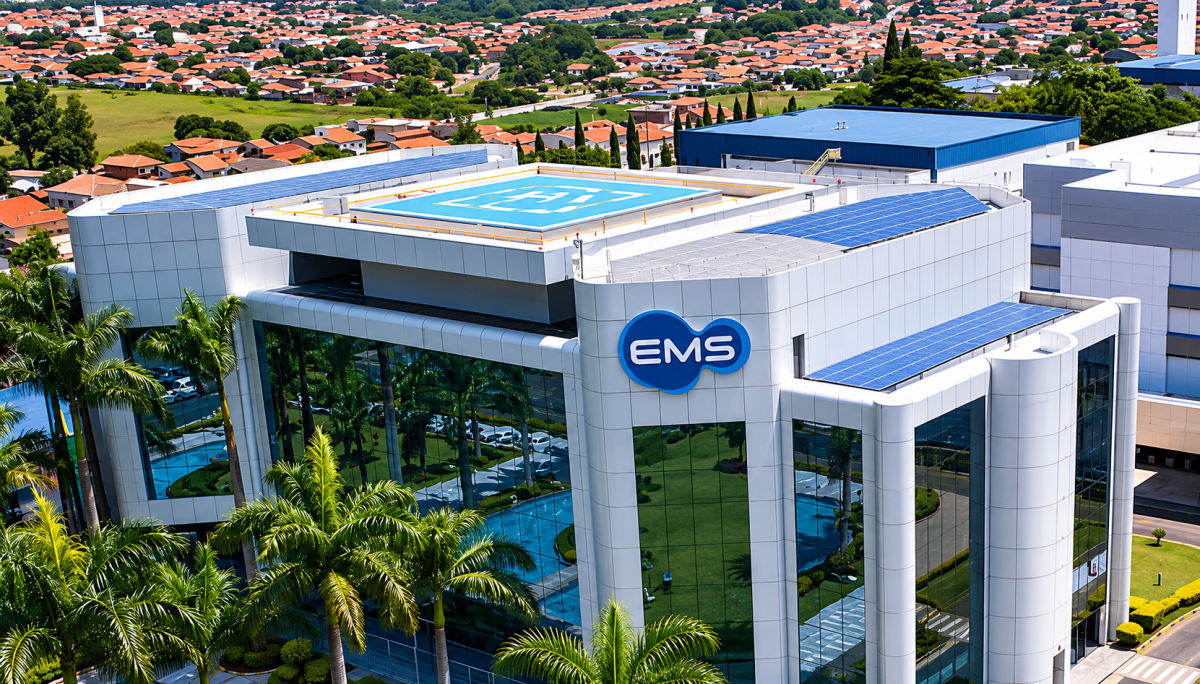
By Brazil Stock Guide – Brazil’s health regulator Anvisa approved Ozivy, from EMS, the country’s first Brazilian-made pen with synthetic semaglutide analogous to Ozempic, in a decision that opens a new phase in the domestic market for GLP-1 medicines, popularly known as weight-loss pens. The approval was formalized in Brazil’s Official Gazette on Tuesday, May 26.
The product uses the same active ingredient as Ozempic, whose patent expired on March 20, but it was not approved as a generic drug. According to the regulatory filing, Ozivy was classified as a new drug, with a new analogue active pharmaceutical ingredient, under an abbreviated development pathway. The distinction matters: Anvisa’s approved indication is for adults with insufficiently controlled type 2 diabetes, as an adjunct to diet and exercise.
Brazilian pen
The approval puts EMS in the race for one of the most contested pharmaceutical markets in the world. Semaglutide has become one of the best-known names in global healthcare because of its use in diabetes, rising demand for weight management and recurring supply shortages in several markets.
In Brazil, Ozivy may be used as monotherapy when metformin is considered inappropriate due to intolerance or contraindications, or in combination with other medicines for diabetes. Although the term “weight-loss pen” has become widely used to describe GLP-1 drugs, Ozivy’s formal approval is not for obesity, but for type 2 diabetes.
Local industry

The approval also gives new weight to an argument that Carlos Sanchez, EMS’s controlling shareholder, had been making publicly: that Brazil should treat local pharmaceutical innovation as a strategic asset, not merely as another request in the regulatory queue. “We are one of the few companies in the world that goes from raw material to molecule development to the finished product,” Sanchez said over the weekend at the Esfera Forum in Guarujá, defending the company’s industrial capabilities.
The comment helps frame Ozivy as more than a commercial challenge to Ozempic. For EMS, the approval is also a showcase of vertical integration — from raw material to final product — in a segment dominated by multinational companies and marked by explosive global demand.
Regulatory queue
Sanchez also made a direct criticism of Anvisa’s review model for products developed in Brazil. “Today, when you submit a product to Anvisa, I have no advantage for having developed it in Brazil. A product from abroad arrives, is submitted, and it has the same review timeline as mine. And sometimes, if it is filed before mine, it is approved before mine,” he said.
The criticism gains relevance precisely because Ozivy’s approval shows that Brazil has managed to develop a synthetic analogue of semaglutide, but still within a regulatory logic that, according to Sanchez, does not distinguish local innovation from imported products. Anvisa said Ozivy went through a technical process to prove efficacy, safety and quality, and that five other synthetic semaglutide medicines and one biological semaglutide product remain under review, in addition to other applications still in the queue.
Not a generic
The most sensitive regulatory point is that Ozivy is not a traditional generic version of Ozempic. Under Brazilian rules, there are no generics for biological products in the same way there are for ordinary synthetic drugs. Anvisa classified the product as a synthetic analogue of a medicine that was originally biological.
That technical difference matters for doctors, patients and investors. The evaluation of synthetic semaglutide analogues is considered complex because these products combine challenges typical of synthetic drugs, such as control of chemical impurities, with risks associated with biological medicines, including immunogenicity and aggregate formation.
Price test
Ozivy will be sold as a 1.34 mg/mL subcutaneous injectable solution in a pre-filled, multidose and disposable application system. The Official Gazette listed four presentations, with 1.5 mL or 3 mL cartridges, accompanied by one or two application pens and different numbers of needles. The presentations have a 24-month shelf life.
There is also a relevant storage difference compared with Ozempic. Ozivy must be kept refrigerated between 2°C and 8°C both before and after treatment begins. Ozempic requires refrigeration before use, but can be kept at temperatures of up to 30°C for as long as six weeks after patients start using it.
Regulatory approval, however, does not mean an immediate arrival in pharmacies. The medicine still depends on a maximum price definition by CMED, Brazil’s drug market regulation chamber. After that, EMS will decide when to launch the product commercially.
For Ozivy to become available through Brazil’s public health system, it would still need to be reviewed and recommended by Conitec and approved by the Health Ministry. Not every medicine registered by Anvisa goes through that process or is incorporated into the public system.
Still, the approval is symbolic. After years in which semaglutide became synonymous with explosive demand, high prices and the dominance of global brands, Brazil now has its first national pen analogous to Ozempic. The race now moves from regulatory approval to the terrain that matters most: price, access and delivery capacity.