
By Brazil Stock Guide – Companhia Siderúrgica Nacional (B3: CSN3) had its long-term issuer default ratings cut by Fitch Ratings to ‘BB-’ from ‘BB’, with the national scale rating lowered to ‘AA-(bra)’ from ‘AAA(bra)’, and all ratings placed on Negative Watch. The move underscores the agency’s concern with CSN’s persistently high leverage, recurring negative free cash flow and elevated refinancing risks at the holding level, while removing a prior methodological observation.
Fitch said gross and net leverage remain the key constraints on the credit profile. The agency now projects gross leverage/EBITDA of 5.9x in 2025 and 5.7x in 2026, versus 6.7x in 2024, with net leverage at 4.4x and 4.6x, respectively. Interest coverage sits in ‘CCC’ territory (around 1.25x EBITDA), reflecting heavy interest expense. Excluding mining, leverage spikes sharply, with gross and net leverage of 15.5x and 13.7x projected for 2025, highlighting the holding’s refinancing vulnerability amid about R$48 billion of debt.
The Negative Watch hinges on execution risk around a delevarage plan anchored in asset sales. Fitch’s base case does not assume proceeds, but CSN aims to sell a majority stake in cement and a significant minority in infrastructure, targeting R$15–18 billion in cash, with contracts expected in 2H26. In a hypothetical sale of 60% of cement and 49% of infrastructure, Fitch estimates R$15.6 billion raised—about 27% of total debt—cutting pro-forma gross and net debt to roughly R$40 billion and R$14.5 billion. The group already monetized its stake in MRS Logística in December 2025, generating R$3.35 billion for the holding.
Governance weighs on the outcome. Fitch said clearer evidence of shareholder commitment to a stronger credit profile is essential under its updated governance methodology, which can impose a one-notch discount for key-person risk, risk appetite, complexity and contagion. CSN’s governance is assessed as “Good”, acknowledging high debt-service priority, but the agency flagged the importance of credible debt reduction.
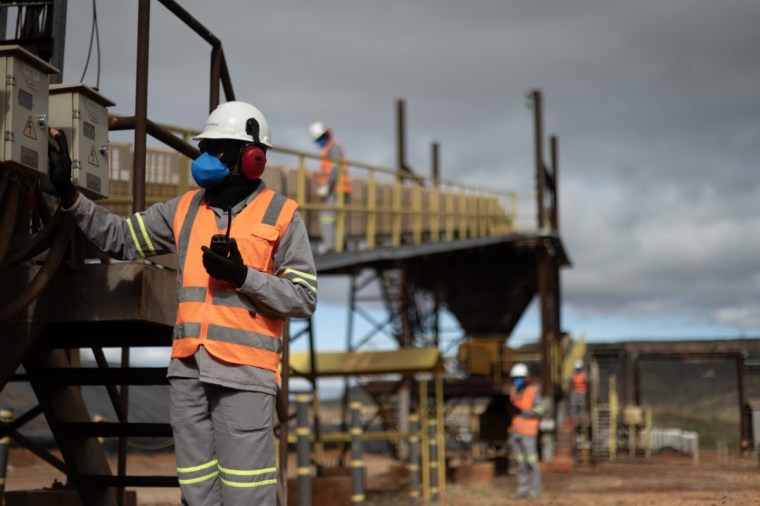
Operationally, Fitch expects mining to cushion earnings despite softer iron ore prices, with volume growth and cost gains offsetting weaker demand from China and rising African supply. Projects at Pires and B4 should add about 3.5 mt after 2025, while Itabirito P15 contributes >16 mt from late-2027. In steel, however, the market remains challenging: imports—61% from China—lifted import penetration in flat steel to 24.9% in 9M25 from 20.8% in 2024, pressuring prices despite better cost control that raised EBITDA/ton to about US$83 for 2025.
What could move the rating
A further downgrade could follow if asset sales stall, liquidity tightens, gross debt fails to decline, or leverage stays above 5.0x gross / 4.0x net, especially alongside debt-funded acquisitions or higher dividend pressure. An upgrade is off the table until there is clear execution on disposals and deleveraging.
Liquidity snapshot
At 30 Sep 2025, CSN had R$52.2 billion in reported debt (R$57.3 billion adjusted including advances and forfaiting), R$16.5 billion in cash, and R$6.29 billion pro-forma cash at the holding after transfers. Average maturities imply about R$9.0 billion coming due annually between 2026–28, with a R$10.7 billion peak in 2028, keeping market access critical.