By Rodrigo Uchoa, special for Brazil Stock Guide
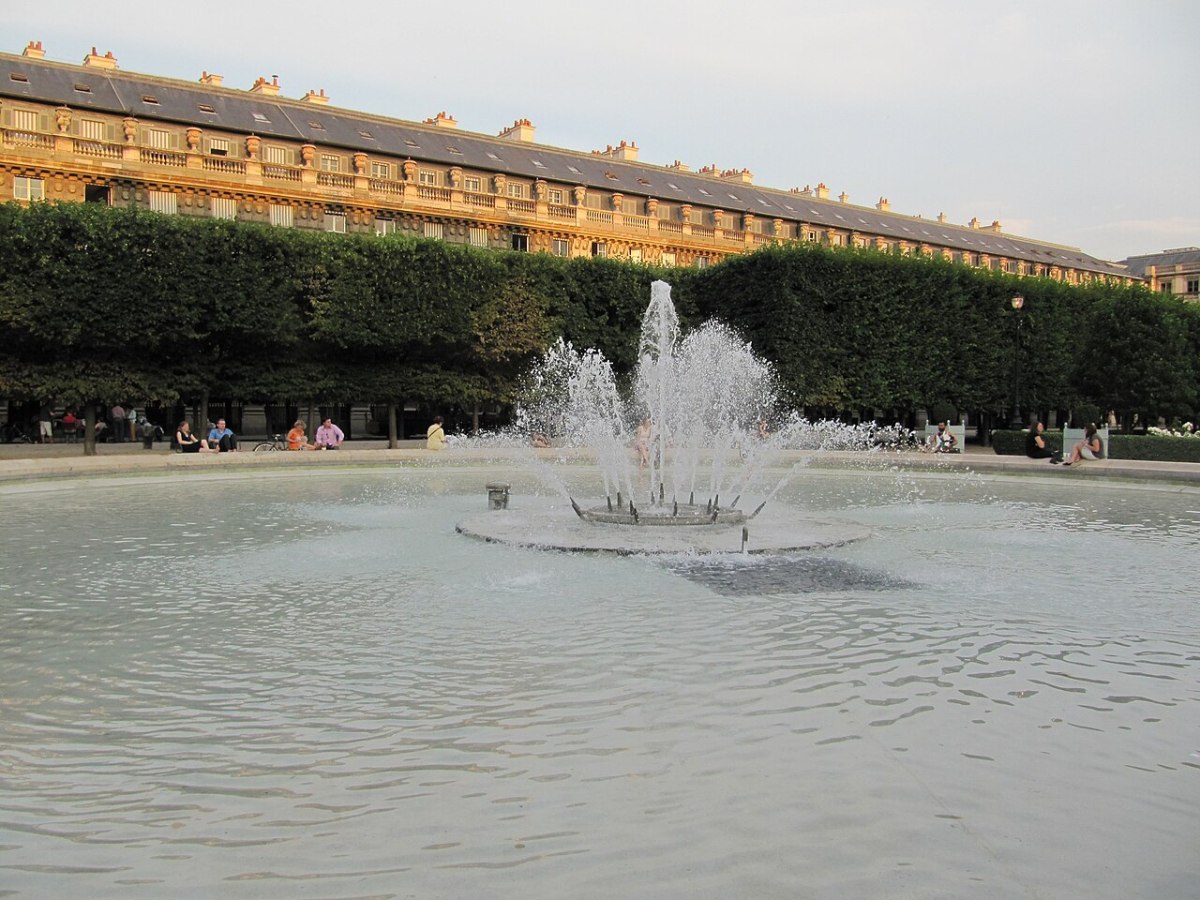
It is a May afternoon in Paris, and the city is, as usual, entirely convinced that it is the finest version of itself. The sky carries that particular spring luminosity — a pale, almost absent-minded blue — that the Impressionists never quite captured, though they spent considerable effort trying. In the gardens of the Palais Royal, people move with that studied nonchalance the French cultivate from childhood and the rest of the world spends a lifetime attempting to replicate without ever quite getting right. A woman in her sixties crosses the street with a Hermès scarf tied to her bag. Nearby, a man in his thirties, wearing red trousers, smokes a cigarette with the philosophical concentration of someone who has read too much Sartre and does not consider this a problem.
This is the particular quality — at once irritating and seductive — that France has been exporting to the world for centuries. It lost its colonial empire and a considerable portion of its geopolitical weight, but it has maintained, with remarkable obstinacy, what theorists call soft power and the French themselves call, without a hint of modesty, civilisation. That soft power can also be detected in the air. Literally. Because France remains the world capital of fragrance — even as it wrestles, quietly and characteristically without acknowledgement, with a crisis of identity.
A brief history of the Western nose
A step back is warranted before arriving at that crisis. Call it a short journey through time — and through the nose.
The 1920s and 30s opened an unprecedented world: synthetic aldehydes allowed perfumers to create smells that had never existed in nature. Chanel Nº 5 did not imitate flowers; it conjured an abstract idea of femininity. The 1950s and 60s brought the green chypres — Miss Dior as the defining example, elegant and architecturally rigorous, smelling of the post-war desire for a future rather than a past.
Then came the 1970s and 80s, when the world collectively decided that restraint was for the faint-hearted. The aromatic fougères and opulent orientals of that era — Drakkar Noir, Kouros, the inimitable Poison — were built to be perceived across the street. Stepping into a lift after someone wearing any of them was an experience some would call immersive and others would call a respiratory incident. You left the room. The perfume stayed.

The 1990s were the reaction. Cool Water, Dune, CK One: the anti-perfume as perfume, constructed paradoxically from entirely synthetic molecules, evoking the ocean, sea spray, and broadly nothing in particular. The colour palette was aquatic blue and pastel Miami green.
The 2000s brought the gourmand — Angel’s cotton candy and caramel, La Vie est Belle’s sugared iris, and a procession of celebrity launches that smelled of watermelon and aggressively sweet chewing gum. A colour palette that would have made Barbie envious.
In the 2010s came the niche boom and the reign of oud — Le Labo, Byredo, Maison Francis Kurkdjian — while Dior’s Sauvage dominated with its omnipresent cloud of ambroxan. Today, the market regards Sauvage the way one regards a school reunion photograph: nostalgic, fond, and faintly embarrassed. It has become the airport fragrance par excellence — too recognisable to say anything about its wearer, precisely because everyone wears it.
The elegance of subtraction
The defining paradox of the current moment is that sophistication is achieved through reduction. The most radical manifesto is Not a Perfume by Juliette Has a Gun: a single molecule, ambroxan, as the entire composition. No olfactory pyramid, no top notes or base notes. One idea, stated with absolute clarity. Think of it as a one-note bossa nova — which is not a criticism. Nobody questioned the genius of Tom Jobim. Nor should anyone question this.
Minerality has emerged as the vanguard note: wet stone, heated metal, high-altitude air. The gourmand survived but grew up — translucent vanilla rather than sticky caramel. Fragrance development has migrated from make it smell good and check the ingredients later towards an approach where the molecular structure is engineered before the aesthetic concept, minimising allergens without sacrificing creative intent. Artificial intelligence has entered the process: Byredo introduced AI personalisation kiosks in 2024 which, according to industry reports, generated a 27 per cent increase in customised orders. Technology has not replaced the perfumers nose — but it has begun pulling up a chair beside it in the laboratory.

La Belle France and its discreet crisis
France remains the centre of the olfactory world. The numbers are unambiguous: Europe holds 34.8 per cent of the global luxury fragrance market, generating approximately .4 billion in 2025, and French perfumery alone accounts for the majority of the continents luxury exports — more than €5 billion annually. Grasse remains the irreplaceable capital of raw materials.
But the centre of gravity has shifted, and France is, characteristically, convinced that this is not quite what it looks like. American niche houses advance with a deliberate rawness, unburdened by centuries of heritage to protect. Korean perfumery exports a clean minimalism that resonates deeply with the expanding Asian consumer. Arab houses have redefined what olfactory luxury can mean without requesting permission from Grasse. Amazonian ingredients are still being discovered, with Brazil at the vanguard. The French paradox sits precisely here: the historic maisons possess the prestige, the heritage, and the best-trained perfumers in the world. They must reinvent themselves without betraying themselves. Since reinvention has never been Frances strongest suit, observing the attempt is rather compelling.
The machine, the museum and the maison
Three models coexist today at the top of the French fragrance pyramid.
Coty is the most instructive case. Founded in Paris in 1904 by François Coty — who revolutionised the industry by democratising it — the company is today an American-listed licence operator. It does not create fragrances so much as manufacture and distribute those of Gucci, Burberry, Hugo Boss, Davidoff and Calvin Klein. It is the machine behind the shop windows. In September 2025 it announced the integration of its prestige and mass fragrance businesses, with the declared ambition of building a single powerhouse serving consumers across a price range from to 00. Whether this represents an intelligent growth strategy or the most candid possible description of an identity in collapse is, frankly, a matter of perspective. Most likely it is both.
LVMH operates as what industry specialists call, with gentle irony, a museum that also sells — and sells extremely well. The groups Perfumes and Cosmetics division delivered 2 per cent organic growth in the third quarter of 2025, with Parfums Christian Dior leading through launches including Miss Dior Essence, Dior Homme Parfum and the high-perfumery La Collection Privée. Sauvage remains omnipresent in airports.
Hermès warrants its own chapter. It is a house that treats its perfumery exactly as it treats its scarves and saddles — no licences to third parties, no concessions to the mass market, no focus groups. Final decisions on every launch rest with three people: perfumer Christine Nagel, Artistic Director Pierre-Alexis Dumas, and Agnès de Villers. In an industry where billions depend on consumer panels in poorly lit rooms, this is a posture that oscillates between vision and aristocratic stubbornness. It is probably both — which is precisely why it works.

Nagel joined Hermès in 2014 with an unusual background: a degree in organic chemistry from the University of Geneva, years at Firmenich, and a creative portfolio spanning works as different as Narciso Rodriguez for Her and Miss Dior Chérie. She represents the perfumer the current market values most: deep technical grounding that liberates rather than constrains the imagination. I am not a priestess of trends, she said recently. By the time you spot one, you are already behind. At Hermès, she has what she considers her greatest luxury: time. Not fiscal quarters, not retail launch cycles. The time of an artisan who works until the piece is ready — a notion any listed-company executive would consider untenable, and any Hermès client would consider obvious.
Worth noting across all three houses is a revealing movement: the creation of prestige within prestige lines — Chanels Les Exclusifs, Hermèss Hermessence, Diors La Collection Privée, all priced above 00 per bottle. It is an acknowledgement that the top of the pyramid still has room to rise further, and that a customer spending €500 on a fragrance has absolutely no intention of sharing that experience with someone who picked theirs up at the duty free before a connecting flight.
The language the giants are trying to learn
The fundamental tension in the market today is this: experienced perfumers are leaving the large supplier houses and joining smaller brands that offer creative autonomy. Those brands understand that credibility cannot be purchased at scale — that they need an artist with a name and a signature, not merely a diligent R&D department. It would be, as someone in the industry put it, like running a fashion maison without a designer. Technically feasible. Commercially suicidal.
The most important division in French perfumery today is not between brands, price points or geographic markets. It is between two philosophically irreconcilable models. On one side, companies that manage fragrances as asset portfolios — efficient, scalable, optimised for the next quarter. On the other, maisons that treat them as signed works — slow, uncompromising, organised around a human nose with a worldview.
The niche consumer has voted clearly for the second model. The giants are, each in their own way and with varying degrees of grace, attempting to learn the language. Some acquire entire niche houses. Others build exclusive lines inside already exclusive lines. Others announce strategic integrations spanning and 00 with the confidence of those who have not yet read the memorandum.
France, in this sense, remains true to itself even in its predicament: extraordinarily well-dressed, unarguably central, and possessed of an identity crisis it refuses to recognise as such. Which, one must admit, has its own particular charm.