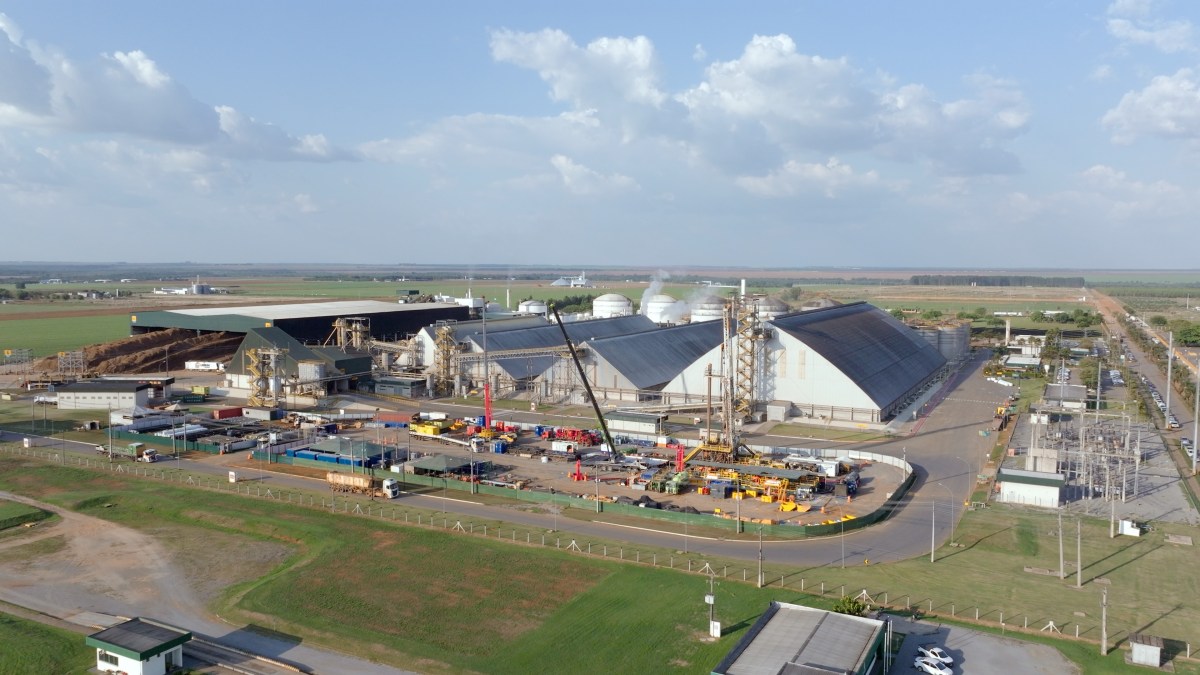
By Brazil Stock Guide – FS Bio announced that Amaggi will become a 40% minority shareholder in the company through a transaction that combines primary and secondary capital. The agreement, disclosed in a material fact on May 13, has been submitted to Brazil’s antitrust authority, CADE, and remains subject to regulatory approval.
The value of the transaction, the precise split between primary and secondary proceeds, the use of funds and the post-deal governance structure have not yet been disclosed. Still, the initial reading from credit analysts is positive: FS Bio gains a strategic shareholder with deep agricultural expertise, strengthens its capital structure and reinforces its role in a sector undergoing rapid consolidation.
Credit Support
The key point for creditors is the primary portion of the deal. If meaningful, those proceeds should go directly into FS Bio’s balance sheet, expanding the company’s ability to finance its next growth phase without necessarily increasing leverage.
That matters because corn ethanol is a capital-intensive business. Scale, access to feedstock, logistics and funding are all critical. In that context, Amaggi’s arrival reduces FS Bio’s strategic risk profile. The company is no longer just a relevant ethanol operator; it now has one of Brazil’s most sophisticated agribusiness groups as a long-term partner.
The transaction also reinforces FS Bio’s systemic importance in Brazil’s corn ethanol expansion cycle. Instead of relying only on organic growth, the company will now combine capital, governance and operational access with a partner deeply rooted in Mato Grosso, the core geography for this market.
Amaggi’s Weight
Founded in 1977 by the Maggi family and based in Cuiabá, Amaggi is one of Brazil’s largest privately held agribusiness groups. The company posted revenue of US$8.4 billion in 2025, has around 9,800 employees and operates in eight countries.
Its platform is vertically integrated. In farming, Amaggi operates 386,000 hectares in the 2025/2026 crop year, with 77% of that area owned. In commodities, it traded 22.5 million tons of grains globally in 2025. It also operates crushing plants, a biodiesel facility, fertilizer mixers, port terminals, barges, push boats and trucks.
That makes Amaggi much more than a financial investor. It can contribute directly to corn origination, logistics, commercialization of co-products such as DDG and corn oil, and access to funding. For a company like FS Bio, those synergies may matter more than the capital injection itself.
Partnership DNA
Amaggi’s investment in FS Bio follows a familiar pattern. Since 2007, the group has used joint ventures and minority stakes as a way to allocate capital into strategic assets. Its track record includes partnerships with Bunge, Louis Dreyfus, Zen-Noh, ADM, Cargill and Rumo, as well as projects such as TGG, Unitapajós, ALZ Grãos, Strada, Milhão Ingredients, Tello and ALTP.
In FS Bio’s case, the rationale looks particularly clear. Corn sits at the center of the production chain, Mato Grosso is the natural expansion territory and corn ethanol has become one of the main industrialization avenues for Brazilian agribusiness.
A Change of Route
The deal also marks a shift in Amaggi’s strategy in corn ethanol. In August 2025, the company had announced a greenfield joint venture with Inpasa to build five plants in Mato Grosso. That partnership was terminated in October 2025.
Now, Amaggi is choosing a different path: taking a minority stake in an established operator. That move can be read as an endorsement of FS Bio’s asset quality and as a way to reduce execution risk in a sector that demands scale, licensing, logistics and industrial efficiency.
For FS Bio, the benefit is twofold. The company receives capital and gains a partner capable of improving its competitiveness in the most sensitive parts of the business: corn supply, transportation, co-product commercialization and relationships across Brazil’s agricultural market.