
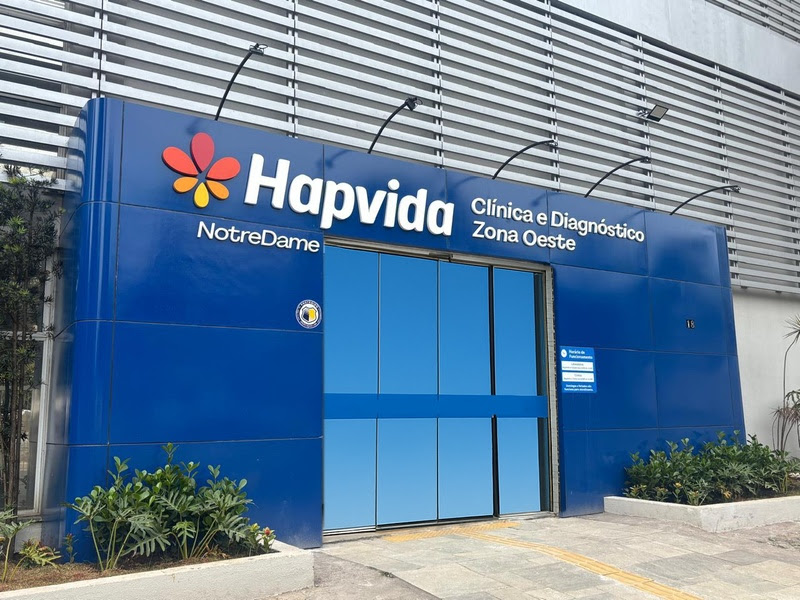

By Brazil Stock Guide – Hapvida (B3: HAPV3) faced one of its steepest single-day sell-offs on Thursday, with shares dropping more than 40% after the company reported a margin-hit third quarter and acknowledged operational missteps. In a call dominated by analyst pressure, CEO Jorge Pinheiro and CFO Lucas Adib defended the company’s verticalization model, arguing that the strategy remains solid despite a temporary spike in medical loss ratios and slow dilution of newly opened units.
Pinheiro said the quarter “came in tougher than expected,” citing stronger winter seasonality, viral outbreaks and the concentrated opening of seven hospitals and 25 outpatient units this year. Adib added that “the result was not good,” but stressed that the numbers reflect a transition phase, not a structural flaw. Both framed the period as “the cost of maturing the network.”
The company posted cash MLR of 75.2%, adjusted recurring EBITDA of R$613 million, free cash flow of –R$52 million and net revenue of R$7.78 billion. Beneficiary growth was modest, and the firm lost 24,000 members in Greater São Paulo, its most competitive region.
Executives Anchor Discussion as Q&A Pressure Builds
The Q&A brought some of the sharpest questioning the company has faced in recent quarters. Samuel Alves, from BTG Pactual, pressed on the spike in contingencies and Hapvida’s decision to clear its entire public-system reimbursement backlog in a single quarter. Adib said the company chose a “full clean-up” to remove uncertainty from future periods. “We preferred to solve it now,” he said, adding that increasing occupancy in new units should gradually ease financial pressure.
Vinícius Figueiredo, from Itaú BBA, challenged management on the late signaling of the surge in utilization. Pinheiro explained that improved access and shorter emergency-room waiting times naturally led to higher usage — an expected consequence of the expanded network. Still, he acknowledged that seasonality “was stronger than we anticipated,” affecting internal projections. He said early November already shows normalizing patterns.
Citi’s Leandro Bastos questioned whether upcoming premium adjustments would offset rising fixed costs. Pinheiro reiterated that Hapvida expects average adjustments near 10% and said actuarial models “do not point to additional pricing action.” Adib added that higher commission expenses reflected internal commercial realignments and should stabilize.
Margin Recovery Dominates the Debate
Santander’s Caio Moscardini focused on churn and the timing of margin recovery. Pinheiro argued that churn is declining over longer windows, while Adib described the quarter as a transition period created by the overlap of new structures and outsourced providers. “Margin recovery will come, but at a different pace than originally planned,” he said.
The most direct challenge came from Joseph Giordano, at J.P. Morgan, who questioned whether Hapvida can rebuild profitability amid weaker copayment trends, strong competition and a slow ramp-up of costly new assets. Pinheiro defended the strategic path: “We built capacity ahead of demand. The priority now is dilution.” He highlighted that 2026 will have far fewer openings, allowing faster consolidation and efficiency gains.
Executives Reframe the Quarter as Temporary Pressure
Throughout the call, Pinheiro and Adib stressed that operational indicators already show improvement. Emergency-room volumes fell in November, regulatory complaints continued to decline and quality metrics improved. They insisted the quarter reflects “the cost of transition,” not a flaw in the verticalization strategy.
Commercial weakness in São Paulo was acknowledged. Pinheiro said system migration created friction with clients but noted that reinforced sales channels and new incentives are designed to restore momentum. were adjusted to recover momentum. “Our focus is clear: stabilize the base, grow in mature regions and dilute new capacity,” he said.