By Brazil Stock Guide – Homerun Resources Inc. (HMR.V) plans to invest 1.725 billion reais ($1.7 billion) to build a high-purity silica processing and solar glass manufacturing facility in Brazil’s Bahia state, targeting the fast-growing domestic photovoltaic market.
The project will be developed through its subsidiary Homerun Brasil Mineração in Belmonte, about two hours from Porto Seguro. Operations are expected to begin in the second half of 2028, with projected annual revenue of $273 million.
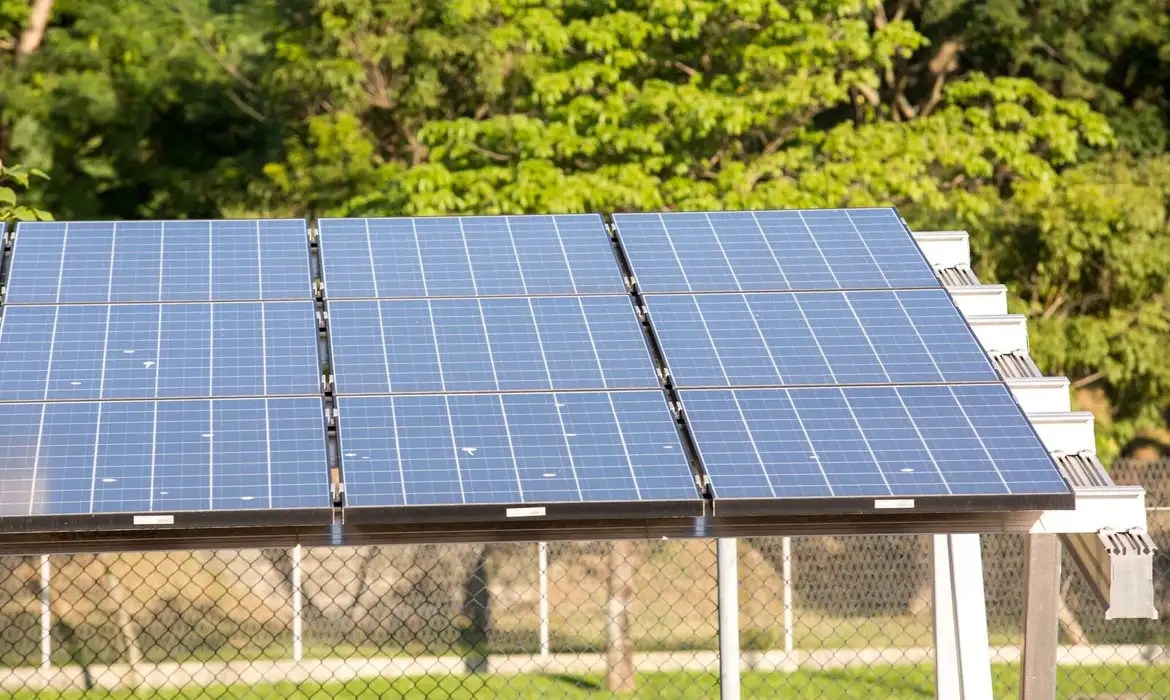
The plant is designed to produce 1,000 tons of solar panel glass per day, or about 365,000 tons per year, using roughly 300,000 tons of silica sand annually. Output will be primarily aimed at Brazil’s domestic market, potentially replacing part of the country’s imports.
“Glass is a component whose import is problematic: it is expensive and fragile. This is reflected in the price of panels,” said Armando Farhate, Chief Operating Officer of Homerun Resources. He added that in Brazil the product costs roughly twice as much as in China.
While solar panels are manufactured in several regions, especially China and the United States, solar-grade glass production is concentrated mainly in China and, to a lesser extent, India, Farhate said.
The company estimates its high-quality silica reserve in Belmonte at 200 million tons. According to the executive, the deposit’s low iron content simplifies processing and improves final product performance. “It may be the best high-purity silica in the Western world. In China, we are not sure what is in it,” he said.
In photovoltaic modules, glass protects light-absorbing components and must allow maximum light transmission. Iron particles can cause a yellowish tint, reducing efficiency. “Because of the purity of our silica, our glass will not have this type of coloration, ensuring greater efficiency in light exposure,” Farhate said.
He also noted that the high purity of the silica eliminates the need for antimony in the iron removal process. The heavy metal is toxic and raises environmental concerns. “There is practically no recycling nowadays,” Farhate said, referring to conventional solar glass.
Beyond glass production, the company is studying the sale of raw sand in the domestic market, with potential volumes of tens of thousands of tons per month. The project is under internal technical review and could be implemented within months.
Homerun is also planning a silica purification plant aimed at higher value-added segments, with estimated capacity of 120,000 tons per year and a projected 12-month implementation timeline.
The Bahia mining rights belong to Companhia Baiana de Produção Mineral (CBPM), which leased the area to Homerun under a royalty structure of about 50 reais per ton of sand. The company will not conduct extraction directly; partner firms will mine the silica, while Homerun focuses on processing and glass manufacturing.
The project is awaiting completion of a bankability study and issuance of an industrial feasibility certificate, expected by the second quarter of 2026.
Financing remains a key hurdle. “The Brazilian economic environment is not favorable, with high interest rates, bureaucracy and socio-environmental requirements,” Farhate said. Brazil’s development bank BNDES has pre-approved 550 million reais, roughly one-third of the total investment. The company also plans to seek guarantees from banks in Canada and Germany to finance heavy equipment purchases estimated at 120 million euros.
Infrastructure upgrades include the paving of a 15-kilometer road stretch, for which the municipality has issued a letter of intent. The executive project was completed in December, and construction is expected to align with the factory buildout schedule.