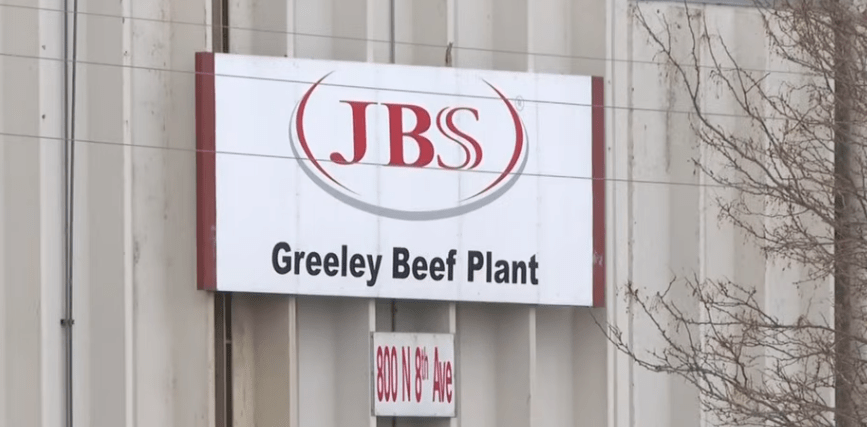
By Brazil Stock Guide – JBS (JBSS3; JBSAY) said operations at its beef plant in Greeley, Colorado are beginning to normalize as more workers return to their shifts, even as a strike led by UFCW Local 7 remains ongoing. The company said attendance has been increasing day by day, allowing production lines to restart and signaling a gradual stabilization of activity.
JBS said it will continue to pay all employees who choose to work during the strike, while focusing on maintaining operations throughout the week. At the same time, the company reinforced its defense of what it describes as a “historic” contract offer, arguing that many workers are seeking financial stability and the opportunity to vote on the proposal — a step it says union leadership has not yet allowed.
The dispute has also drawn political attention. Members of the Colorado State Legislature sent a letter to JBS leadership expressing “deep concern” about the ongoing conflict, warning that a prolonged stoppage could disrupt supply chains and create economic ripple effects across the state and beyond. Lawmakers highlighted the Greeley facility’s role as one of the largest beef-processing plants in the United States and a key regional employer, urging the company to return to good-faith negotiations with the union.
JBS responded by emphasizing wage growth and benefits. Since 2019, base hourly pay at the Greeley plant has increased by about 46%, outpacing regional inflation of roughly 25% and implying real wage gains of around 16%. Starting pay stands at $23.25 per hour, with average earnings of $26.00 and a top rate of $29.75 — equivalent to about 171.5% of Colorado’s minimum wage. The company also highlighted healthcare, education benefits and a proposed pension plan as part of its offer.
The company also addressed union concerns over healthcare costs and working conditions. JBS said healthcare costs have increased by only $0.05 since 2019, compared with a $7.70 per hour increase in wages, and noted that the most widely used PPO plan became cheaper in 2026 compared with 2025. It added that personal protective equipment is provided at no cost and replaced when worn.
On operations, JBS emphasized that production line speeds cannot be changed without oversight from USDA-FSIS inspectors, who are required by federal law to be present daily. The company said its processes are subject to multiple layers of regulatory, engineering and union review.