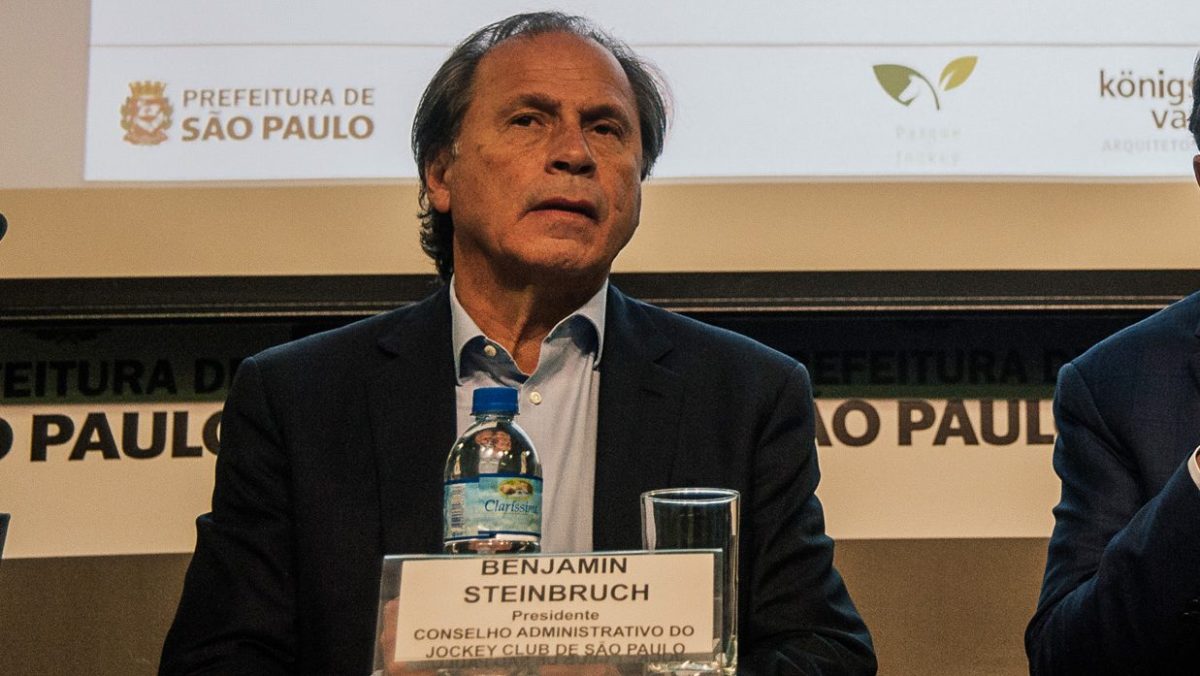
By Brazil Stock Guide – The São Paulo Jockey Club transferred R$7 million to a personal account belonging to Benjamin Steinbruch, the club’s former chairman and controlling shareholder of CSN, using public resources originally earmarked for the restoration of protected heritage buildings, according to documents obtained by UOL. The payment came from a municipal compensation mechanism designed exclusively to finance preservation projects at the historic art-deco complex — not to be directed to private accounts.
The disclosure intensifies political and financial scrutiny over the Jockey, located on one of São Paulo’s most valuable real-estate corridors. The City of São Paulo, which has publicly indicated its intention to convert the racetrack into a public park, formally requested explanations about the transfer and reiterated that funds tied to heritage protection must follow strict usage rules. The City Council, meanwhile, has opened its own investigation into the club’s handling of public compensation payments, broadening the institutional pressure on its governance.
The transfer occurred as the Jockey faced mounting debts, internal disputes and chronic challenges to maintain its 600,000-square-meter art-deco complex. The new revelations add to years of administrative turmoil and revive a broader debate about transparency at private social clubs that manage protected public heritage while operating under hybrid governance and limited oversight.
In an official statement to UOL, Steinbruch said the R$7 million reflected reimbursement of personal funds he injected during his tenure as chairman between 2017 and 2024. He stressed that none of his roles at the club were remunerated and that his financial contributions aimed solely at maintaining the institution and preserving what he described as the world’s largest continuous art-deco complex. He added that the 2019 balance-sheet item labeled “NPS payable” corresponded to the remaining portion of a loan that the club had already repaid.
Steinbruch also noted that Partifib — a company linked to him — purchased two Construction Rights Certificates (TDCs) from the Jockey in a regular, fully registered transaction in accordance with municipal law. He said there was never any legal restriction on acquiring such certificates and that the deal followed standard market practice with full transparency.
As City Hall advances its urban-planning agenda for the racetrack and legislators pursue parallel investigations into the club’s use of public funds, the case adds momentum to a larger rethinking of the Jockey’s future. The combination of political pressure, financial probes and competing visions for the high-value site near the Pinheiros River is likely to intensify as authorities dig further into how the club managed compensation resources intended for heritage preservation.