By Rodrigo Uchoa*, special for Brazil Stock Guide
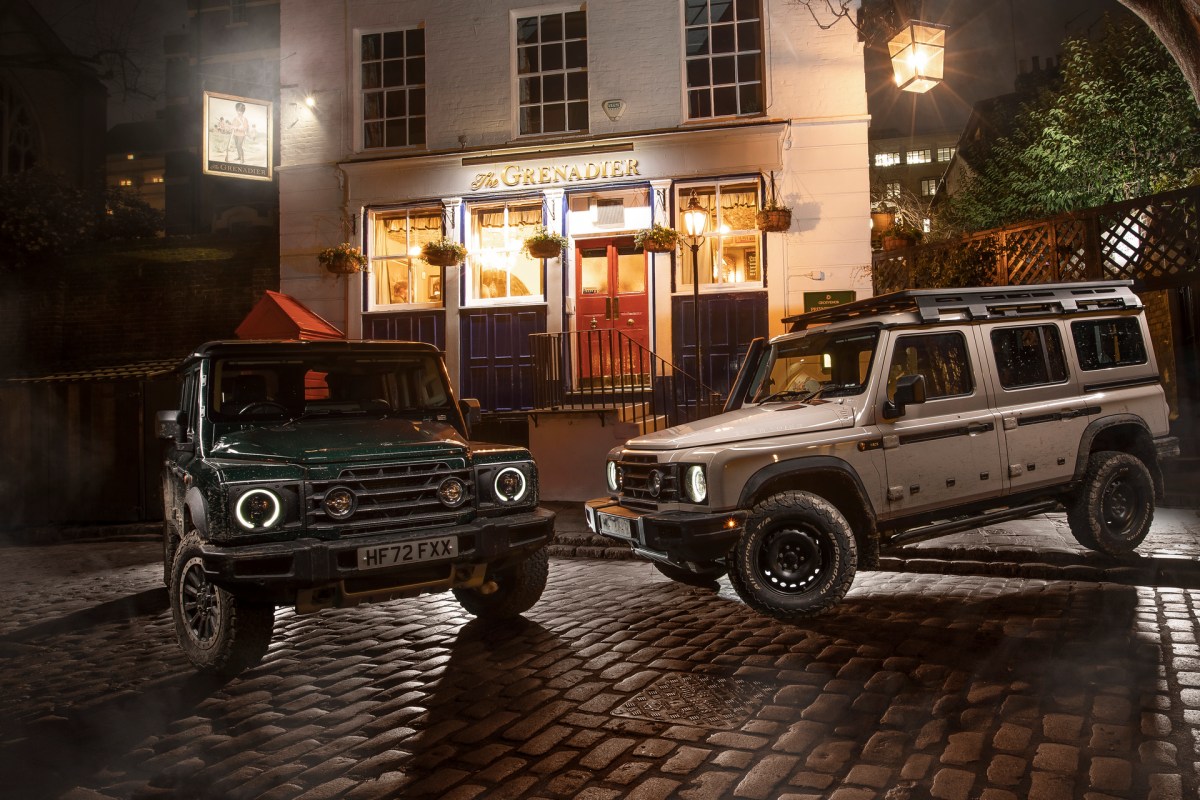
The Grenadier is not the sort of pub that makes it into guidebooks. It sits down a cobbled mews in Belgravia — one of the most expensive patches of real estate on earth — hidden behind iron railings and dark green painted woodwork, as though it would rather not be found. It belongs to a category of London drinking establishments that regulars describe as irreplaceable, then watch disappear one by one, swallowed up by express supermarkets and nail bars. The beer is pulled slowly. The walls are hung with equestrian prints. Conversations start somewhere and end nowhere in particular. That sort of pub.
It was here, in 2016, that Sir Jim Ratcliffe had dinner with friends. Nobody recorded the exact date — it wasn’t that kind of meeting. It was the kind where wealthy men of a certain age drink well and complain about the way things are going. And the way things were going, that particular evening, included a piece of news that Ratcliffe found intolerable: Jaguar Land Rover, by then owned by India’s Tata Motors, was shutting down production of the Defender. Sixty-eight years of history. Done.

Ratcliffe, then 63, is the kind of figure Britain produces with some regularity: the self-made man from the North. Born in Lancashire, raised on a council estate in Failsworth, trained as a chemical engineer at Birmingham. In 1998 he bought a BP plant in Antwerp for $84 million and named the company Ineos. What followed was built on a logic that was simple and brutal: buy industrial assets nobody else wanted, wring efficiency out of them, buy more. The group now turns over $55 billion a year.
Since 2018, Ratcliffe has lived in Monaco — a move that saved him billions in tax and sits uneasily with his well-documented enthusiasm for Brexit. He also has a parallel life in elite sport: he bought the Team Sky cycling franchise, won the Tour de France, took a partnership stake in the Mercedes Formula 1 team and acquired 25 per cent of Manchester United. The pattern is consistent. He enters fields where technical excellence determines outcomes.
An Icon

His attachment to the Land Rover Defender was almost an identity statement. The car was born in 1948, sketched hastily on an Anglesey beach by Maurice Wilks, who needed something to work his farm and couldn’t find anything on the market that did the job. It was meant to be temporary. It lasted 68 years. In its most basic form there was no glovebox, no armrest, no carpet. The roof was canvas. What it had was portal axles, permanent four-wheel drive, and a suspension geometry that crossed terrain that swallowed more sophisticated vehicles whole.
Armies adopted it. Missionaries adopted it. The British Royal Family still uses it at Sandringham and Balmoral. The car became a symbol: to say Defender was to say expedition, African veld, the amateur adventurer with a one-way ticket and a vague plan. A 1:43 die-cast model, made by Corgi since the 1950s, has never left their catalogue and remains the brand’s best-selling miniature to this day.
The last one
That car — and everything it stood for — died on 29 January 2016, when the last one rolled off the line at Solihull with a small commemorative plate and a muted ceremony. JLR already had a successor ready: safer, better connected, more expensive, and for many, further from everything that made the original untouchable. It was a fine vehicle. It was also a different one entirely.
Ratcliffe tried to buy the original production tooling from JLR. They declined. So, over a pint at The Grenadier, with a sketch on the back of a five-pound note, he decided to build his own.
Grenadier project
The project took six years and cost £650 million. Ineos Automotive was built from scratch, with no prior experience in series production. Engineering was contracted out to Magna Steyr, the Austrian firm that builds cars under contract for BMW and Mercedes. The powertrain came from BMW itself: a turbocharged inline-six, in petrol or diesel, paired with an eight-speed automatic gearbox. The factory was announced for Wales — a neat political gesture in post-Brexit Britain — and then, rather awkwardly, relocated to Hambach in France, where Mercedes had just sold off the plant it used to make the Smart.
JLR did not take it quietly. They sued, claiming the new vehicle copied the Defender’s trade dress. The British courts threw the case out in 2020. The legal battle migrated to the United States and was never resolved on the merits. In the market, it resolved itself more simply: the people who buy a Grenadier buy it precisely because it looks like a Defender.
A new Defender
The vehicle that reached dealerships in 2022 is, technically speaking, a statement of principle. Ladder chassis, portal axles, three locking differentials, hydraulic recirculating-ball steering, two-speed transfer case with low range. No touchscreens competing with the landscape, no lane-keep systems fighting the driver for control. Car and Driver called it “probably the most analogue vehicle available in any segment of the contemporary market.” In 2025, that reads almost like a provocation. Its buyers took it as a compliment.

The Grenadier starts at around £65,000 in the UK and tips into six figures in the United States, where import tariffs make anything built in France considerably more expensive than it would otherwise be. George Ratcliffe — Jim’s son, and the company’s commercial director — has admitted what his father may never quite manage to: “We wanted to build something affordable, easy to fix, good for farmers. But with modern emissions and safety regulations, that simply isn’t possible any more.” Global sales through 2024 were around 20,000 units. A real niche — but well short of what the business model requires. Production halted for months in 2024 after seat supplier Recaro went bankrupt, bringing the Hambach line to a standstill. Restructuring and job cuts followed.
The Grenadier is not alone in this territory, though it has perhaps the most colourful neighbours. The Mercedes-Benz G-Class has existed since 1979, originally commissioned as a military vehicle for the Shah of Iran — ordered before the Islamic Revolution, delivered after it, never once stopped being made. It became ruinously expensive, turned into a status symbol in Los Angeles and Dubai, but the utilitarian soul is still visible in its outline, square as a shoebox. The Toyota Land Cruiser 70 Series is the more honest case: in production since 1984, largely unchanged, sold mainly in Australia and African markets, indifferent to fashion. Neither vehicle is cheap. Both have waiting lists.
The niche exists. It is not enormous, but it is culturally dense. These are the same people who mourn pub closures.
Chinese invasion
The BAW 212, from Beijing Auto Works, is essentially a Defender clone: selectable four-wheel drive, differential locks, transfer case. Starting price: $14,000. The Haval Xianglong, from Great Wall Motors, uses round headlamps and a rear end that looks lifted directly from Solihull. It’s a plug-in hybrid. The Jetour Traveller is already on sale in parts of South America for the equivalent of around £15,500. The template is consistent: Defender shape, electrified powertrain, one-fifth of the original’s price. They won’t go everywhere a proper Defender goes — but they look the part in a shopping centre car park, and they sip fuel while the Grenadier guzzles it at around 15 miles per gallon.
Which is precisely where the plot thickens. The niche is being invaded — by Chinese manufacturers, with at least half a dozen models inspired by the classic Defender. Electric ones, or heading that way. An affront that would have seemed farcical just a few years ago.
And then the plot deepens further still.
In November 2025, Chery — one of China’s four largest automakers, based in Wuhu, Anhui province — launched the iCaur V27: a mid-size SUV with a range-extended electric drivetrain, a combustion engine acting as a generator, 449 horsepower and a claimed range of 1,200 kilometres. It costs between $28,000 and $35,000 in China. It is also the very model over which Ineos opened negotiations with Chery, looking to rebadge it as the Fusilier — the smaller electric vehicle the company wants to bring to market. In early 2026, Ineos described the project as “not years away.”
The irony is almost too large to fit in a single sentence. A British billionaire spends £650 million building a spiritual successor to a British icon — only to find that its next chapter may be written by a Chinese manufacturer, run on electricity, and assembled in a city most of its buyers could not place on a map. And that successor may be offered, among other options, with a combustion engine acting as a range extender: precisely the compromise Ratcliffe long insisted he would never have to make.
The king died in Solihull in January 2016. He was resurrected in Hambach in December 2022, with a Bavarian engine and a French address. Now it seems his soul may yet transmigrate to Wuhu, Anhui province, People’s Republic of China.
Long live the king!
* Instagram.com/theskepticalhedonist/