By Brazil Stock Guide – Lavras Gold, a Canadian junior miner developing a gold project in southern Brazil, has joined a regional lobbying effort to change the country’s Border Strip law, a 1979 statute created under a national-security framework that local leaders now say is holding back investment in Rio Grande do Sul.
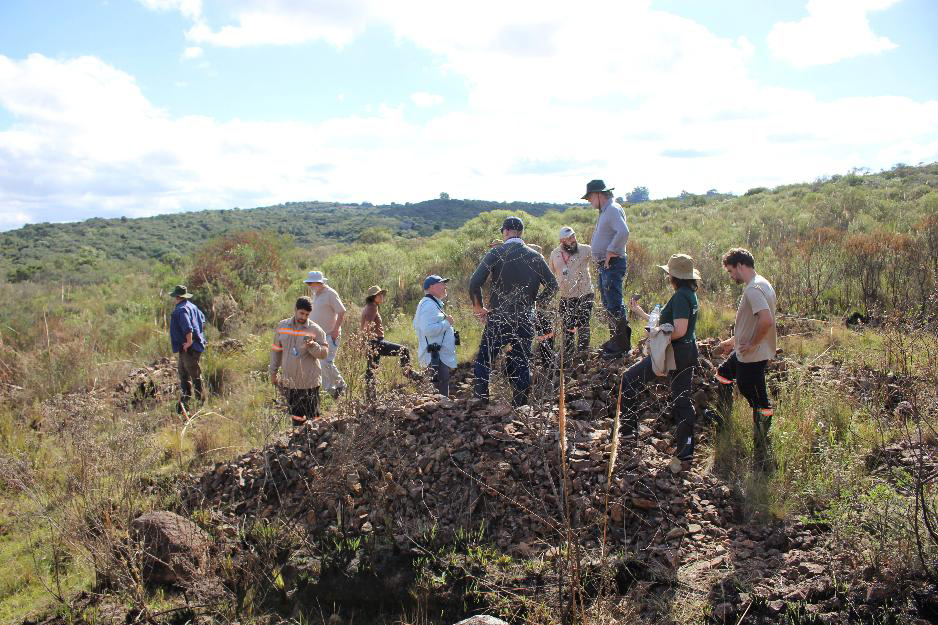
The push gained visibility on May 8, during the Border Strip Leaders Meeting held in Lavras do Sul. The event was organized by the Front for the Development of the Campanha Region, represented by local business groups and Lavras do Sul Mineração, the Brazilian brand linked to Lavras Gold Corporation.
The campaign brought together mayors, business leaders, rural groups and political representatives. Names involved or cited in the movement include Renan Delabary, mayor of Lavras do Sul; Leonardo Betin, mayor of Itaqui; Lucas Gonçalves Menezes, mayor of São Gabriel; Luiz Carlos Folador, mayor of Candiota; Marcelo Spode, mayor of Caçapava do Sul; Mário Augusto Teixeira, president of the Union of Legislatures of the Western Border; and Afonso Hamm, federal deputy and leader of Rio Grande do Sul’s caucus in Brazil’s lower house.
Brazil’s current law defines the Border Strip as an internal zone of 150 kilometers running parallel to the country’s land borders and treats it as an area relevant to national security. Certain activities in those regions — including land concessions, transport infrastructure, communications and projects tied to strategic sectors — may require prior approval from Brazil’s national-security authorities.
Political Pressure
For Lavras Gold and local leaders, the legislation has become an economic obstacle. The company is developing the LDS Project near Lavras do Sul, about 320 kilometers from Porto Alegre, in a region seeking to attract capital for mining, agribusiness, logistics and energy.
Lavras do Sul is not a border city in the strict sense. It does not sit directly on Brazil’s international line with Uruguay or Argentina. But the municipality falls within the legal 150-kilometer Border Strip, which means the controversy is not about a mine sitting on the border itself, but about how far Brazil’s national-security rules should reach into the interior of Rio Grande do Sul.
Supporters of the change argue that a rule designed to protect Brazilian territory has ended up discouraging investment in municipalities already marked by weak economic dynamism. In Rio Grande do Sul, 197 municipalities are inside the Border Strip, representing about 40% of all cities in the state.
During the meeting, Afonso Hamm said he intends to seek the rapporteur role for the bill in the lower house and pledged to work on updating the legislation. The proposal most directly linked to the issue is Bill 1455/2022, authored by former senator Lasier Martins and currently reported by Senator Luis Carlos Heinze.
Lasier Martins did not attend the meeting in person but sent a video defending changes to the law. The bill proposes reorganizing the Border Strip into sub-zones and reducing the level of restriction in certain regions of the country, especially in the South.
Gold and Sovereignty
The sensitive point is that the lobbying effort involves mining and foreign capital in an area Brazil still classifies as strategic. Lavras Gold is a foreign company listed in Canada, and its project in Rio Grande do Sul depends on legal certainty to move forward.
During the event, Paulo Serpa, president of Lavras do Sul Mineração, defended reducing the restricted strip to 15 kilometers in Rio Grande do Sul, Santa Catarina and Paraná.
“We need to reduce this strip to 15 kilometers in the states of Rio Grande do Sul, Santa Catarina and Paraná, and work to keep this issue alive in an election year,” Serpa said, according to material released by the organizers. “We can no longer be merely border keepers.”
Leonardo Betin, mayor of Itaqui, also called for collective political coordination around the issue. “We need collective articulation to pursue important interests. Many things have changed, and the legislation has remained the same since 1979,” Betin said. “This lack of protagonism prevents us from moving forward and creating windows for priority agendas for Rio Grande do Sul.”
Lucas Gonçalves Menezes, mayor of São Gabriel, said the current legislation limits regional development. “I hope the issue gets the attention it deserves and gains strength to change this outdated legislation,” he said.
Luiz Carlos Folador, mayor of Candiota, suggested taking the issue to the March of Mayors in Brasília.
Exploration Push
The political campaign comes as Lavras Gold is sharpening its exploration strategy in southern Brazil. On May 12, the company said a specialist technical workshop at its Lavras do Sul project confirmed priorities for its 2026 exploration program.
Lavras Gold said the project spans more than 21,000 hectares and includes more than 24 gold prospects centered on historic gold workings. The company identified Cerrito, Matilde and Butia/Fazenda do Posto as priority areas, while also pointing to Caneleira as a target where high-grade vein mineralization has been found near lower-grade mineralization that could be potentially bulk mineable.
Interim Vice President of Exploration Jonathan Hill said the company’s primary targets remain “large-scale, bulk tonnage systems,” while shallow high-grade vein-style mineralization could represent attractive targets for “potential early-stage mine development and cash flow generation.”
The latest technical update gives the border-law debate a more concrete business dimension. Lavras Gold is not only backing a less restrictive regulatory framework; it is doing so while advancing a technical plan for a gold district that it says may support several targets under a broader economic model.
The company remains at the exploration stage, and no mine development decision has been announced. But the sequence is politically sensitive: a foreign gold explorer is advancing its project while participating in a regional push to ease a national-security law that still governs areas well beyond Brazil’s physical border line.