
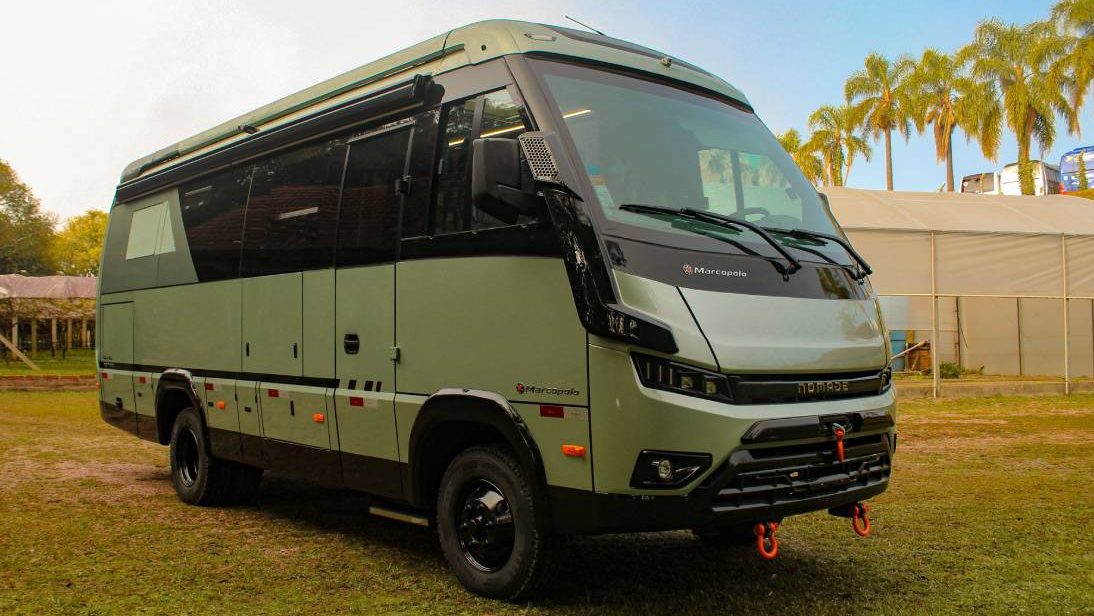
By Brazil Stock Guide – If Jack Kerouac turned the road into a literary myth of freedom and discovery, Marcopolo S.A. (POMO4), Brazil’s traditional bus-body maker, is giving that romance a distinctly Brazilian update: 4×4 traction, solar panels, satellite internet, bespoke interiors and a price tag starting at R$1.5 million. Here, the road is not about improvisation, dust and hitchhiking with a thumb in the air. It is an experience of comfort, engineering and design on wheels.
The bet begins with the NOMADE, the first proprietary motorhome from Marcopolo Motorhome, a division created by the company to explore a segment that is still small in Brazil, but rapidly changing. The first unit was delivered in May in Caxias do Sul, in southern Brazil, to an entrepreneur from Santa Catarina. Other units are expected to hit the road throughout 2026.
Marcopolo said the model’s price “starts at around R$1.5 million,” with the final amount depending on the options chosen by each customer. The company also said deliveries are following the pace of sales and that units have already been sold for the full year, although it did not disclose volumes for compliance reasons.
Luxury in Motion
The product arrives at a curious moment in Brazil’s consumer economy. For decades, the classic symbol of status was fixed in place: a larger apartment, a beach house, a farm or a boat kept at the marina. The motorhome suggests a different logic. Luxury is no longer tied to a single address. It travels with the owner. The landscape changes, but the bed, kitchen, bathroom, connectivity and air conditioning go along for the ride.
It may be a small shift in volume, but it says something about behavior. High-income consumers are increasingly seeking private, flexible and personalized experiences. They want nature, but not discomfort. Adventure, but not improvisation. Distance, but not total isolation. The premium motorhome speaks directly to that desire: being outside without fully giving up the comforts of inside.
Marcopolo itself describes the target customer as people or families who “have already traveled a lot,” appreciate high-quality products and now want to explore destinations in a more autonomous, flexible way, closer to nature. According to the company, this customer “is not just looking for a recreational vehicle,” but for a reliable, well-built project with engineering, robustness and support behind it.
For Marcopolo, the move also has an industrial logic. The company is taking decades of know-how in passenger vehicles into a new market. The same expertise used to design bus bodies, integrate systems and think through ergonomics, resistance and after-sales support now appears in a product aimed at high-end leisure. It is a natural extension of the business, but with a different audience, a different symbolic margin and a different story.
Expanding Market
Marcopolo is entering a market that has moved beyond being a curiosity for enthusiasts. Since the pandemic, the motorhome has gained strength as a symbol of autonomy, safety and freedom of movement. The logic is simple: travel without depending as much on hotels, airports or rigid itineraries, while taking one’s own comfort infrastructure along the way.
In Brazil, this universe remains small compared with the United States and Europe, but it is already forming its own ecosystem. According to a technical study cited by Expo Motorhome, Brazil’s camping and caravanning market moved about R$1.5 billion in 2023, up 30% from the previous year. National production, including motorhomes, trailers, mini-trailers and campers, is estimated at between 450 and 500 units per month.
That backdrop helps explain why Marcopolo decided to enter the segment now. In a note to Brazil Stock Guide, the company said its entry into the motorhome market is aimed at using its vehicle-production expertise in a segment with “great growth potential in Brazil and Latin America.”
The company also sees a specific opportunity in the Brazilian market. According to Marcopolo, the country demands factory-built products in a sector where adaptations are still common. Marcopolo Motorhome was created in that context, aligned with the company’s strategy of diversifying into segments linked to mobility and transportation.
That is exactly where the company is trying to position its motorhome: not as an artisanal conversion, but as a high-end industrial product. In a still-fragmented market, brand strength, engineering scale and an assistance network may become important competitive advantages.
Road Engineering
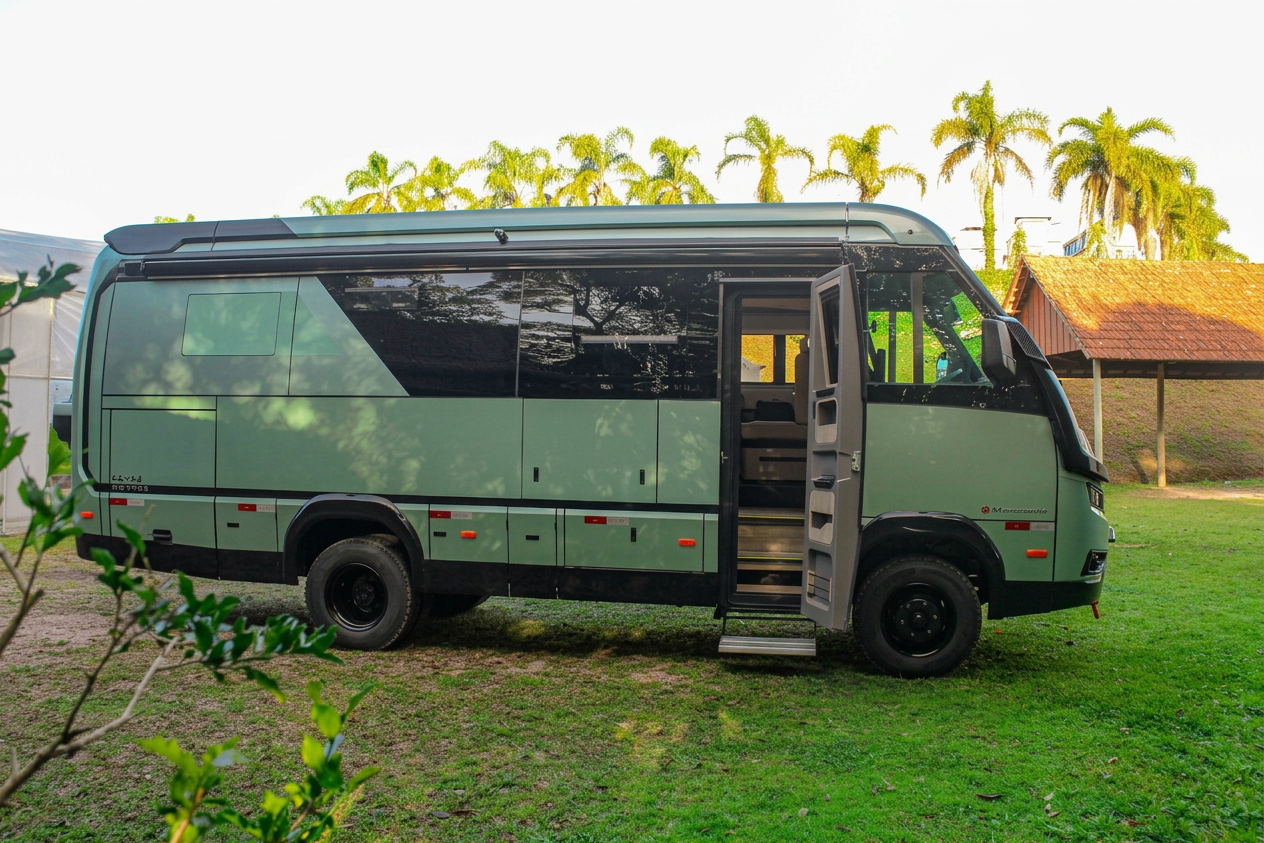
The project’s key difference is that the vehicle was conceived from the start as a 4×4 motorhome. According to Marcopolo, it is not an adaptation based on a bus, truck or van, as is still common in much of the Brazilian market. “The NOMADE chassis was developed exclusively for motorhomes,” the company told Brazil Stock Guide.
The company went further. It said the product is the result of decades of learning from vehicle operations in demanding environments, from red-mud roads in northern Brazil to sub-zero temperatures at copper mines in Chile. “It is not a product derived from a bus or truck, like most of the market,” Marcopolo said. “The NOMADE chassis was developed to be a motorhome.”
That difference matters. In an integral motorhome, the exterior and interior design are born as part of a single project. This allows for better use of space, greater visual fluidity and an experience closer to high-end models sold in more mature markets. In Brazil, it also helps set a new standard for a segment that still has a strong presence of made-to-order solutions.
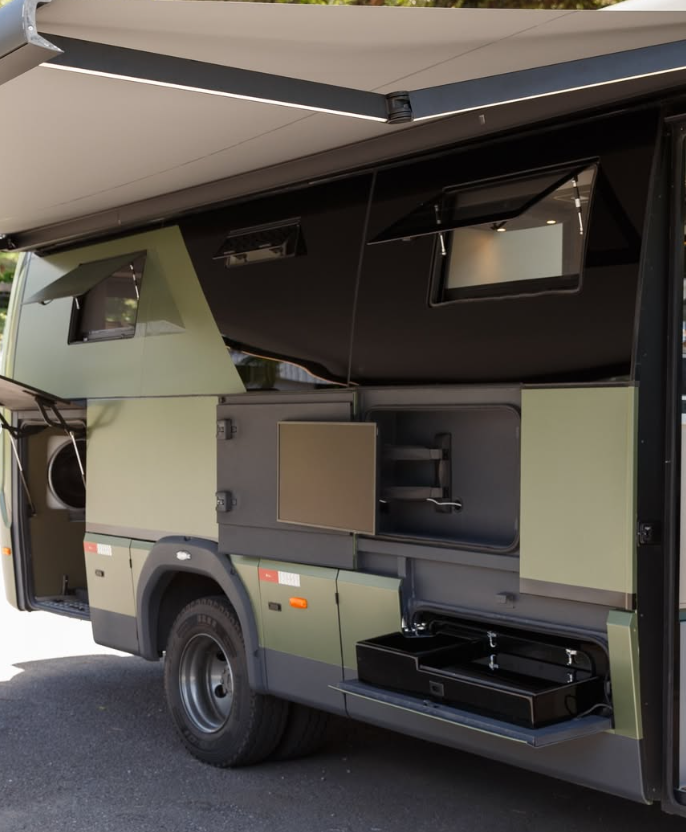
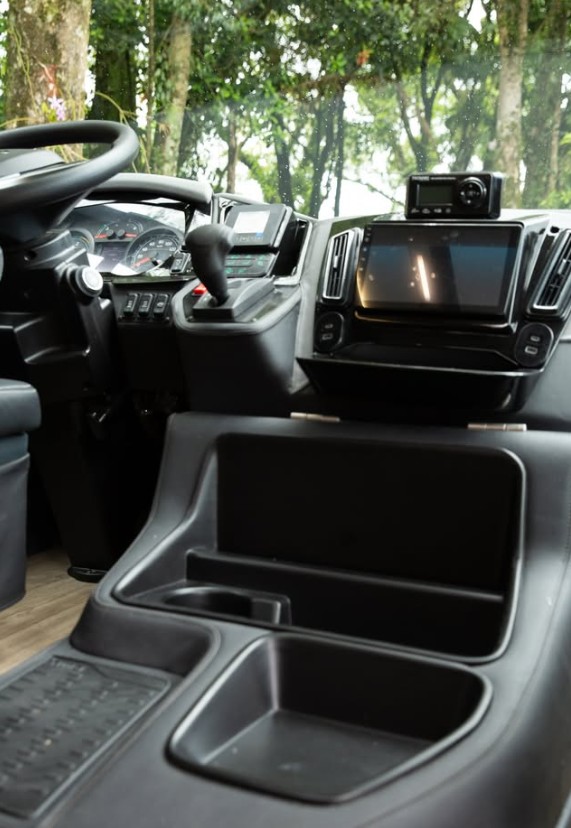
The vehicle is 7.5 meters long and comes with 4×4 traction with low-range gearing, a 175-horsepower Cummins engine, an Allison automatic transmission, mixed-use tires and an 8-ton gross vehicle weight chassis. The package was designed to handle more challenging terrain, from beaches to dirt roads, without losing its focus on interior comfort.
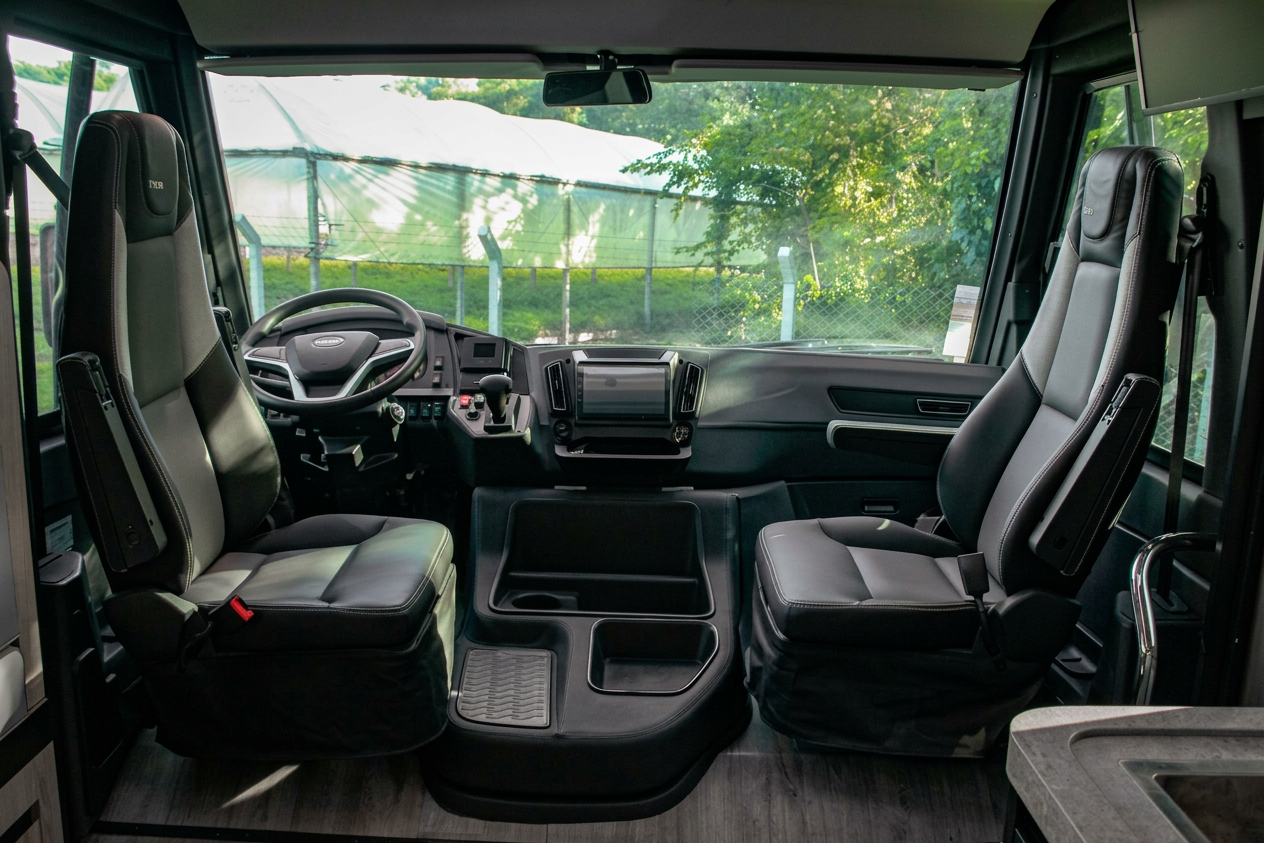
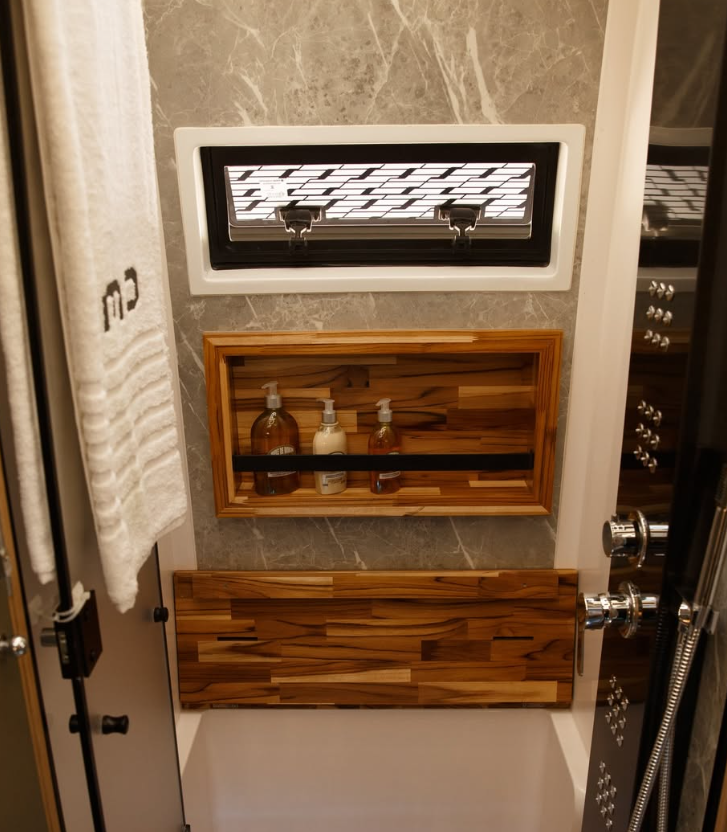
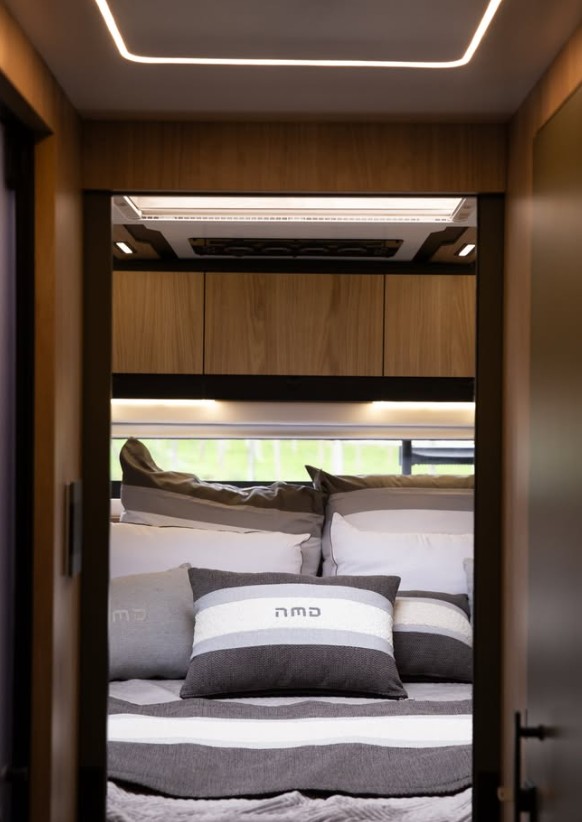
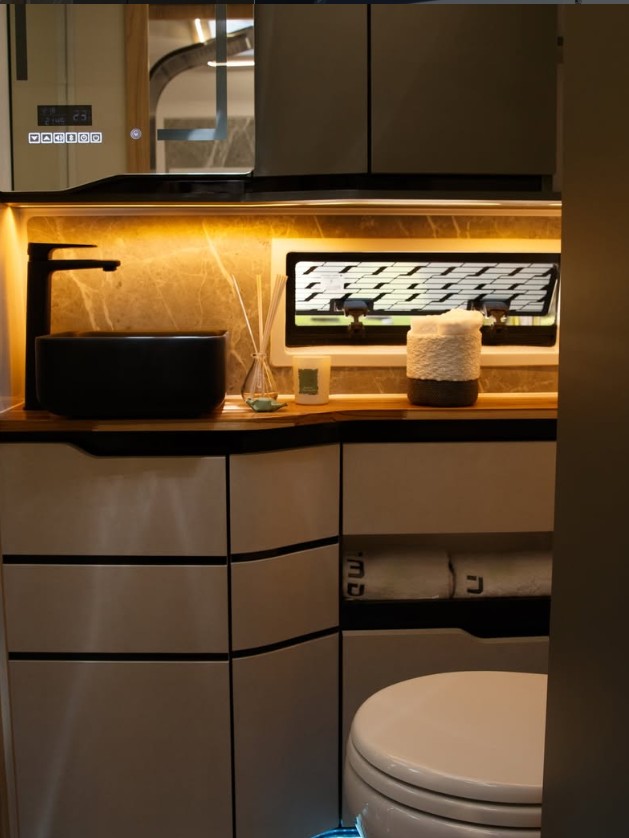
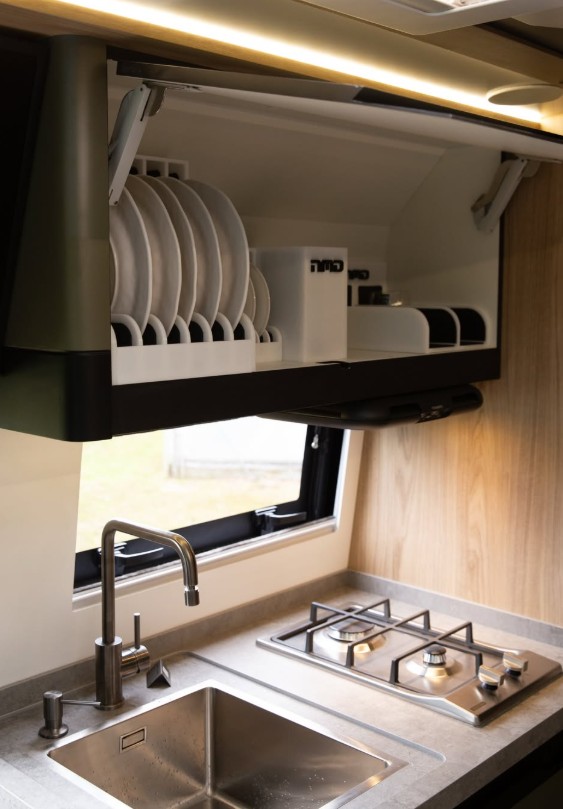
Inside, the motorhome includes a full kitchen, refrigerator, oven, microwave, bathroom, bedroom, television, air conditioning, bespoke woodwork, LED lighting, panoramic roof and windows with mosquito screens and blackout shades. A slide-out system expands the interior space when the vehicle is parked, reinforcing the sense that the trip does not have to end when one arrives at the destination.
Home and Technology
There is something especially Brazilian about this combination. The country has always had a vocation for long journeys, but has not always offered comfort to those willing to take them. Distances are vast, landscapes are generous and the desire to explore new destinations is part of the national culture. The luxury motorhome tries to organize that desire with technology, autonomy and robustness.
The model’s package includes flexible solar panels capable of generating up to 800W, an energy-storage system, a 360-degree camera, satellite internet with 4G and 5G connectivity, a front winch, rear hitch, outdoor kitchen and space to carry a motorcycle or bicycles. It is a compact home designed to leave the asphalt behind, without giving up comfort and connectivity.
The proposition combines freedom and control. The traveler chooses the route, the landscape and the pace, while taking along a structure designed to reduce uncertainty. It is the road domesticated by design, without losing the promise of discovery.
After-sales service is also part of that logic. Marcopolo said the customer experience “does not end with the delivery of the vehicle” and that it is structuring a service model with a dedicated team, assistance network, technical support and close monitoring of the first units in operation. The company’s network in Brazil and Latin America, it said, will be an important competitive advantage, although motorhome service requires specific attention to both vehicle systems and onboard systems.
New Frontier
For Marcopolo, this is an elegant step in diversification. The company is not abandoning its identity in passenger transportation. On the contrary, it is expanding that identity into a new type of mobility: more private, more aspirational and more tied to experience than necessity.
Marcopolo Motorhome was created inside the company’s industrial complex in Ana Rech, Caxias do Sul, with a focus on motorhome development and production. The company said this is “certainly a relevant front” for its national and potentially global strategy, because it applies its expertise and strategic advantages in a market close to its core business.
Latin America is also on the horizon. Marcopolo says it sees potential in the region, given the combination of autonomy, robustness, comfort and suitability for long-distance travel and nature tourism. The company says it has already received demand from other Latin American countries, although the initial focus is to consolidate the product in Brazil and assess expansion gradually.
The NOMADE is, above all, a positioning showcase. It shows a Marcopolo willing to occupy markets adjacent to its traditional business, using engineering, brand and production capacity to create a higher-value experience. It is not just a recreational vehicle. It is a lifestyle product with industrial DNA.
In the end, the charm of the project lies precisely there. Marcopolo grew by putting Brazil in motion through buses, routes and passengers. Now, it is trying to capture another version of the same idea: the road as pleasure, not just displacement.
Kerouac might have been surprised by the bespoke woodwork, satellite internet and R$1.5 million price tag. But he would have recognized the central impulse: the desire to leave. The difference is that, in this Brazilian version, the journey comes with 4×4 traction, solar power and a generous dose of comfort.