By Brazil Stock Guide – Petróleo (PETR4) is calling for the immediate approval of the results of Brazil’s 2026 Capacity Reserve Auction, known locally as LRCAP, arguing that the country needs firm power capacity to preserve grid reliability and reduce the risk of blackouts in the coming years.
The auction, held in March by Brazil’s electricity regulator Aneel and the country’s power trading chamber CCEE, was designed to secure generation capacity that can be dispatched when the national grid is under stress. Petrobras says the approval of the auction results is essential to provide regulatory certainty, keep existing thermal plants available, and strengthen the reliability of Brazil’s National Interconnected System.
The debate comes as Brazil’s electricity sector undergoes a structural transformation. The country has rapidly expanded renewable sources such as wind and solar, while power demand continues to grow and extreme weather events become more frequent. That combination has made grid reliability a more sensitive issue. Renewable power is central to Brazil’s energy transition, but intermittent generation does not always coincide with peak demand.
Firm Power
Petrobras’ core argument is that Brazil needs not only energy, but dependable capacity available at critical moments. In a system with more variable renewable generation, dispatchable plants play a balancing role, especially in the early evening, during demand spikes or when wind and solar output declines.
According to technical warnings cited by Petrobras from Brazil’s grid operator ONS, without new capacity contracting, the probability of a power supply failure could reach close to 30% as early as 2026 and rise to more than 90% by 2029. For the company, those figures show that the capacity auction has become a central tool for energy security.
“This new context requires firm, reliable capacity available 24 hours a day to guarantee supply at critical moments,” said William França, Petrobras’ acting executive director for energy transition and sustainability. He said LRCAP is essential to Brazil’s power security and to the predictability needed for the development of the national energy sector, helping the country avoid blackouts.
Thermal Backup
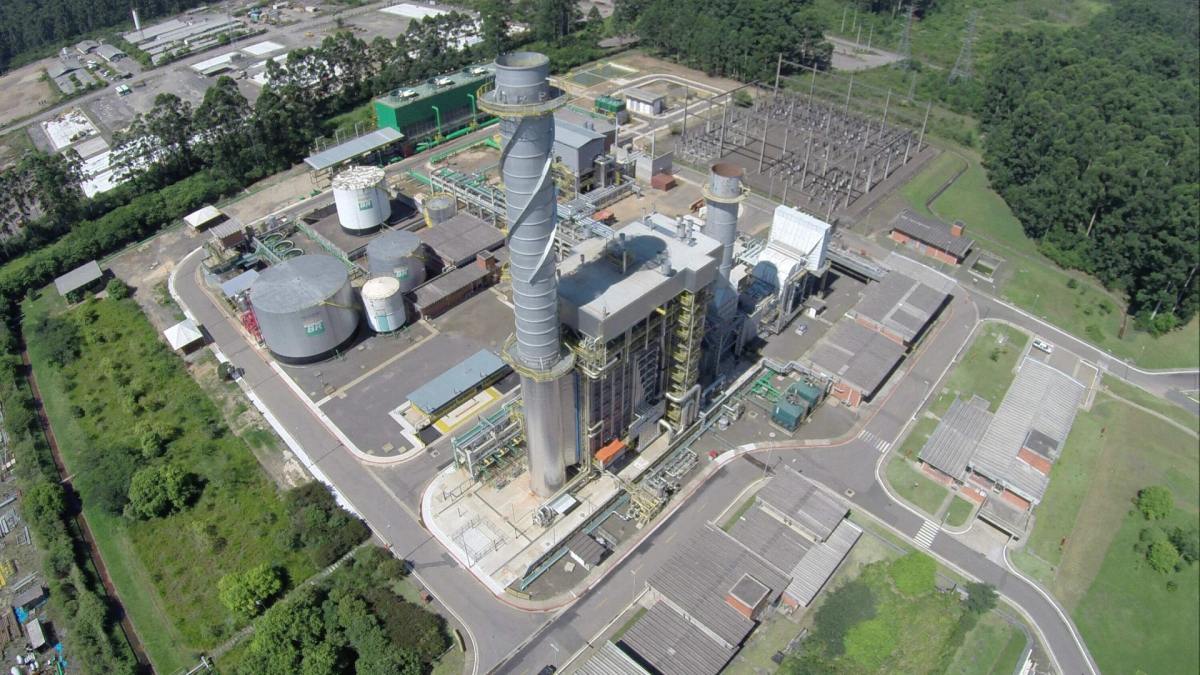
Petrobras also pointed to recent operational data to support its case. On May 6, the company’s thermal plants were dispatched in real time to meet peak demand, generating more than 680 MW. On May 15, Petrobras’ thermal power generation exceeded 2,000 MW shortly after 6 p.m., an increase of 1,400 MW in a little over one hour.
Those figures reinforce the company’s view that thermal plants still have an important role in Brazil’s electricity system, even as the grid becomes cleaner and more renewable. Petrobras is not framing thermal generation as a substitute for renewables, but as a complement to them. Modern electricity systems increasingly need a mix of renewable generation, flexible capacity, storage, transmission and dispatchable sources to remain stable.
The company warned that failure to complete the 2026 capacity auction could jeopardize the continued operation of existing thermal plants. These assets depend on regulatory predictability and capacity payments to remain economically viable. If some plants are removed from the system, Petrobras argues, Brazil could face greater supply risks precisely during the period in which ONS sees rising vulnerability.
The dispute highlights a more complex phase of Brazil’s energy transition. The question is no longer simply how fast the country can add renewable power, but how it can keep the grid reliable while doing so. For Petrobras, contracting firm capacity does not contradict the energy transition. It is part of making that transition operationally safe.