By Brazil Stock Guide – Petrobras (B3: PETR4; NYSE: PBR) set a new production record in the third quarter of 2025, reaching 3.14 million barrels of oil equivalent per day, up 7.6% from the previous quarter and 16.9% year on year. The gains were driven by strong ramp-ups at the Búzios and Mero fields, led by the FPSOs Almirante Tamandaré and Marechal Duque de Caxias, and by higher operational efficiency across the Campos and Santos basins.
Operationally, Petrobras maintained refinery utilization at 94%, sold 1.8 million barrels per day of derivatives domestically — up 5.3% from the previous quarter — and posted record crude exports of 814,000 barrels per day. Diesel sales jumped 12%, driven by agribusiness demand, while pre-salt oil accounted for 69% of refinery feedstock, underscoring its profitability focus. Gas deliveries from the Boaventura complex rose nearly 12%, reducing reliance on imports.
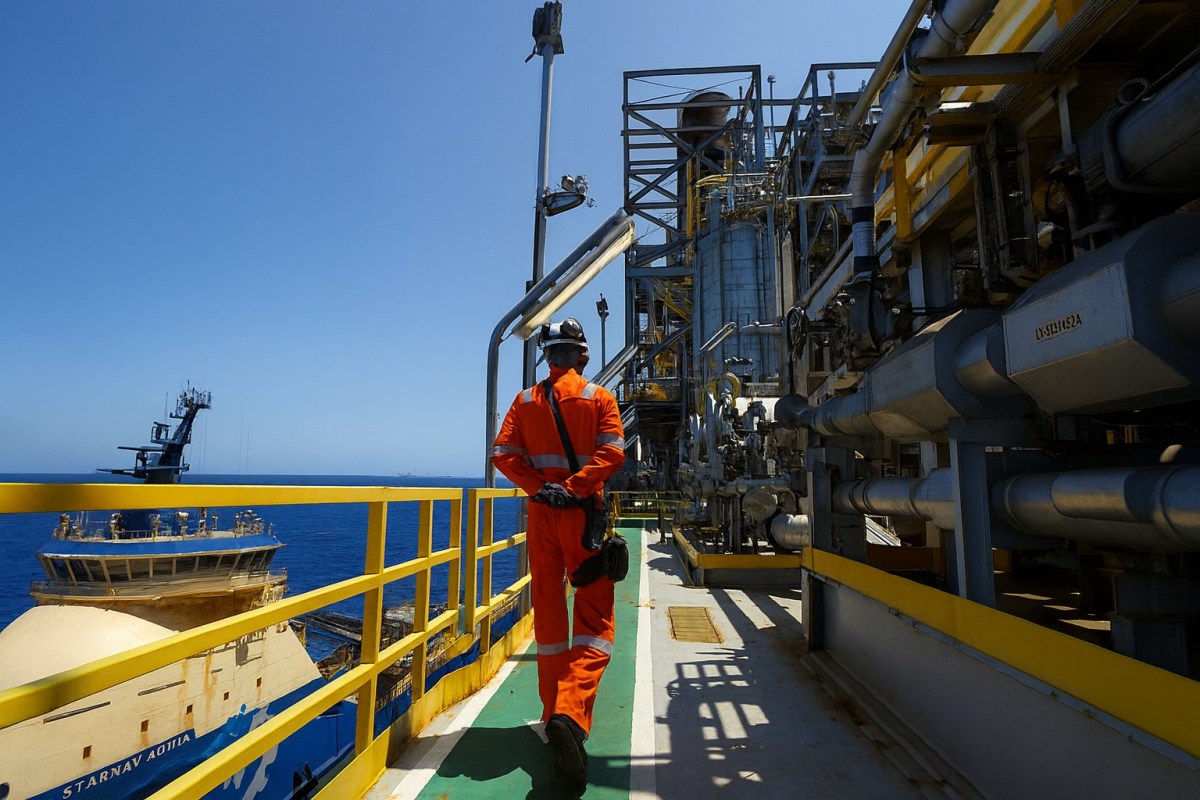
The quarter also confirmed Petrobras’s dominance in the pre-salt: production from these reservoirs rose to 2.12 million barrels per day, 6.6% higher than in Q2, representing two-thirds of Brazil’s total oil output. The FPSO Almirante Tamandaré, which entered production in February, became the country’s most productive platform, reaching 250,000 bpd — above its nominal capacity — just eight months after first oil. In parallel, the arrival of the P-78 unit in Búzios, with capacity for 180,000 bpd and 7.2 million m³/day of gas compression, sets the stage for another output boost in the fourth quarter.
Refining and marketing operations mirrored the upstream momentum. The production of derivatives grew 3.5%, led by diesel and aviation fuel (QAV), both hitting quarterly records at the REFAP and REPLAN refineries. The company also advanced construction contracts for the Boaventura Refining Project, designed to expand diesel S-10 output by 76,000 bpd and aviation fuel by 20,000 bpd, while integrating refining with renewable energy infrastructure. The project also includes production of 12,000 bpd of Group II lubricants, adding higher-value streams to Petrobras’s portfolio.
In gas and power, Petrobras increased deliveries of domestic natural gas by 11.8% quarter on quarter, driven by the ramp-up of the Itaboraí processing hub within the Boaventura complex. The company also began early delivery of 1.12 GW from its Ibirité and Termorio thermal plants — one year ahead of schedule — to stabilize Brazil’s grid amid greater renewable penetration. Electricity sales rose 17% as hydro reservoirs fell, reinforcing Petrobras’s growing role in energy security.
The company will report its third-quarter financial results on November 6, when investors expect updates on dividends, capex execution, and potential revisions to the 2025–2029 strategic plan. Analysts will also look for margin signals from refining and trading, as well as progress on energy transition projects such as sustainable aviation fuel (SAF) production and carbon capture pilots.
The company also received a federal environmental license this week authorizing the start of exploration drilling in the Equatorial Margin, a vast frontier off northern Brazil viewed as the country’s most promising new oil province since the pre-salt. The permit allows Petrobras to begin seismic and drilling activities, a move executives say is essential to sustaining long-term reserves and balancing its production portfolio beyond the Southeast.