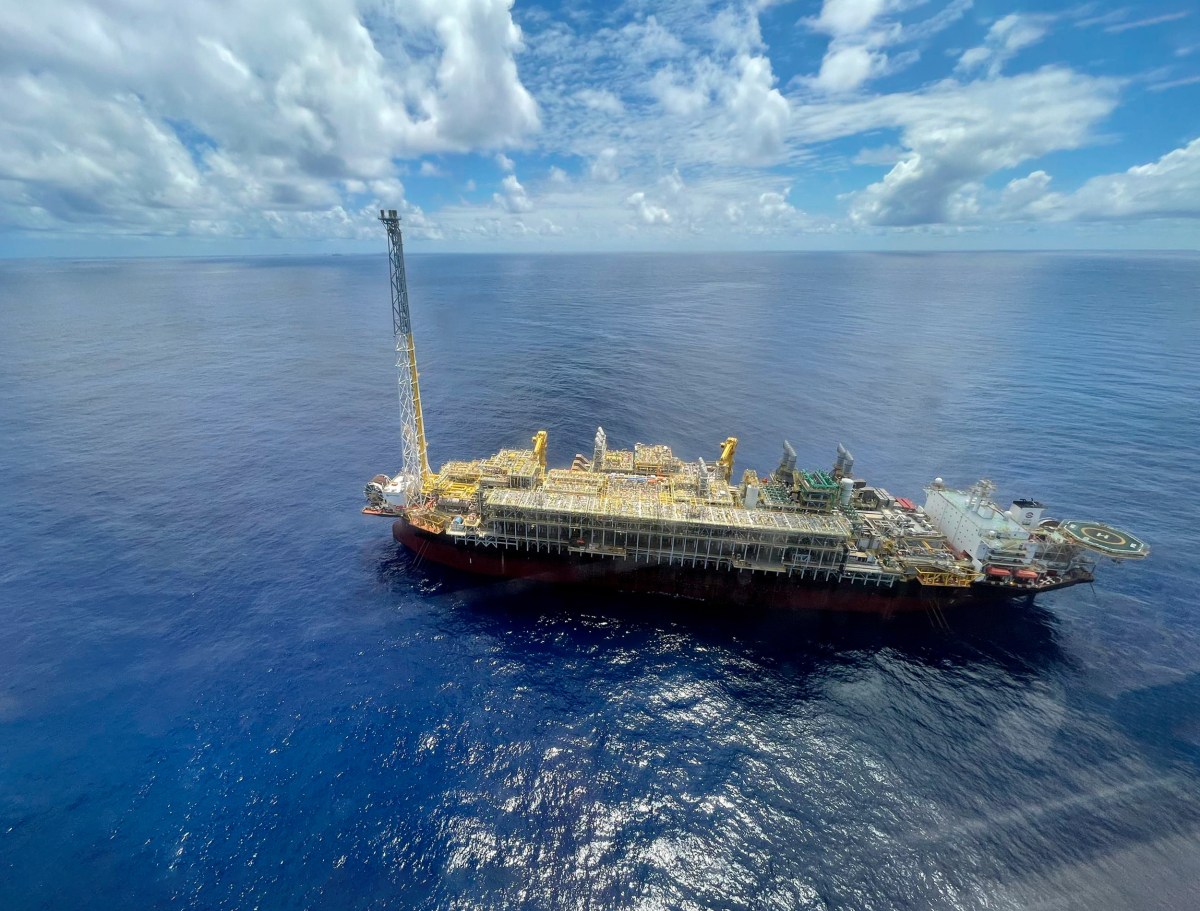
By Brazil Stock Guide – Petrobras and its partners in the Libra consortium plan to invest more than R$150 million in geological studies of Brazil’s pre-salt reservoirs, a research effort aimed at improving oil recovery in the Mero field, one of the country’s largest offshore discoveries. The initiative, known as Libra Rocks, combines advanced rock analysis with artificial intelligence to better understand how oil flows through the carbonate formations that host Brazil’s most productive reservoirs.
The project brings together Petrobras and the international partners of the Libra consortium — Shell, TotalEnergies, CNPC and CNOOC, alongside Brazil’s state manager PPSA — with three universities: the University of Brasília (UnB), the Federal University of Paraná (UFPR) and PUC-Rio Grande do Sul (PUCRS). The research will run for four years and will focus on building detailed geological models of the rocks that store hydrocarbons in the Santos Basin pre-salt, more than 5,000 to 6,000 meters below sea level.
Why the Rocks Matter
Unlike conventional sandstone reservoirs, much of Brazil’s pre-salt oil sits in carbonate rocks formed around 120 million years ago, when South America and Africa were separating. These formations can have high porosity and permeability, meaning they store large volumes of oil but also behave unpredictably. Small variations in rock structure can change how quickly oil flows through the reservoir.
Understanding these variations is crucial for operators because it helps determine where to drill new wells, how fast to produce oil and how to manage pressure inside the reservoir. According to Petrobras, better geological characterization could increase the recovery factor, meaning more oil can be extracted from the same field.
Artificial Intelligence Meets “Digital Rock”
One of the most innovative aspects of the Libra Rocks project is the use of AI algorithms to process geological data automatically. Researchers will combine laboratory analysis with high-resolution imaging techniques that create three-dimensional digital replicas of rock samples, known as “digital rocks.”
These digital models allow scientists to simulate how fluids move through microscopic pores in the rock, helping engineers predict how oil, gas and injected CO₂ behave underground. The technology can also speed up reservoir analysis, reducing the time required to interpret geological samples.
Strategic Field
The research focuses on Mero, currently the third-largest producing field operated by Petrobras, located in deep waters of the Santos Basin with water depths between 1,800 and 2,000 meters. The reservoir is known for high salinity and elevated CO₂ levels, conditions that pose technical challenges for production.
Beyond Mero itself, Petrobras expects the knowledge generated by Libra Rocks to be applied to other pre-salt fields in the Santos and Campos basins, potentially improving efficiency across one of the world’s most prolific offshore oil provinces.
The project is funded under Brazil’s ANP research and development clause, which requires oil companies to allocate part of their revenues to scientific research in the country. More than 150 researchers and students are expected to participate, including over 90 scholarships for undergraduate, master’s and doctoral programs.