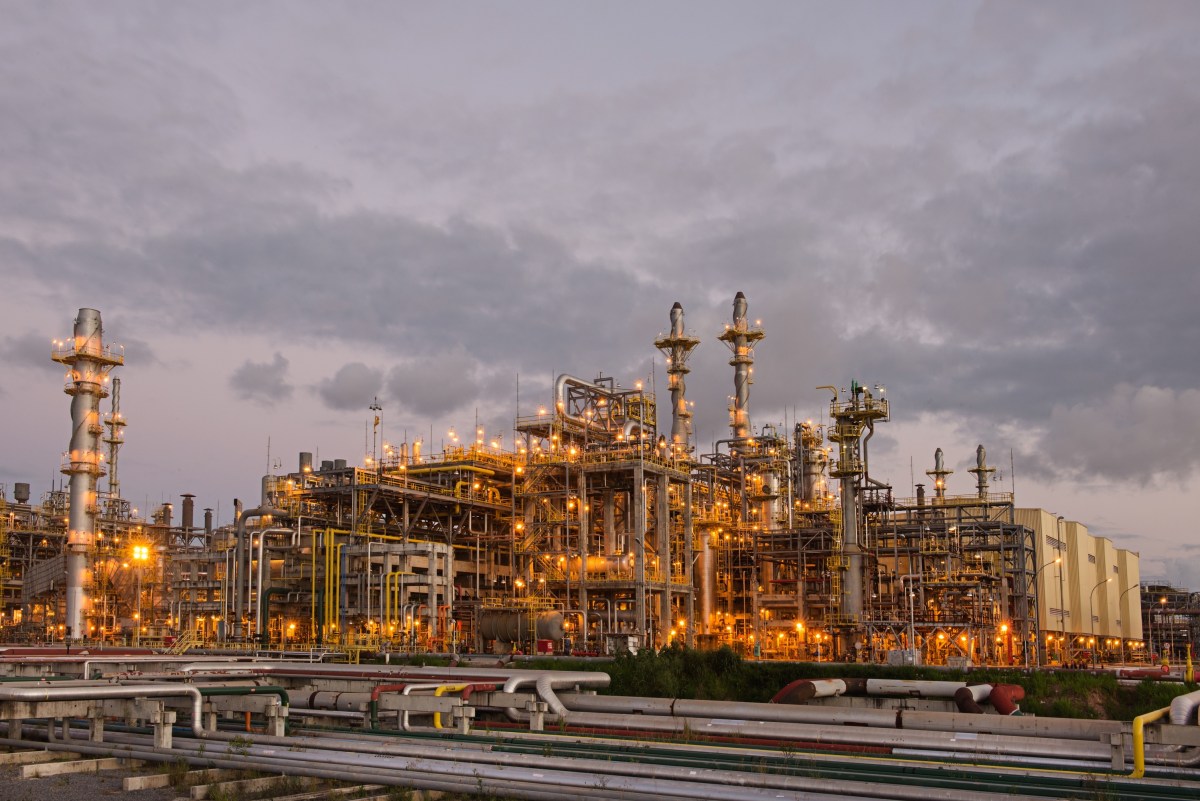
By Brazil Stock Guide – Petrobras (B3: PETR4) has signed nine contracts worth R$ 8.3 billion (US$ 1.46 billion) to restart construction of Train 2 at the Abreu e Lima Refinery (RNEST) in Ipojuca, Pernambuco. The project, halted for nearly a decade following the Car Wash (Lava Jato) corruption investigation, is now back on track under the company’s 2025–2029 Business Plan and the federal government’s New Growth Acceleration Program (PAC). Full operations are expected by 2029, with over 2,500 workers already mobilized.
The agreements cover construction and automation services by Consag, Tenenge, CPL, Possebon, Tecnosonda, and Schneider Electric. Once completed, Train 2 will add 13 million liters (3.4 million gallons) per day of low-sulfur S10 diesel to Brazil’s refining capacity — equivalent to about 8% of national output. Petrobras expects the project to generate around 30,000 direct and indirect jobs during construction.
“The volumes reinforce RNEST’s role in expanding production of higher value-added derivatives, boosting productivity, and supplying low-sulfur fuels. These are profitable investments that will drive integration and diversification while creating value in a fair energy transition,” said Petrobras CEO Magda Chambriard.
From Scandal to Recovery
The Abreu e Lima Refinery became one of the most emblematic projects tied to the Lava Jato investigation, which exposed a massive kickback scheme involving Petrobras and major contractors. Construction costs ballooned, and work on Train 2 was suspended in 2015 amid legal disputes and corruption probes. Since then, Petrobras has undergone a deep governance overhaul, adopting stricter procurement and compliance standards.
Restarting Train 2 now signals the company’s return to large-scale refining projects under tighter controls. The refinery — Brazil’s most modern, opened in 2014 — already operates with high automation and advanced environmental systems. In 2024, RNEST became the first in the country to run a SNOX unit, which reduces sulfur and nitrogen emissions while producing sulfuric acid for sale.
Strategic Investment for the Future
Petrobras plans to invest US$ 19.6 billion in refining, logistics, petrochemicals, and fertilizers through 2029 — nearly twice the amount from the previous cycle. Train 2 is expected to reduce Brazil’s dependence on imported diesel and enhance the company’s capacity to produce premium, lower-carbon fuels.
For the federal government, the project also serves as a symbol of industrial revival and regional development in the Northeast. For Petrobras, it’s a test of credibility — a chance to prove that Brazil’s state-controlled oil giant can combine profitability, transparency, and industrial expansion after years of reputational damage.
If completed on schedule, the RNEST expansion will reshape Brazil’s refining landscape, positioning Pernambuco as a strategic hub for domestic fuel supply and exports — and marking Petrobras’s definitive comeback from its most turbulent chapter. In 2021, Petrobras sold its Mataripe Refinery in Bahia to Acelen, a company controlled by Abu Dhabi’s Mubadala Capital.