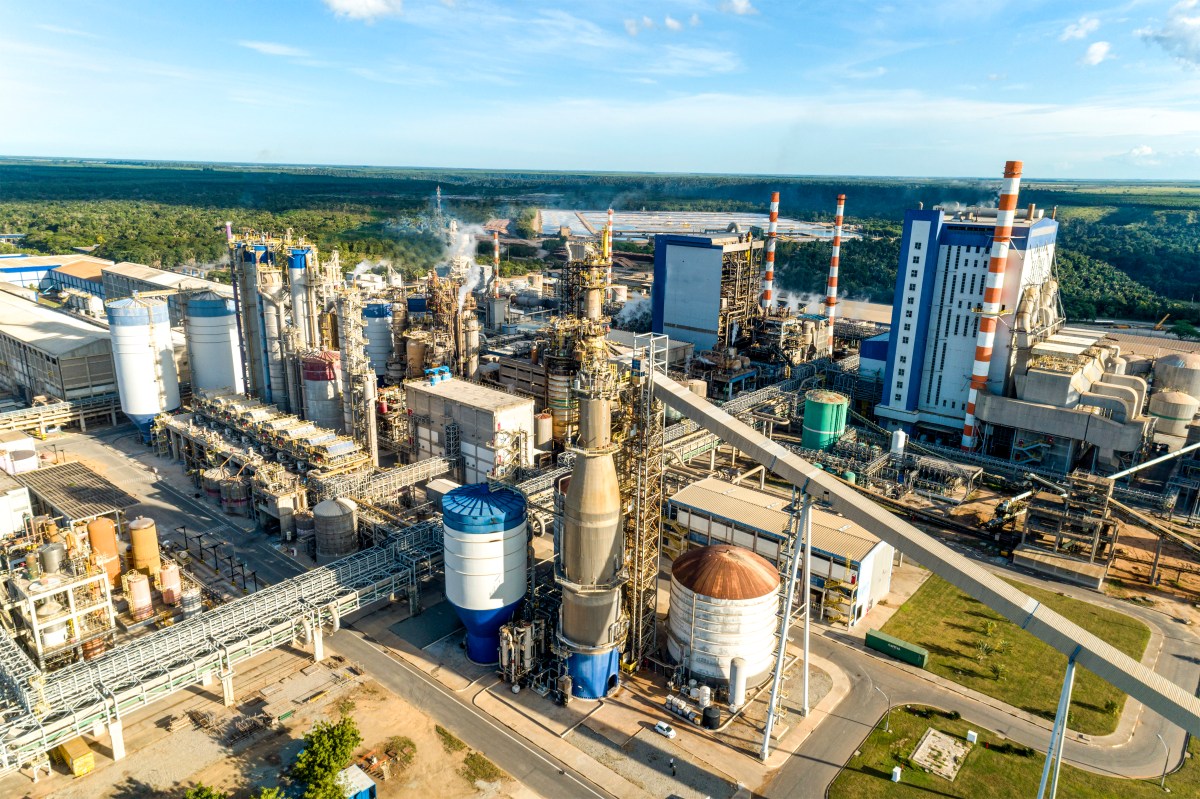
By Brazil Stock Guide – Brazil’s development bank BNDES approved R$451.7 million (about $86 million) in financing for Suzano (B3: SUZB3) to modernize industrial units and expand waste-management infrastructure across five states. The projects, which total R$700 million, aim to boost operational efficiency and meet long-term climate goals tied to the company’s “Compromissos para Renovar a Vida” program.
Emission Cuts
Suzano will use R$108.9 million from Fundo Clima to reduce fossil-fuel consumption and improve energy efficiency. At its Limeira mill, the company expects to eliminate about 10.5 million m³ of natural-gas use per year through steam-process optimization, avoiding roughly 25,000 tons of CO₂-equivalent emissions annually. In Aracruz, Suzano will expand waste-storage capacity by 200,000 m³ and add equipment to dredge sludge from effluent-treatment lagoons.
Safety and Productivity
The modernization package covers eight projects. In Mogi das Cruzes, Suzano will build acceleration and deceleration lanes to improve road access and reinforce safety for employees and nearby communities. In Mucuri, the company plans to install a sand-separation stage in the cooking process and refurbish diffusers, including screens, perforated plates and lifting systems. At Três Lagoas, Suzano will replace three chip pumps to increase reliability and reduce production bottlenecks.
“The partnership with the BNDES is essential to enable initiatives in emissions reduction, circularity and equipment reliability. This set of initiatives enhances the competitiveness of all units that will be benefited,” said Marcos Assumpção, Suzano’s executive vice president of Finance and Investor Relations.
What’s at Stake
The program signals growing alignment between industrial policy and climate finance in Brazil. BNDES has expanded the use of environmental credit lines to support decarbonization in energy-intensive sectors such as pulp and paper, which produced 25.5 million tons of pulp in 2024, up 5.2% from 2023. Exports rose 33.2%, surpassing $10 billion, reinforcing the sector’s role in Brazil’s trade balance and its exposure to global sustainability demands.
Climate-Finance Context
Fundo Clima, tied to the Ministry of the Environment, finances projects focused on emissions mitigation, adaptation and climate-related technological development. Its mandate has become a central tool as Brazilian manufacturers accelerate the shift toward lower-carbon industrial systems.