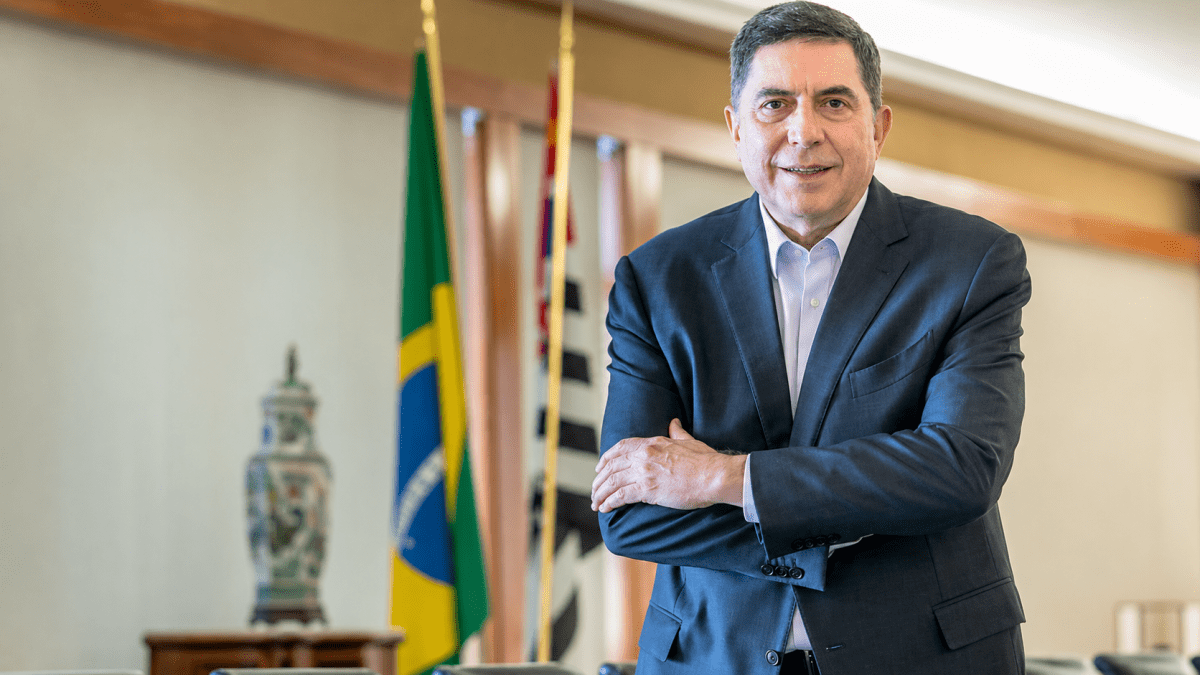
By Brazil Stock Guide – Luiz Carlos Trabuco, chairman of Bradesco’s board of directors, said Brazil’s benchmark interest rate still has room to fall and argued that the country has the fundamentals to enter a new growth cycle with a lower cost of capital. In an interview with Times Brasil/CNBC, the executive said the combination of more contained inflation, a dollar below R$ 5 and lower Brazil risk points to room for a less restrictive monetary policy.
Trabuco’s remarks come as companies, consumers and banks continue to feel the effects of a prolonged period of high interest rates. According to him, an excessively high benchmark rate not only makes credit more expensive but can also weaken borrowers’ ability to repay. “When the interest rate is very high, there is a risk of not recovering the principal,” he said, arguing that rates must be compatible with borrowers’ capacity to pay.
Cost of Credit
Trabuco said Brazil’s banking system is solid, competitive and able to meet the country’s demand for credit, but stressed that the cost of capital remains high. He also criticized the tax burden on financial intermediation, saying that taxes on loans end up making financing more expensive for consumption, investment and business expansion.
For the executive, tight monetary policy played an important role in bringing inflation under control, but there is now room to ease part of that tightening. He noted that the Selic rate moved from very low levels to nearly 15% in recent years, a shift that, in his view, especially hurt entrepreneurs who borrowed to invest in productive projects.
Fiscal and Monetary Policy
One of the central points of the interview was the need for better alignment between fiscal and monetary policy. Trabuco compared the mismatch between expansionary fiscal policy and restrictive monetary policy to a car in which one foot presses the accelerator while the other steps on the brake. In his view, that combination makes economic management uncomfortable and reduces the effectiveness of both policies.
Despite the warnings, Trabuco’s tone was optimistic. He said Brazil is going through an interesting phase, with external solvency, the Treasury’s ability to place its bonds and signs of improvement already being perceived by the market. Domestic debt still concerns rating agencies, he said, but the country has the conditions to move to a higher level if it navigates the year well.
A New Cycle
Trabuco’s reading is that Brazil may benefit from a rare combination: lower risk perception, a more favorable exchange rate, inflation under control and a robust financial system. In his view, that mix would allow the country to reduce the cost of capital without abandoning macroeconomic prudence.
The message matters because it comes from one of the most influential names in Brazil’s financial system. Trabuco, who served as Bradesco’s chief executive from 2009 to 2018 and now chairs the bank’s board, is not calling for an irresponsible shift in monetary policy. His argument is more subtle: Brazil has already paid a high price to stabilize inflation, and part of that monetary tightening can now be released back into the real economy.