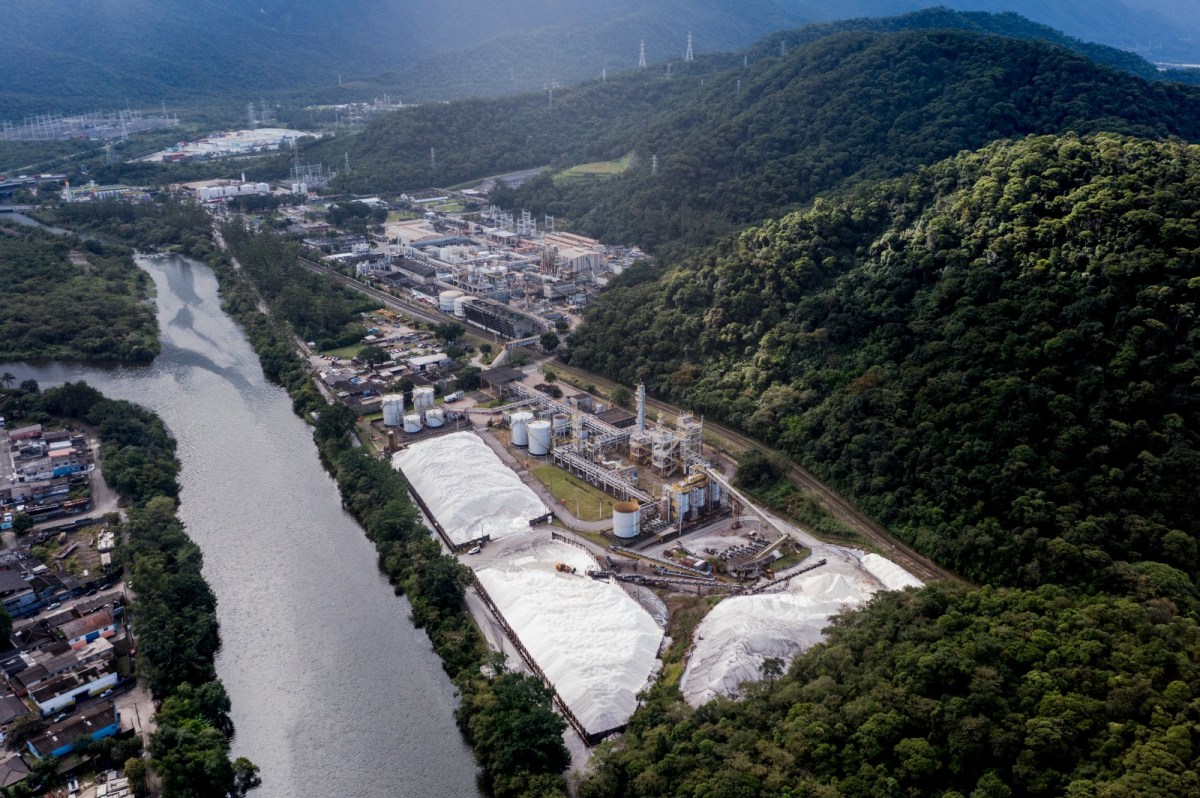
By Brazil Stock Guide – Unipar (UNIP6, B3) has inaugurated a R$1 billion (about $200 million) modernization of its Cubatão, São Paulo, plant, eliminating mercury from chlorine production before Brazil’s December 2025 deadline under the Minamata Convention, with part of the investment backed by financing from Brazil’s state development bank BNDES.
The project converts 100% of chlorine output to membrane cell technology, replacing mercury- and diaphragm-based processes. The upgrade makes Cubatão the largest membrane-based chlor-alkali facility in South America, shifting 210,000 equivalent tonnes per year to the cleaner production method.
“The technological modernization of the Cubatão plant reinforces our strategy of sustainable growth, competitiveness and commitment to ESG principles,” said Rodrigo Cannaval, Unipar’s chief executive officer.
The new technology cuts specific energy consumption by about 40% per tonne of chlorine, reducing total energy use at the site by 18%. Carbon dioxide emissions will fall by around 70,000 tonnes compared with a 2020 baseline, while 150 tonnes of industrial waste per year will be eliminated. The upgrade also allows up to 5% higher product deliveries without expanding nominal capacity.
Part of the project was financed through R$672.9 million in loans from BNDES, contracted in November 2024 under credit lines focused on energy efficiency and low-carbon industrial technologies, including resources from Brazil’s Climate Fund and the FINEM Environment program. The investment also includes $42 million in export credit financing backed by Euler Hermes, a trade credit insurance and export credit agency specialist, according to the company.
Regulatory backdrop
The investment comes as Brazil tightens oversight of mercury use. The federal environmental agency Ibama issued a Term of Reference detailing requirements for the decommissioning of mercury-based chlor-alkali plants, reinforcing the end-2025 phaseout deadline.
Metallic mercury is classified as highly toxic, with neurological, renal and reproductive risks. Once converted into methylmercury, it bioaccumulates in ecosystems. The risks were made globally visible by the Minamata disaster in Japan, which led to the international treaty Brazil adopted in 2017.
Ibama’s rules require safe mercury removal and stabilization, full decontamination of equipment and facilities, continuous monitoring of air, water and soil, and medical surveillance of exposed workers. Residues must be sent to licensed disposal facilities, under Brazil’s National Solid Waste Policy.