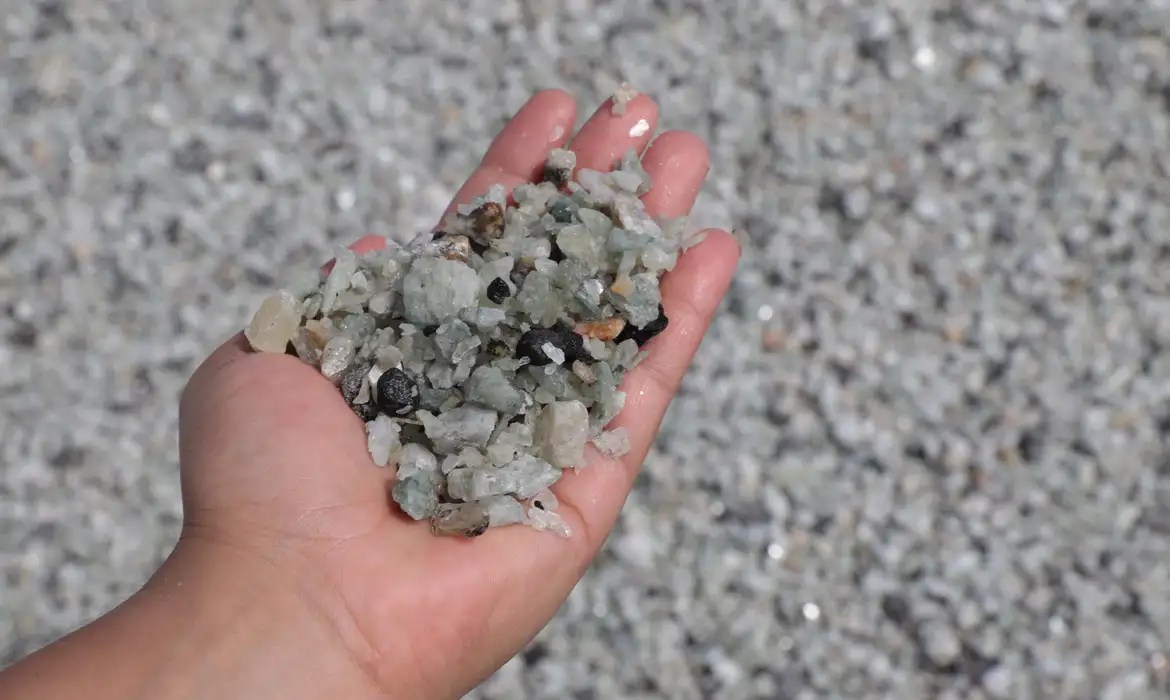
By Brazil Stock Guide – The US Development Finance Corporation (DFC) increased its financing package for Serra Verde, the only rare-earth miner currently operating in Brazil, to $565 million, the company said on Thursday (5). The revised deal also grants the US government the right to acquire a minority equity stake in the business.
The new terms deepen Washington’s direct involvement in Brazil’s critical minerals sector as the US pushes to secure alternative supply chains outside China. In November, Serra Verde had disclosed that the DFC committed $465 million to the company, without mentioning any potential equity participation.
Serra Verde operates a rare-earth mine in northern Goiás state and currently exports its entire output to China, which dominates about 60% of global extraction and roughly 90% of refining of rare-earth elements. The company, owned by two US investment funds and one UK fund, said last year it restructured contracts with Chinese buyers to allow part of its production to be shipped to Western customers, without naming them.
Operational constraints have prevented Serra Verde from reaching its full production capacity of 5,000 tons of rare-earth oxide contained in its concentrate — the company’s final product. Even so, the miner plans to expand output to 6,500 tons by the end of 2027.
“The announcement today represents strong recognition of Serra Verde’s preeminent strategic importance in the global landscape,” Chief Executive Officer Thras Moraitis said in a statement, according to Folha de S. Paulo. “We are deeply grateful for the support of the United States government and look forward to working together to build new independent value chains.”
Moraitis added that the expanded financing strengthens Serra Verde’s long-term outlook. “DFC’s large-scale commitment of nearly $600 million secures a promising future for Serra Verde and for multiple downstream companies that rely on our rare earths,” he said.
It remains unclear whether the agreement includes any obligation for Serra Verde to supply US manufacturers, particularly in industries such as electric vehicles and defense, which depend on rare-earth magnets. People familiar with the sector say such supply commitments are often part of deals of this kind.
The financing highlights a broader US strategy of signing direct agreements with Brazilian critical minerals companies, rather than waiting for a broader government-to-government framework. Brazilian officials have increasingly pressed for more domestic processing of rare-earth materials to take place inside the country.
Brazil holds the world’s second-largest rare-earth reserves and has been viewed internationally as a key alternative to China’s dominance. The DFC has been used as a tool to advance these partnerships.
In September, the agency signed a $5 million agreement with Aclara Resources Inc. (no ticker provided), which has an advanced-stage rare-earth project also located in northern Goiás. The funds, which may later be converted into equity, will support the completion of the mine’s feasibility study.
One month later, Aclara said it plans to build a rare-earth separation refinery in the US by 2028. The company estimates $277 million in investment for the US facility, less than the $680 million it has projected for Goiás. Aclara says the refinery would be capable of supplying more than 75% of US demand for heavy rare-earth elements for electric vehicles by 2028.
The US government also announced on Wednesday (4) partnerships with the European Union, as well as Japan and Mexico, aimed at strengthening the security and resilience of critical minerals supply chains. Brazil’s Foreign Minister Mauro Vieira was invited to the event but sent diplomat Fernando Sena, while Goiás Governor Ronaldo Caiado also attended.